Best Lead Generation Tools for Real Estate Companies
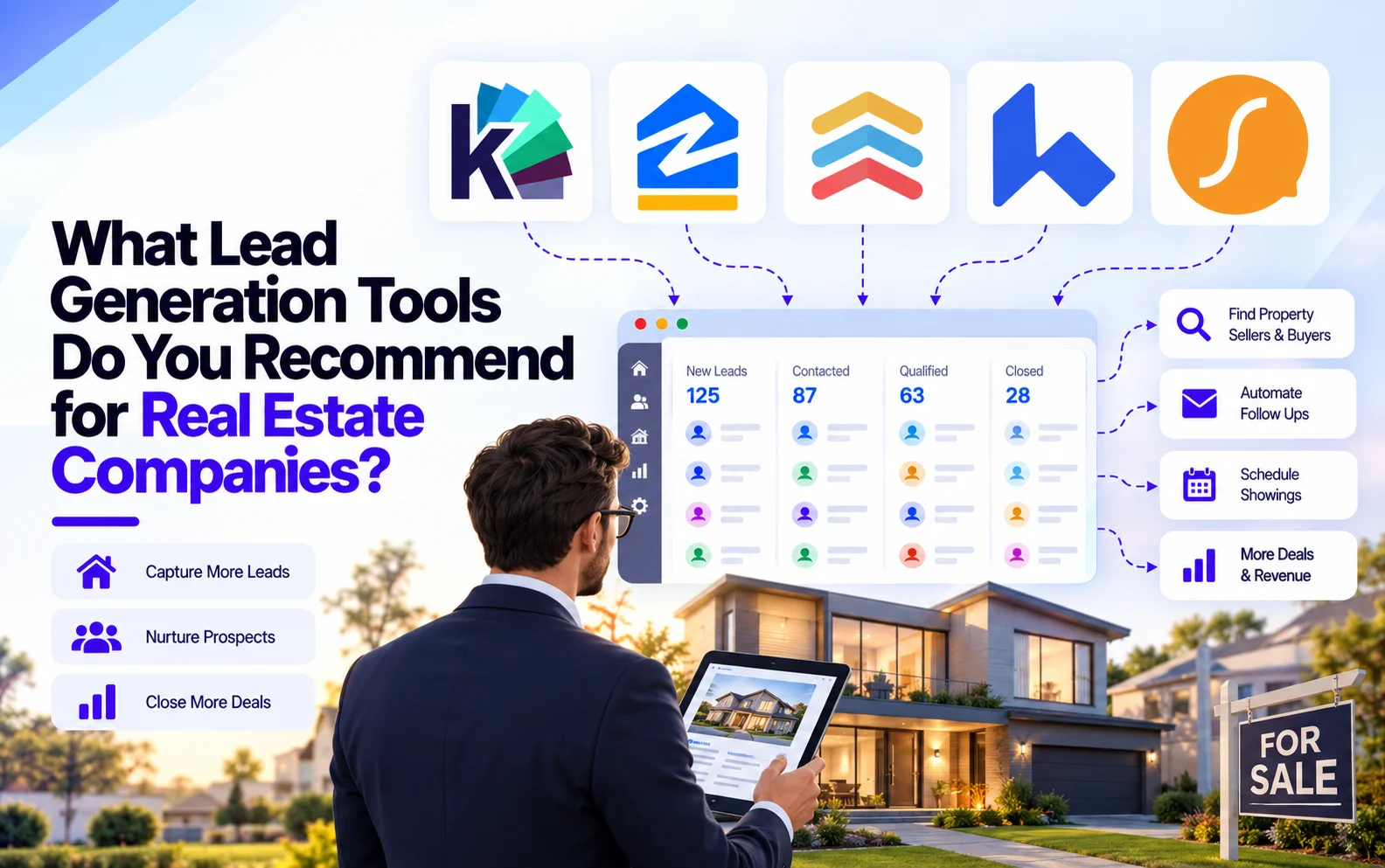
What Lead Generation Tools Do You Recommend for Real Estate Companies?
TL;DR
Real estate lead generation is increasingly digital, but generating interest is only the first step. Buyers may discover properties online, browse multiple listings, return to a website several times, and still leave without contacting an agent. The right lead generation technology should help real estate companies capture that demand, understand buyer intent, respond quickly, and move qualified prospects toward a conversation.
A few numbers show why this matters:
52% of buyers found the home they purchased on the internet.
69% of buyers used a mobile or tablet search device during their home search.
88% of home buyers used a real estate agent or broker to purchase their home.
48% of REALTORS® are watching AI-powered lead generation and follow-up as an emerging technology for their business in 2026.
81% of REALTORS® say saving time is a primary reason for adopting technology, followed by improving the client experience at 71%.
The five tools we'll compare are:
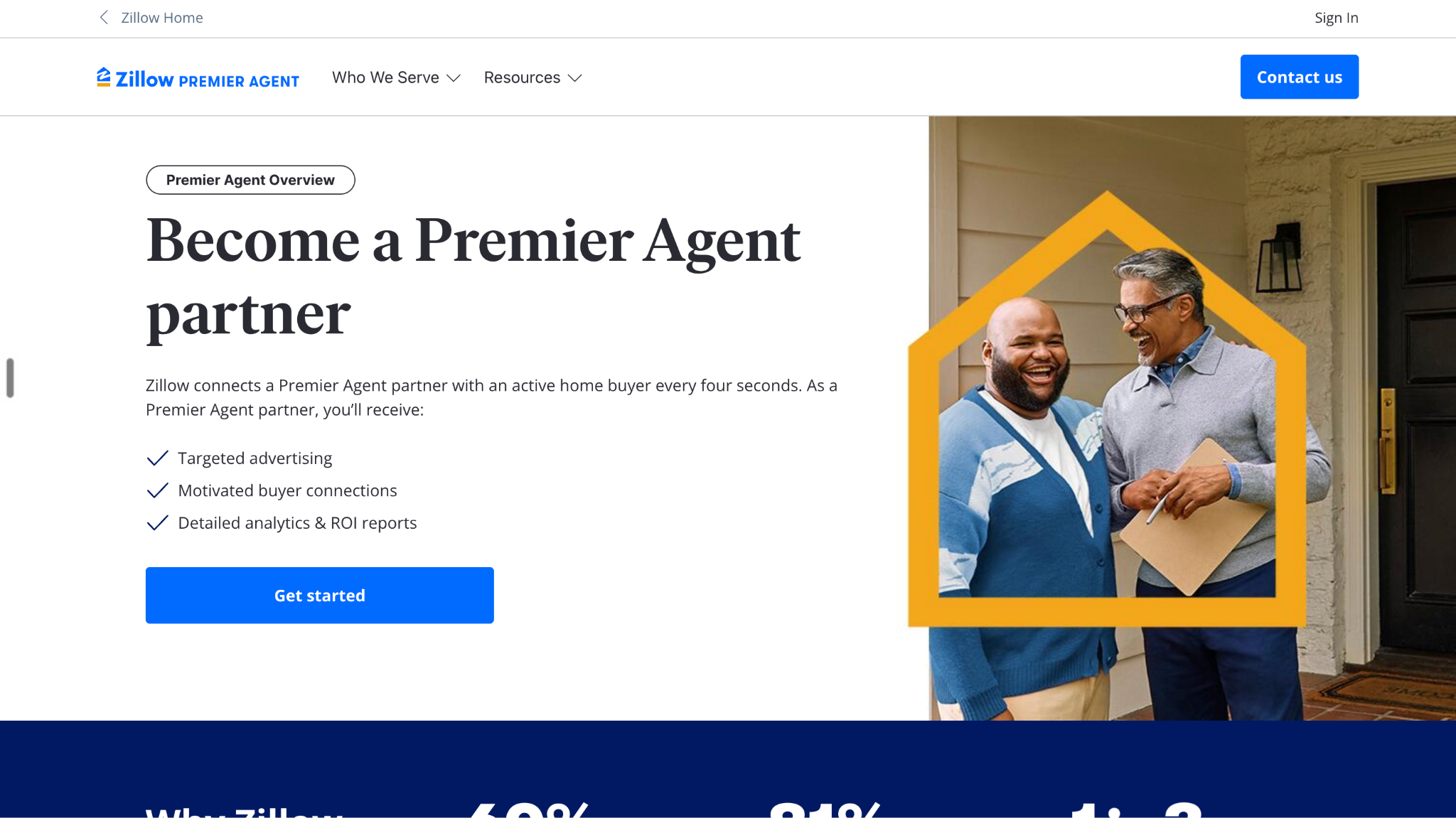
Zillow Premier Agent: Marketplace-based buyer lead generation
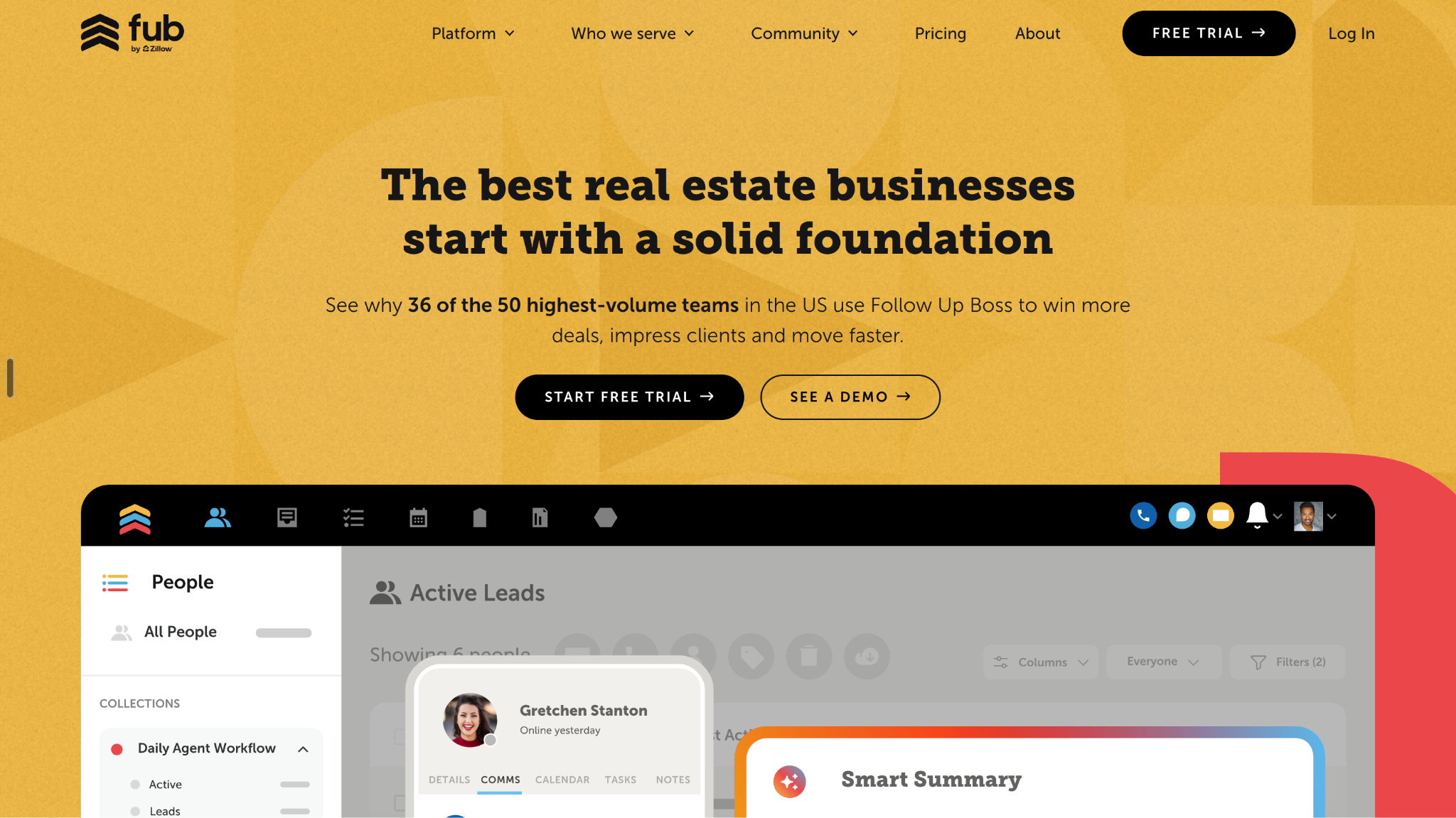
Follow Up Boss: Real estate CRM and lead follow-up
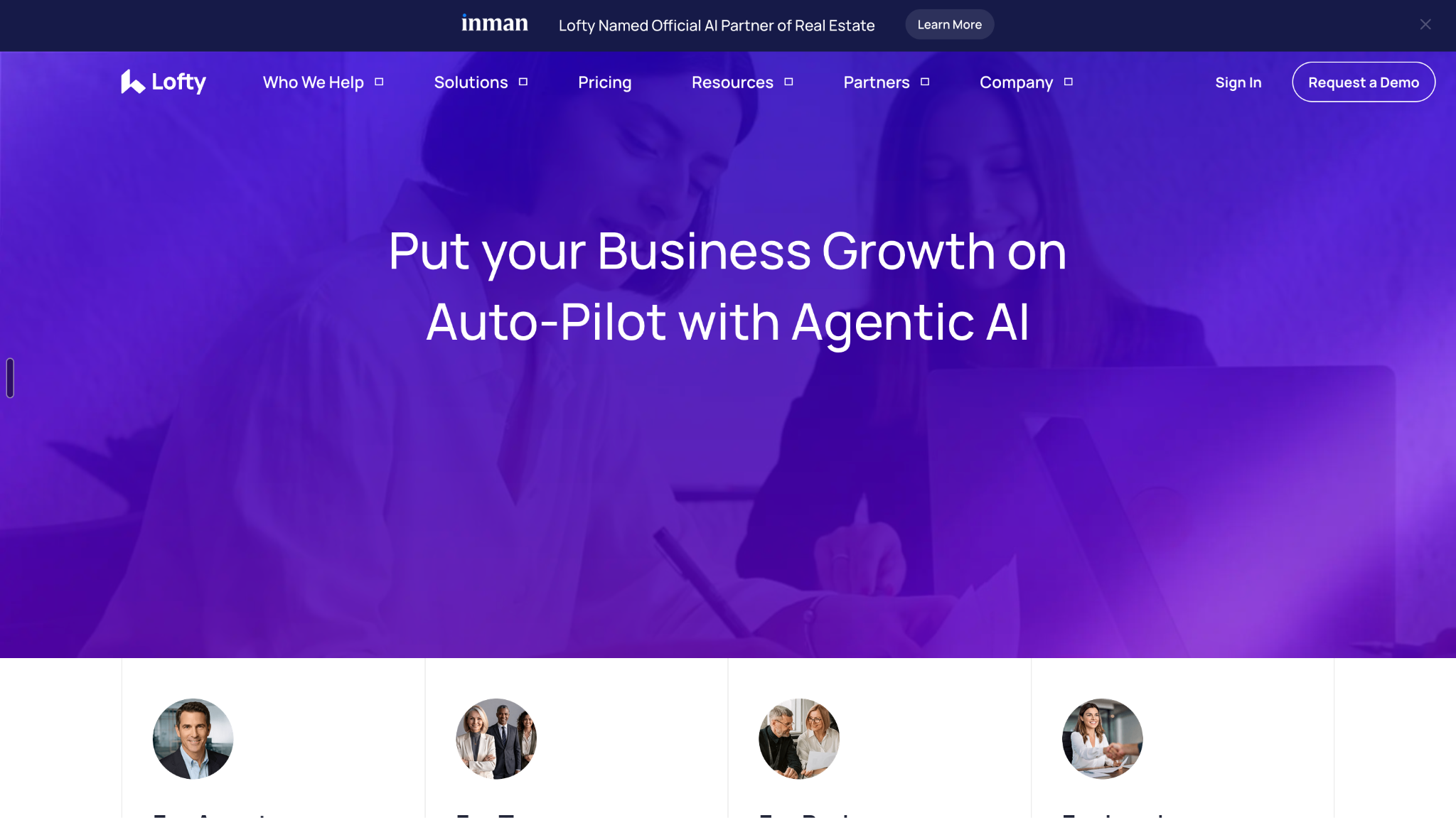
Lofty: Real estate website, CRM, lead generation, and automation
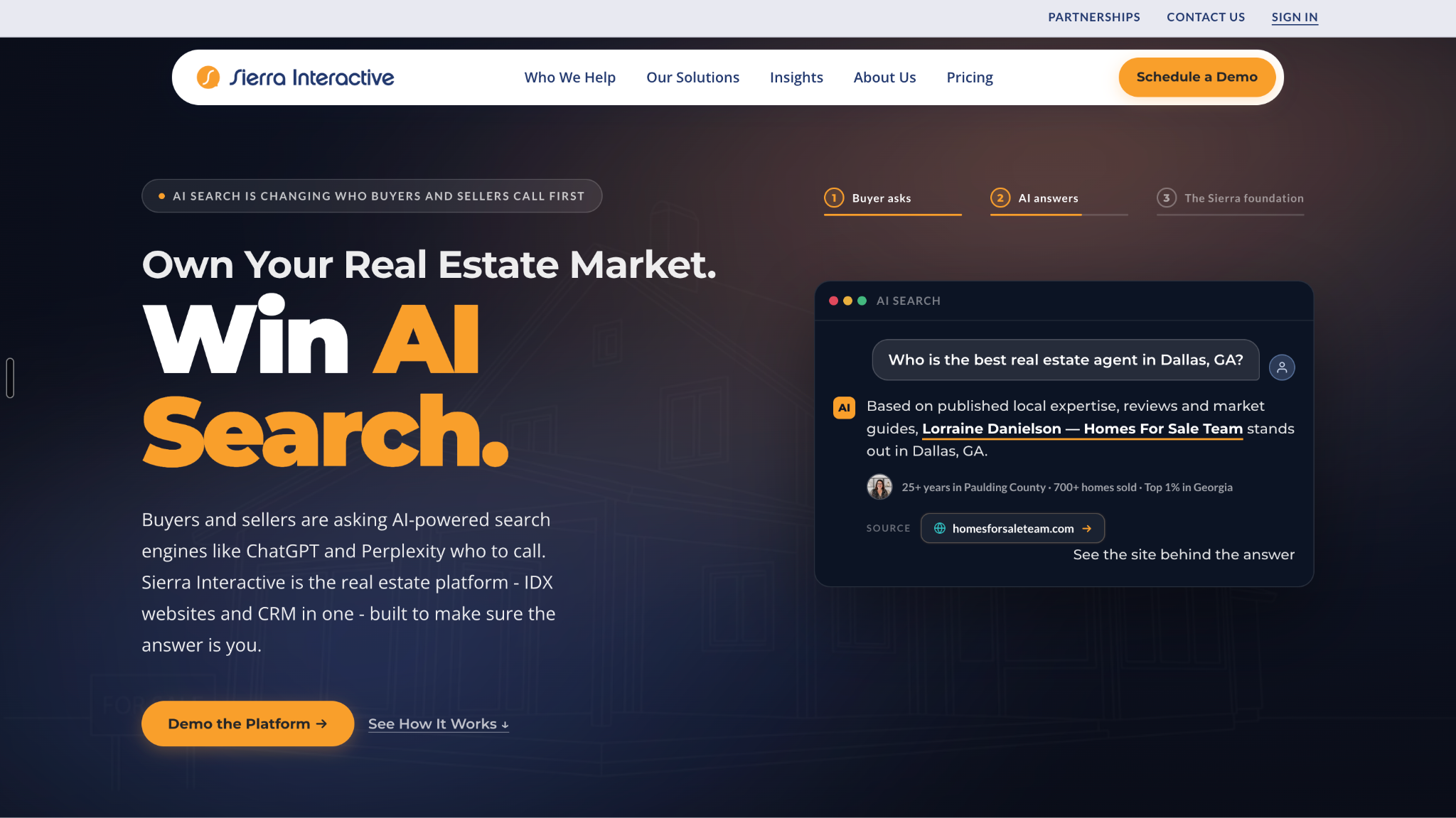
Sierra Interactive: Real estate website, IDX, SEO/PPC, and lead capture
Knock AI: Website visitor identification, first-party intent, AI engagement, qualification, and routing
The important distinction is that these platforms solve different parts of the real estate lead-generation process. Some help you find demand, others help you manage known leads, while Knock AI focuses on identifying and converting high-intent website demand that may otherwise remain anonymous.
How Real Estate Companies Generate and Convert Leads
The modern real estate buyer journey rarely starts with a phone call to an agent. A buyer may discover a property through search, social media, a marketplace, an advertisement, or a referral. From there, they might browse listings, compare properties, research neighborhoods, check pricing, return to the website, and eventually decide whether to contact an agent.
The challenge is that not every important buying signal happens through a form submission.
A prospective buyer could view several properties, return to the same neighborhood page, spend significant time researching listings, and leave without filling out a contact form. A seller might repeatedly visit a valuation or seller-services page without being ready to speak with an agent.
If the technology only counts completed forms, much of that behavior remains invisible.
That's why a real estate lead generation stack should help teams answer questions such as:
Which visitors are serious buyers or sellers?
What properties or neighborhoods are they interested in?
Which visitors are returning to the website?
When is someone showing meaningful buying or selling intent?
Which agent should handle the opportunity?
How quickly can the team respond?
Which leads should be nurtured rather than contacted immediately?
The goal isn't simply to generate more inquiries. It's to make sure the interest already being generated has a path toward a conversation, showing, consultation, and ultimately a transaction.
Best Lead Generation Tools for Real Estate Companies Compared
Tool
Primary Role
Property/Buyer Leads
Website & Lead Capture
Intent Signals
Lead Qualification
Follow-Up
Appointment Booking
Routing
CRM / Workflows
Best For
Pricing
Zillow Premier Agent
Real estate marketplace lead generation
Connects agents with buyers and sellers through Zillow and Trulia, including calls, emails, tours, and pre-approved buyers.
Leads originate from Zillow/Trulia interactions rather than primarily from your own website.
Buyer activity and connection context help agents understand the opportunity.
Helps connect agents with active shoppers, but detailed qualification happens through the agent's sales process.
Agents handle follow-up after Zillow connections.
Tour requests can connect buyers with agents.
Connects shoppers with agents based on Zillow's marketplace and advertising model.
Provides tools for tracking connections and agent performance.
Agents and teams looking for marketplace-generated buyer demand.
Custom / market-based. Zillow says pricing varies by ZIP code, market, home values, and expected connections.
Follow Up Boss
Real estate CRM and lead follow-up
Connects and manages leads from 200+ sources rather than generating property demand itself.
Connects website and external lead sources into the CRM.
Uses lead activity and predictive prioritization to help agents identify opportunities.
Helps agents prioritize and manage leads using activity, tasks, and AI features.
Strong focus on automated follow-up through email, text, calling, and Action Plans.
Supports calendar synchronization and sales workflows around appointments.
Custom lead distribution, including round-robin and team-based assignment.
Real estate CRM with automations, Smart Lists, reporting, integrations, and team management.
Real estate teams that already have lead sources and need better follow-up and conversion.
Grow: $69/user/month monthly or $58/user/month annually. Pro: $499/month for 10 users monthly or $416/month annually. Platform: $1,000/month for 30 users monthly or $833/month annually. Calling is an additional $39/user/month on Grow monthly, or $33/user/month annually.
Lofty
Real estate website, CRM, marketing, and automation
Supports real estate lead generation through its platform and optional lead-generation programs.
Includes customizable IDX websites, lead capture, and real estate marketing functionality.
Dynamic lead scoring and behavioral data help identify and prioritize opportunities.
AI-powered CRM, dynamic lead scoring, and automation help prioritize leads.
Email, text, automated campaigns, and Smart Plans support ongoing nurturing.
Supports real estate sales workflows and lead conversion, with platform capabilities varying by package.
Lead management and workflow automation support team-level distribution.
Combines AI-powered CRM, IDX website, marketing automation, lead scoring, listing tools, email, and text.
Agents, teams, and brokerages looking for a broader all-in-one real estate platform.
Custom pricing. Lofty currently requires a quote based on platform package, seats, upgrades, and lead-generation programs.
Sierra Interactive
Real estate website, IDX, SEO/PPC, CRM, and lead capture
Generates and captures buyer and seller leads through IDX websites, property search, SEO, PPC, seller sites, and listing tools.
Strong website and IDX lead-capture capabilities, including property search and conversion-focused CTAs.
Uses website behavior and lead activity as signals for prioritization and automation.
CRM can filter, prioritize, and route leads based on source, location, behavior, and other criteria.
Automated follow-up, behavioral triggers, drip campaigns, autoresponders, and e-Alerts.
Supports real estate sales workflows and appointment-oriented lead engagement.
Advanced lead routing based on geography, price range, behavior, source, and agent availability.
Real estate CRM, website, automations, reporting, integrations, and marketing tools.
Real estate teams that want their website, IDX, lead generation, and CRM connected in one platform.
Starting at $299.95/month annually for Starter, $399.95/month annually for Essential, and $599.95/month annually for Growth. Monthly billing for the 12-month agreement starts at $359.95, $474.95, and $724.95 respectively.
Knock AI
Cross-touchpoint buyer identification, first-party intent, AI engagement, qualification, and routing
Not a residential property lead marketplace. Identifies and engages high-intent demand across websites and other digital marketing touchpoints.
Identifies and enriches buyers from websites and other digital touchpoints, with conversational entry points that can capture demand without relying solely on traditional forms.
Uses first-party engagement, intent, website behavior, and enrichment signals to identify and understand high-intent buyers.
AI can qualify buyers based on discovery conversations, intent, enrichment, and ICP criteria.
AI-powered engagement and conversational workflows can respond while buyer intent is active across relevant touchpoints.
AI can book demos/meetings with qualified buyers.
Routes qualified buyers to the appropriate ICP group, workflow, or sales team.
Syncs enriched buyer information and activity with CRM and supports broader GTM workflows.
B2B real estate organizations, commercial real estate, real estate technology, and property-related businesses with meaningful digital demand.
Pipeline Foundation from $2,000/month; Pipeline Acceleration from $3,500/month. Knock AI says its platform is built for B2B companies only.
See Knock AI in Action — Book Your Live Demo Today
Best Lead Generation Tools for Real Estate Companies
Real estate lead generation covers several different problems. Zillow Premier Agent is primarily a marketplace-based acquisition channel, Follow Up Boss focuses on managing and following up with real estate leads, Lofty combines real estate websites, CRM, marketing, and automation, and Sierra Interactive combines websites, IDX, acquisition, and CRM capabilities.
Knock AI addresses a different part of the funnel: identifying and converting high-intent website demand, particularly for B2B real estate organizations where the buyers themselves are businesses.
1. Zillow Premier Agent
Zillow Premier Agent is a real estate lead-generation platform that connects agents and teams with buyers and sellers searching on Zillow and Trulia.
Rather than requiring an agent to generate all of their own website traffic, Premier Agent provides connections from people already searching for properties. Depending on the package and market, connections can include live calls, emails, tour requests, and pre-approved buyers.
That makes Zillow Premier Agent fundamentally different from a website conversion platform. Its primary job is to connect real estate professionals with demand that already exists on the Zillow ecosystem.
Key Features
Buyer lead generation: Connect with active home shoppers through Zillow and Trulia.
Seller opportunities: Help agents connect with consumers looking for real estate professionals.
Property inquiries: Receive inquiries from shoppers interacting with properties and listings.
Lead connections: Connections can come through calls, emails, tours, and other Zillow interactions.
Buyer activity insights: Give agents context around buyer activity and their property search.
CRM integrations: Connect Zillow-generated leads with existing lead-management workflows.
Lead follow-up: Give agents the opportunity to continue the relationship after the initial Zillow connection.
Best For
Real estate agents, teams, and brokerages that want to generate buyer and seller opportunities through an established property marketplace rather than relying entirely on their own website or advertising campaigns.
A buyer searching for homes on Zillow finds a property, requests information or a tour, and is connected with an agent. The agent then follows up, qualifies the buyer, schedules a showing, and continues the relationship through the transaction.
Pros
Accesses consumers already searching for real estate.
Provides direct connections through Zillow and Trulia.
Can generate calls, emails, and tour opportunities.
Useful for agents that want an additional source of buyer demand.
Can complement an agent's own website and marketing channels.
Cons
Lead generation depends on Zillow's marketplace rather than solely on the agent's owned audience.
Pricing varies by market and ZIP code.
Agents still need an effective CRM and follow-up process after receiving a connection.
It does not primarily solve the problem of identifying high-intent visitors on your own website.
Pricing
Zillow Premier Agent uses market-based pricing rather than a single published subscription price. Zillow says pricing varies by ZIP code, market, home values, expected connections, and other factors. Zillow currently reports an average cost per connection of $223 in major metro areas and $139 in non-major metro areas, but individual pricing can differ significantly.
When Should You Choose Zillow Premier Agent?
Choose Zillow Premier Agent when your priority is getting connected with active buyers and sellers already searching within the Zillow ecosystem.
It makes sense when you want another acquisition channel that can deliver direct property inquiries and buyer connections to your agents.
When Should You Consider Another Tool?
Consider another tool when your main problem isn't acquiring marketplace leads but converting the traffic already reaching your own website.
Zillow helps bring marketplace demand to agents.
A website conversion platform addresses a different question:
What are the visitors already coming to our website doing, and which of them should our team engage?
2. Follow Up Boss
Follow Up Boss is a real estate CRM built around lead management, distribution, follow-up, communication, and team workflows.
Instead of acting primarily as a lead marketplace, Follow Up Boss connects leads from different sources and gives agents a centralized system for managing conversations, follow-up, tasks, and opportunities.
It supports more than 200 lead sources and integrations, including website and lead-generation systems.
Key Features
Real estate CRM: Centralize contacts, leads, activities, and conversations.
Lead management: Organize leads from multiple acquisition sources.
Lead distribution: Automatically assign leads to agents or teams.
Automated follow-up: Use Action Plans and automated workflows to maintain contact.
Email: Send and manage email communication from the platform.
Texting: Communicate with leads through text.
Calling: Make and receive calls through Follow Up Boss.
Smart Lists: Organize leads based on relevant criteria and activity.
Lead routing: Use distribution rules such as round-robin and other team workflows.
Reporting: Track agent and lead-source performance.
Integrations: Connect websites, lead sources, calendars, marketing tools, and other systems.
Best For
Real estate teams that already generate leads from multiple sources and need a central CRM for organizing, distributing, following up with, and converting those leads.
For example, a brokerage receives leads from Zillow, its website, Facebook, and other sources. Those leads enter Follow Up Boss, are automatically assigned to agents, and enter appropriate follow-up workflows.
Pros
Built specifically for real estate.
Connects leads from many different sources.
Strong lead distribution and follow-up capabilities.
Supports email, text, and calling.
Includes AI features such as predictive lead prioritization.
Useful for both individual agents and larger teams.
Cons
Primarily a CRM and lead-conversion platform rather than a property marketplace.
Teams still need external sources to generate much of their initial demand.
The platform is most useful once leads have entered the system.
Calling is an additional cost on the Grow plan.
Pricing
Follow Up Boss currently offers:
Grow: $69/user/month monthly or $58/user/month when billed annually
Pro: $499/month for 10 users or $416/month when billed annually
Platform: $1,000/month for 30 users or $833/month when billed annually
Calling is an additional $39/user/month on Grow monthly or $33/user/month annually. Follow Up Boss also offers a free trial and says there are no contracts.
When Should You Choose Follow Up Boss?
Choose Follow Up Boss when your biggest challenge is managing and converting leads you've already generated.
It is particularly useful for teams dealing with leads from multiple sources that need consistent follow-up, automated workflows, lead distribution, and visibility into agent performance.
When Should You Consider Another Tool?
If your problem begins before the lead enters the CRM, you may need an additional layer.
Follow Up Boss manages leads once they enter the CRM.
Knock AI addresses a different stage by helping identify and act on high-intent website demand before or as it becomes a traditional lead.
3. Lofty
Lofty is an all-in-one real estate technology platform combining an IDX website, AI-powered CRM, lead generation, marketing automation, lead scoring, and sales workflows.
The platform is designed specifically for real estate and aims to manage the journey from attracting a prospect through nurturing and conversion. Its CRM includes dynamic lead scoring and Smart Plans that automate multi-step communication across email, text, calls, and direct mail.
Key Features
IDX website: Create customizable real estate websites with property search.
Property search: Give visitors an integrated home-search experience.
CRM: Manage real estate contacts and opportunities.
Lead capture: Convert website visitors and other prospects into leads.
Lead generation: Support real estate acquisition and marketing campaigns.
AI-powered engagement: Use AI capabilities across lead management and communication.
Marketing automation: Automate campaigns and recurring marketing activities.
Lead nurturing: Use Smart Plans for multi-step follow-up.
Website personalization: Create experiences designed around local markets and visitors.
Reporting: Track lead and business activity across the platform.
Best For
Agents, teams, and brokerages that want an all-in-one real estate platform combining website, CRM, lead generation, marketing automation, and AI.
Example Use Case
Real estate website → property search → lead capture → AI follow-up → CRM → agent
A visitor arrives through search or another marketing channel, searches for properties through the IDX website, becomes a lead, and is then managed and nurtured through Lofty's CRM and automated workflows.
Pros
Built specifically for real estate.
Combines website, IDX, CRM, marketing, and automation.
Supports automated email, text, calls, and other nurturing workflows.
Provides a broader technology stack than a standalone CRM.
Cons
The breadth of the platform may be more than a small team needs.
Pricing isn't publicly displayed as a simple standard subscription.
Teams that already have a website, CRM, and marketing stack may prefer specialized tools instead of replacing their existing systems.
Pricing
Lofty currently uses custom pricing for its Agent, Team, Broker, and Enterprise plans. The pricing page directs prospective customers to request pricing rather than publishing a fixed monthly rate.
When Should You Choose Lofty?
Choose Lofty when you want to combine your real estate website, IDX, CRM, lead generation, marketing automation, and AI workflows in one platform.
It is particularly relevant for teams that don't want to assemble and maintain multiple separate systems.
When Should You Consider Another Tool?
Consider another approach if your existing real estate technology stack already works well and you only need to solve a specific problem, such as website visitor identification or high-intent buyer engagement.
In that situation, adding a specialized conversion layer may make more sense than replacing the broader platform.
4. Sierra Interactive
Sierra Interactive is a real estate technology platform built around websites, IDX, lead generation, SEO, PPC, lead capture, CRM, and automated follow-up.
Its website platform is designed to help real estate teams attract visitors through organic and paid channels, give them property-search functionality, and convert those visitors into leads that can then be managed through the CRM.
Key Features
IDX websites: Real estate websites connected to MLS feeds.
Property search: Let buyers search listings directly on the website.
SEO: Website infrastructure designed to support organic lead generation.
PPC: Support for paid search acquisition.
Lead capture: Conversion tools for buyer and seller opportunities.
Behavioral tracking: Use website and lead activity to support follow-up.
CRM: Manage leads and sales activity.
Automated follow-up: Automate communications and nurturing.
Lead nurturing: Continue engaging prospects after the initial interaction.
Reporting: Measure website, lead, and team activity.
Best For
Real estate teams and brokerages that want to generate and capture demand through their own website while connecting their website, IDX, CRM, and follow-up workflows.
Example Use Case
SEO/PPC → real estate website → property search → lead capture → CRM → follow-up
A buyer discovers a local property page through Google or a paid campaign, searches additional listings on the website, submits an inquiry, and enters Sierra's CRM for automated and agent-led follow-up.
Pros
Combines website and IDX with CRM capabilities.
Strong focus on real estate-specific website acquisition.
Supports SEO and PPC-driven lead generation.
Includes lead routing and automation capabilities.
Multiple website designs and MLS feed options are available.
Built for solo agents through larger teams and brokerages.
Cons
More expensive than a standalone real estate CRM.
Teams that already have a website and CRM may not need the entire platform.
Some functionality, including certain AI nurturing and advertising services, is available as an additional add-on.
Pricing
Sierra Interactive currently lists three packages:
Starter: $299.95/month when paid annually
Essential: $399.95/month when paid annually
Growth: $599.95/month when paid annually
Monthly billing for the same 12-month agreement is $359.95, $474.95, and $724.95/month respectively. Monthly billing also carries a $500 one-time setup fee, while annual prepayment has no setup fee.
Sierra also lists Lead Engage, its AI-powered lead nurture add-on, at $199/month for eligible Essential and Growth plans.
When Should You Choose Sierra Interactive?
Choose Sierra Interactive when your priority is building a real estate website that can attract, capture, and manage demand.
It is particularly useful when SEO, PPC, IDX property search, lead capture, and CRM workflows need to operate as one connected system.
When Should You Consider Another Tool?
Consider another tool if your website and acquisition infrastructure are already working and the missing piece is understanding which visitors are showing high intent and acting on those signals in real time.
Sierra helps generate and capture website demand.
That's different from a specialized platform focused on identifying and converting the high-intent visitors already on the site.
It is not another property marketplace or traditional real estate CRM.
Instead, Knock AI focuses on what happens when potential buyers interact with a company's website, content, campaigns, events, marketplaces, LinkedIn, G2, and other digital touchpoints. It can identify and enrich buyers, capture first-party intent signals, engage prospects, qualify opportunities, book meetings, and route qualified buyers into sales workflows.
There is one important qualification for real estate companies: Knock AI is currently built for B2B companies only. That makes it relevant to commercial real estate, B2B property companies, proptech, real estate technology providers, developers targeting business buyers, and other B2B real estate organizations rather than being a general-purpose residential-agent CRM.
Key Features
Cross-touchpoint buyer identification: Identify and enrich buyers interacting with your website and other connected digital touchpoints.
Account and contact enrichment: Enrich buyer profiles with company, role, location, size, industry, and other available information.
First-party intent signals: Use buyer interactions across connected digital touchpoints, including website activity and shared links, to understand interest and buying intent.
Website behavior analysis: Understand how identified buyers interact with pages, CTAs, forms, and other website experiences.
AI-powered engagement: Start conversations with buyers through conversational experiences.
Lead qualification: Use AI and buyer signals to qualify opportunities.
Meeting booking: Help qualified buyers move directly into a sales conversation.
Lead routing: Route qualified buyers to the appropriate sales team or workflow.
CRM integrations: Sync enriched buyer information and activity with the CRM.
Real-time sales alerts: Surface relevant buyer activity to sales teams.
Attribution: Capture source and UTM information from the first interaction.
GTM workflows: Connect buyer activity with broader revenue workflows.
Best For
B2B real estate organizations that generate demand across digital channels and want to identify, understand, engage, qualify, and route high-intent buyers.
That can include commercial real estate companies, property technology companies, real estate software providers, real estate services businesses, and other B2B organizations operating in the real estate ecosystem.
Example Use Case
Buyer engages across a digital touchpoint → buyer identified → activity enriched → intent detected → AI engages → qualification → meeting booked → routed to sales
For example, a commercial real estate technology company may see a target business engage with its content, click a shared link, and later visit its pricing or solution pages. Instead of treating each interaction as an isolated activity, Knock AI can connect available buyer and company information, enrich the profile, analyze intent signals, engage the buyer, qualify the opportunity, and route the conversation to the appropriate sales workflow.
Pros
Focuses on converting existing buyer demand across digital touchpoints rather than simply building another prospect database.
Combines identification, enrichment, intent, engagement, qualification, and routing.
Uses first-party engagement signals, including website behavior, to understand buyer intent.
Can engage buyers before they complete a traditional form.
Supports AI-powered qualification and meeting booking.
Syncs buyer information with CRM systems.
Can complement existing acquisition, CRM, and ABM platforms rather than replacing them.
Cons
Built for B2B companies only, so it isn't a general-purpose solution for residential real estate agents.
Its value depends on having a meaningful website or marketing demand to convert.
It is not designed to replace property marketplaces such as Zillow.
It is not a conventional real estate CRM like Follow Up Boss or Lofty.
Pricing
Knock AI currently lists:
Pipeline Foundation: From $2,000/month
Pipeline Acceleration: From $3,500/month
Knock AI says plans include unlimited seats and touchpoints, with AI agents included at no additional cost. Its FAQ states that the platform is built for B2B companies only.
When Should You Choose Knock AI?
Choose Knock AI when your problem isn't simply generating more traffic or buying more leads.
The problem may be that high-intent business buyers are already interacting with your digital touchpoints, but too many of those signals aren't being identified, connected, acted on, or routed to sales.
For a B2B real estate organization, the journey might look like:
Target account → digital engagement → intent signal → identification → AI engagement → qualification → meeting → sales pipeline
That's a different problem from acquiring residential buyer leads through a property marketplace or managing known leads inside a real estate CRM.
When Should You Consider Another Tool?
Choose another platform when your primary requirement is:
Need a property marketplace: Zillow Premier Agent
Need a real estate CRM: Follow Up Boss
Need an all-in-one real estate platform: Lofty
Need a website, IDX, and acquisition platform: Sierra Interactive
Knock AI is most relevant when the missing layer is buyer intent, engagement, and revenue conversion across digital touchpoints, particularly for B2B real estate organizations.
The distinction is important:
Zillow helps bring buyers to agents.
Follow Up Boss helps agents manage and follow up with leads.
Lofty combines many real estate marketing and CRM functions.
Sierra Interactive helps real estate businesses generate and capture website demand.
Knock AI helps B2B organizations identify and act on high-intent buyer demand across digital touchpoints. Website activity is one important source of those signals, but it is not the only touchpoint Knock AI can work with.
How to Choose the Right Real Estate Lead Generation Tool
The right tool depends on where your real estate lead-generation process is losing opportunities. A property marketplace, CRM, website platform, and visitor-intent platform may all contribute to lead generation, but they solve different problems.
Your Main Challenge
Tool to Consider
Generate leads from an established property marketplace
Zillow Premier Agent
Manage and nurture real estate leads
Follow Up Boss
Combine website, CRM, lead generation, and automation
Lofty
Generate and capture demand through a real estate website
Sierra Interactive
Identify and act on high-intent buyer signals across digital touchpoints
Knock AI
Don't choose based on how many features a platform has. Choose based on where your real estate lead-generation process is losing opportunities.
If you need more marketplace-based buyer demand, your needs are different from a brokerage struggling to follow up with existing leads. Likewise, a company with plenty of website traffic but limited visibility into visitor intent has a different problem from a company that needs an IDX website in the first place.
Best Lead Generation Strategies for Real Estate
Real estate lead generation isn't just about putting more listings in front of more people. The strongest strategies connect demand generation, property discovery, lead capture, follow-up, qualification, and conversion.
Here are the strategies worth building into your lead-generation process.
1. Create Local SEO Content and Property Pages
Real estate searches are highly location-driven, which makes local SEO an important source of high-intent traffic.
Build dedicated pages around searches such as:
Homes for sale in [city]
Homes for sale in [neighborhood]
Condos for sale in [location]
Real estate agents in [city]
Home valuation in [city]
Best neighborhoods in [city]
[Neighborhood] real estate market
Homes for sale by property type
Don't rely only on a generic homepage or a single listings page.
A buyer searching for "homes for sale in Austin" has a different intent from someone searching for "best neighborhoods in Austin." Your website should give both visitors a relevant next step.
Social media can be an important acquisition channel for real estate professionals, particularly when the content showcases properties and demonstrates local expertise.
NAR's 2025 Technology Survey found that 39% of respondents identified social media as the technology generating their highest number of quality leads, ahead of CRM at 23% and local MLS at 17%.
Real estate companies can use:
Property tours
New listing announcements
Neighborhood guides
Market updates
Educational content
Client stories
Short-form video
Local market commentary
But don't measure social media only through views or followers.
A more useful funnel is:
Social content → website visit → property engagement → lead → appointment → transaction
3. Build High-Converting Property and Landing Pages
Don't send every visitor to the homepage.
Create dedicated pages around the specific action you want a visitor to take:
Properties
Neighborhoods
Buyer services
Seller services
Home valuation
Consultations
Market reports
Property alerts
A property page should make the next step obvious.
Similarly, a seller-focused page could guide visitors toward:
Home valuation → seller consultation → agent conversation
The more closely the page matches the visitor's intent, the easier it becomes to turn traffic into identifiable demand.
4. Give Buyers More Reasons to Convert
A generic "Contact Us" button doesn't always give a buyer enough reason to submit their information.
Instead, match the CTA to what the visitor is trying to accomplish.
Useful real estate CTAs include:
Schedule a showing
Get property updates
See similar homes
Get a home valuation
Talk to an agent
Get neighborhood listings
Request property details
Get notified when prices change
The goal isn't to force every visitor into the same form.
It's to give different types of visitors a natural reason to start a conversation.
5. Respond to Leads Quickly
Generating a lead is only the beginning.
If someone requests a property showing, asks for information, or submits a home valuation request, the next question is how quickly does an agent respond?
Real estate teams can reduce delays through:
Instant acknowledgments
Automated notifications
SMS follow-up
AI-assisted conversations
Automatic lead assignment
Calendar booking
Agent alerts
The objective isn't to remove the agent from the process.
It's to reduce the time between:
Buyer intent → team awareness → first response
This becomes especially important when a prospect is actively comparing properties or agents and has several possible next steps.
6. Nurture Leads That Aren't Ready Yet
Not every real estate lead is ready to buy or sell immediately.
Someone may be researching neighborhoods today and planning to purchase six months from now. A homeowner may be considering selling but still deciding when to list.
Segment leads based on factors such as:
Buyer vs. seller
Location
Budget
Property type
Timeline
Engagement
Financing status
Properties viewed
Then tailor follow-up accordingly.
A buyer looking for a home in a particular neighborhood should receive different communication from someone researching how much their current property could sell for.
The goal is to keep the relationship active until the prospect is ready for the next step.
7. Use AI for Lead Qualification and Follow-Up
AI can help real estate teams automate parts of the lead-generation and follow-up process without removing agents from the relationship.
Useful applications include:
Automated responses
Lead qualification
Buyer-intent analysis
Agent notifications
Appointment booking
Follow-up
Lead prioritization
Conversation summaries
This is becoming a more relevant area of real estate technology.
NAR's 2026 technology research found that 48% of REALTORS® are watching AI-powered lead generation and follow-up as an emerging technology area. The same research found that 81% cite saving time as a primary reason for adopting technology.
That suggests the opportunity isn't limited to using AI for content or administrative tasks. AI can also become part of the actual lead-to-conversation workflow.
8. Identify High-Intent Website Visitors
This is where many real estate companies have an opportunity beyond traditional form-based lead generation.
A website visitor might:
View multiple properties → return to the website → research a neighborhood → check pricing → interact with a CTA → leave
If the only signal you measure is "form submitted," you may miss much of that buying behavior.
Instead, look for combinations of signals such as:
The next step is turning those signals into an action.
For B2B real estate organizations, this is where a platform such as Knock AI can add a different layer to the stack by identifying website visitors, analyzing first-party intent, engaging high-intent buyers, qualifying conversations, and routing opportunities to the appropriate sales workflow.
The broader principle is:
Don't only ask how many people visited your website. Ask which visitors are showing meaningful buying intent and what your team is doing about it.
9. Build Referral and Local Partnership Channels
Real estate businesses can also generate leads through relationships with complementary businesses and professionals.
Potential partners include:
Mortgage lenders
Insurance providers
Banks
Contractors
Home inspectors
Relocation services
Property managers
Interior designers
Local businesses
These partnerships can create referral opportunities while also strengthening the company's presence within its local market.
The key is to make the referral relationship useful for both sides rather than treating it as a one-way lead exchange.
10. Measure Leads Through to Closed Business
Traffic and lead volume are useful, but they don't tell you whether your lead-generation strategy is actually producing revenue.
This lets real estate companies identify where opportunities are being lost.
For example:
High traffic + low leads → conversion problem
High leads + low qualification → targeting problem
High qualified leads + low appointments → engagement problem
High appointments + low transactions → sales or qualification problem
The ultimate goal isn't to generate the largest possible number of leads.
It's to build a system that consistently turns relevant demand into qualified conversations, client relationships, and closed business.
What Does a Modern Real Estate Lead Generation Stack Look Like?
Real estate lead generation works best when each stage of the buyer journey has a clear purpose. One platform may generate demand, another may manage leads, while another can help identify and act on high-intent website behavior.
Zillow Premier Agent: Demand generation through the Zillow marketplace
Sierra Interactive: Website + IDX property discovery + SEO/PPC acquisition
Lofty: Website + CRM + marketing automation
Follow Up Boss: Lead management + follow-up + nurturing
Knock AI: Visitor identification across digital touchpoints + first-party intent + AI engagement + qualification + routing
The important point is that these platforms don't all solve the same problem.
A real estate company might use a marketplace to generate demand, an IDX website to capture that demand, a CRM to manage the resulting leads, and specialized technology to identify high-intent visitors who haven't yet filled out a form.
Zillow Premier Agent vs. Follow Up Boss vs. Lofty vs. Sierra Interactive vs. Knock AI: What's the Difference?
The easiest way to compare these platforms is to look at where they operate in the real estate lead-generation journey.
Zillow Premier Agent vs. Knock AI
Zillow Premier Agent: Connects agents with buyer and seller demand generated through the Zillow marketplace.
Knock AI: Identifies and engages high-intent buyers across a company's digital touchpoints, including website activity and other GTM touchpoints.
The distinction is primarily marketplace acquisition vs. buyer intent and conversion across owned and connected digital touchpoints.
Zillow helps real estate professionals connect with people already searching for properties within its marketplace. Knock AI focuses on identifying and acting on relevant buyer signals when prospects are already engaging with the company's digital touchpoints.
Follow Up Boss vs. Knock AI
Follow Up Boss: Manages and nurtures known real estate leads.
Knock AI: Helps identify and act on high-intent demand before or as that buyer becomes a traditional lead.
Follow Up Boss is primarily the system for managing the lead once it enters the CRM.
Knock AI addresses an earlier part of the journey: recognizing meaningful buyer intent, engaging prospects, and creating an opportunity for sales before that visitor necessarily becomes a conventional lead.
Lofty vs. Knock AI
Lofty: Provides a broader real estate website, CRM, lead generation, marketing, and automation ecosystem.
Knock AI: Adds a specialized intent, engagement, qualification, and routing layer.
If a team wants to consolidate its website, CRM, marketing, and automation into one real estate platform, Lofty's broader ecosystem is relevant.
If its existing stack is already working but it wants greater visibility into who is showing intent, what signals they're generating, and how to turn those signals into qualified sales conversations, a specialized conversion layer serves a different purpose.
Sierra Interactive vs. Knock AI
Sierra Interactive: Helps real estate companies generate and capture demand through websites, IDX, SEO, PPC, and connected CRM workflows.
Knock AI: Focuses on identifying and acting on high-intent buyer signals across digital touchpoints, including website activity.
This creates a particularly useful distinction:
Sierra Interactive: Helps generate and capture the demand.
Knock AI: Helps identify, engage, qualify, and route the high-intent demand that is already there.
For B2B real estate organizations, that can mean connecting buyer signals across digital touchpoints with identification, intent analysis, AI engagement, qualification, meetings, and routing.
Our Recommendation
There isn't one platform that solves every real estate lead-generation problem. The more useful approach is to match the platform to the specific part of the funnel your team needs to improve.
For Marketplace-Based Lead Generation: Zillow Premier Agent
Zillow Premier Agent is suited to agents and teams that want to connect with active buyers and sellers through an established property marketplace.
It's particularly relevant when the priority is generating new buyer and seller opportunities rather than optimizing an existing website funnel.
For Real Estate CRM and Follow-Up: Follow Up Boss
Follow Up Boss is suited to teams that already receive leads from multiple sources and need to centralize, distribute, follow up with, and nurture those leads.
Its strength is what happens after the lead enters the CRM.
For an All-in-One Real Estate Platform: Lofty
Lofty is suited to agents, teams, and brokerages looking to combine real estate websites, IDX, CRM, marketing automation, lead generation, and AI-powered workflows in a broader platform.
For Website, IDX, SEO, and PPC Lead Generation: Sierra Interactive
Sierra Interactive is suited to real estate businesses that want to generate and capture demand through their own website, while connecting IDX property search, SEO, PPC, CRM, and follow-up.
For Buyer Intent and Revenue Conversion: Knock AI
For B2B real estate organizations, Knock AI is suited to teams that already generate digital demand and want to identify, understand, engage, qualify, and route high-intent buyers across digital touchpoints.
This is particularly relevant when the problem isn't simply generating more traffic, but understanding which buyers are showing meaningful intent, where that intent is coming from, and how to turn those signals into qualified sales conversations.
The goal isn't simply to generate more real estate leads. It's to make sure valuable buyer intent doesn't get lost between the first interaction and the sales conversation.
FAQs
What are the best lead generation tools for real estate companies?
The right tool depends on where your lead-generation process needs support. Zillow Premier Agent focuses on marketplace-based buyer and seller connections, Follow Up Boss on real estate CRM and lead follow-up, Lofty on an all-in-one real estate technology stack, Sierra Interactive on website and IDX-based demand generation and capture, and Knock AI on identifying, engaging, qualifying, and routing high-intent buyers across digital touchpoints for B2B organizations.
What is the best tool for generating real estate buyer leads?
Real estate buyer leads can come from property marketplaces, search, social media, paid advertising, referrals, and a company's own website. Zillow Premier Agent is designed around connecting agents with active buyers through its marketplace, while platforms such as Sierra Interactive focus more on generating and capturing demand through an organization's own website.
What is the best CRM for real estate lead generation?
A real estate CRM should help teams centralize leads, distribute them to agents, automate follow-up, track conversations, and measure performance. Follow Up Boss is specifically designed around these real estate CRM and lead-management workflows, while Lofty provides CRM functionality as part of a broader real estate platform.
How do real estate companies generate more leads?
Common strategies include local SEO, property and neighborhood pages, social media, property marketplaces, paid advertising, referrals, email nurturing, partnerships, and conversion-focused websites.
The important part is connecting acquisition with the rest of the funnel:
Agents can generate online leads through local SEO, property pages, social media, paid search, property marketplaces, landing pages, home valuation tools, property alerts, and educational content.
The strategy should match buyer intent. Someone searching for a specific property needs a different conversion path from someone researching neighborhoods or considering selling a home.
How can real estate companies identify high-intent buyers?
Look beyond form submissions and analyze combinations of first-party signals such as repeat visits, multiple property views, pricing activity, neighborhood research, CTA interactions, and other meaningful engagement.
For B2B real estate organizations, platforms such as Knock AI can combine website activity, enrichment, and first-party intent signals to help identify, understand, and engage high-intent buyers.
How can real estate companies identify people visiting their website?
Visitor identification technology can use available company, contact, enrichment, and behavioral information to provide context around digital activity.
For B2B organizations, Knock AI can identify and enrich available buyer information and connect engagement signals with intent, AI engagement, qualification, and sales workflows. Website activity is one source of these signals alongside other digital touchpoints.
How can AI help with real estate lead generation?
AI can assist with lead qualification, automated responses, buyer-intent analysis, follow-up, prioritization, appointment booking, and routing.
For example, instead of requiring a sales or real estate team to manually review every new interaction, AI can help identify opportunities showing meaningful intent and trigger the appropriate next action.
How can real estate agents qualify leads automatically?
Teams can combine information such as buyer or seller status, location, budget, property type, timeline, and financing status with behavioral and engagement signals.
Automation can then prioritize opportunities and trigger actions such as follow-up, agent notifications, appointment booking, or routing.
How can real estate companies respond to leads faster?
Use automated acknowledgments, AI-assisted conversations, SMS and email workflows, instant notifications, automatic lead assignment, and calendar booking.
The objective is to reduce the time between intent appearing and the appropriate sales or real estate professional taking action.
How can real estate companies convert website traffic into leads?
Start by matching landing pages and property pages to specific search intent, then provide relevant CTAs such as property alerts, showing requests, valuations, consultations, or requests for additional information.
Beyond forms, companies can also analyze visitor behavior and other engagement signals to identify high-intent activity that does not result in an immediate conversion.
What is the difference between Zillow Premier Agent and Knock AI?
Zillow Premier Agent connects agents with buyer and seller demand generated through the Zillow marketplace.
Knock AI focuses on identifying, understanding, and acting on high-intent buyer signals across digital touchpoints, including website activity and other GTM touchpoints. Knock AI is currently designed for B2B organizations, so its real estate relevance is primarily commercial and other B2B real estate use cases.
What is the difference between Follow Up Boss and Knock AI?
Follow Up Boss is a real estate CRM designed to manage and nurture leads once they enter the system.
Knock AI focuses on the conversion layer around identifying buyer intent, engaging prospects, qualifying opportunities, and routing them into sales workflows, including before a prospect becomes a conventional lead.
Can Knock AI help real estate companies convert website visitors?
Yes, for B2B real estate organizations. Knock AI can identify and enrich available buyer and company information, analyze first-party intent and engagement signals, engage high-intent buyers, qualify conversations, book meetings, and route qualified opportunities.
For residential real estate agents looking for a property marketplace or traditional real estate CRM, platforms such as Zillow Premier Agent or Follow Up Boss address a different need.


.svg)


.svg)
.svg)
.svg)


.svg)
.svg)


.svg)