Cybersecurity Lead Generation: 12 Strategies That Work in 2026
Cybersecurity Lead Generation: Strategies, Channels and What Works With Security Buyers
Key takeaways
Cybersecurity lead generation fails for a structural reason, not a creative one. Standard outbound looks like social engineering to people trained to detect social engineering.
Your cyber security leads data is unreliable. Security gateways auto-click links, privacy tooling blocks pixels, and careful buyers hand you burner addresses.
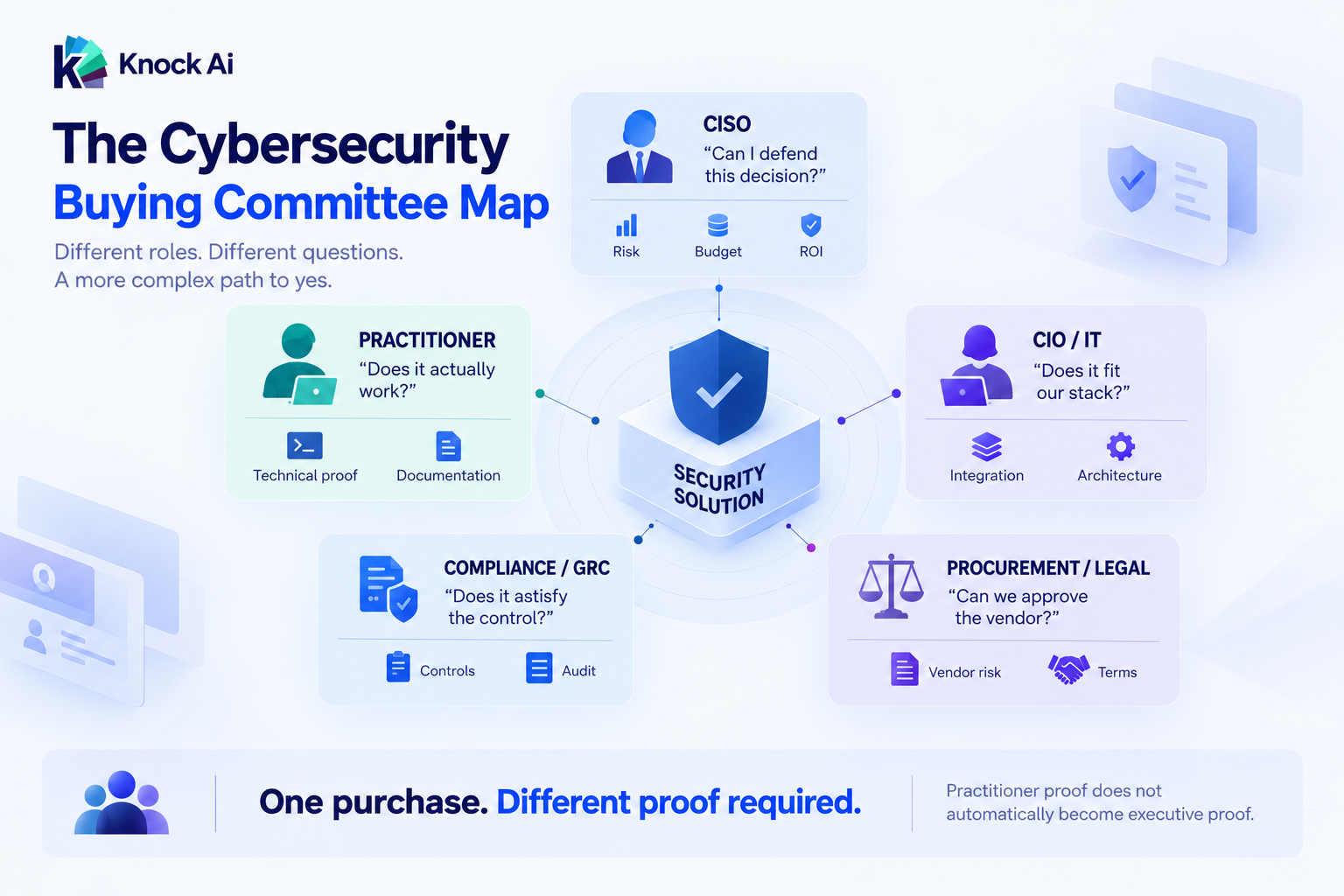
You are selling to two people who disqualify each other. The CISO needs board-defensible risk framing. The practitioner needs technical truth.
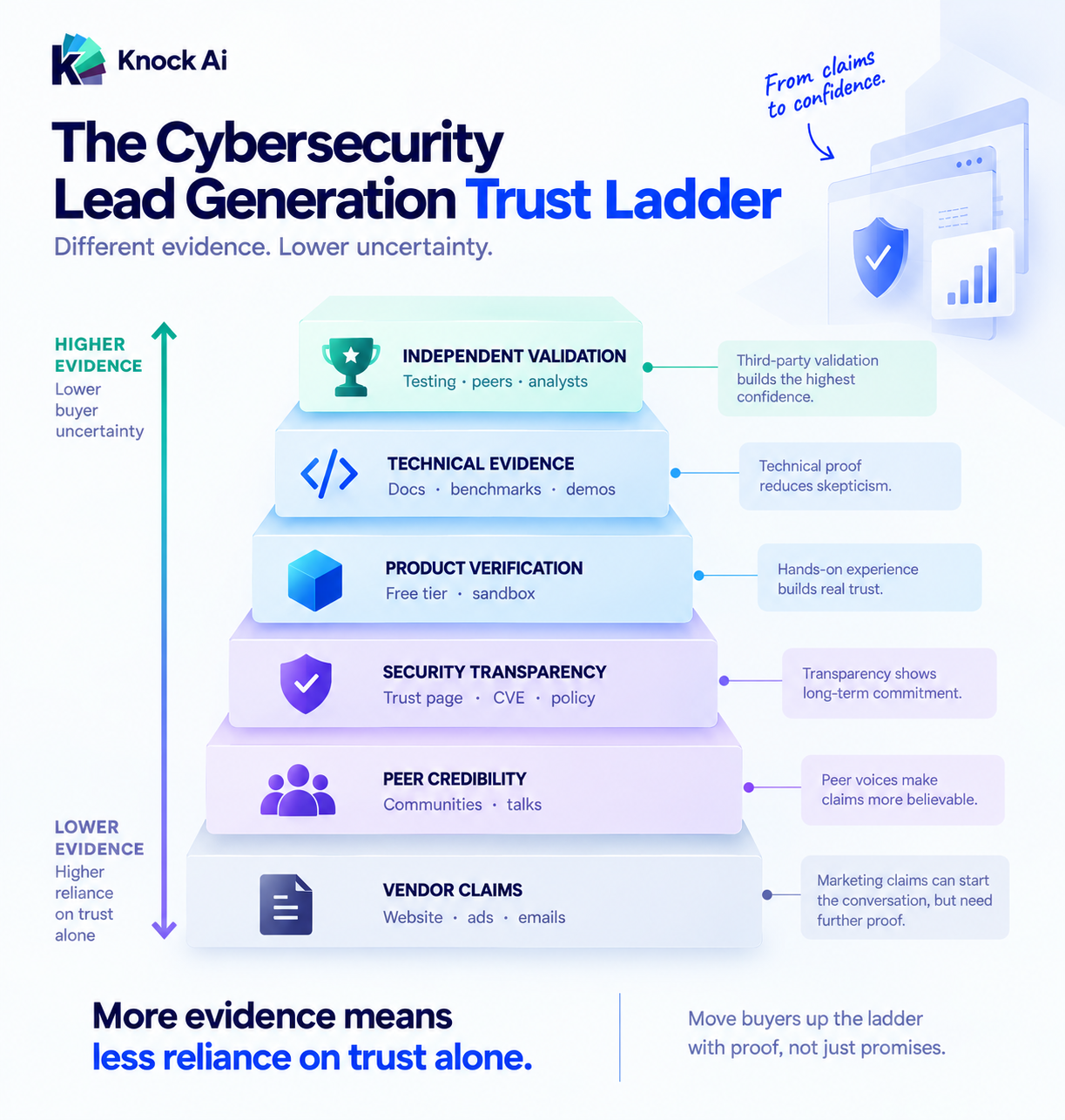
The strongest cybersecurity lead generation strategies let a skeptical buyer verify you without contacting anyone.
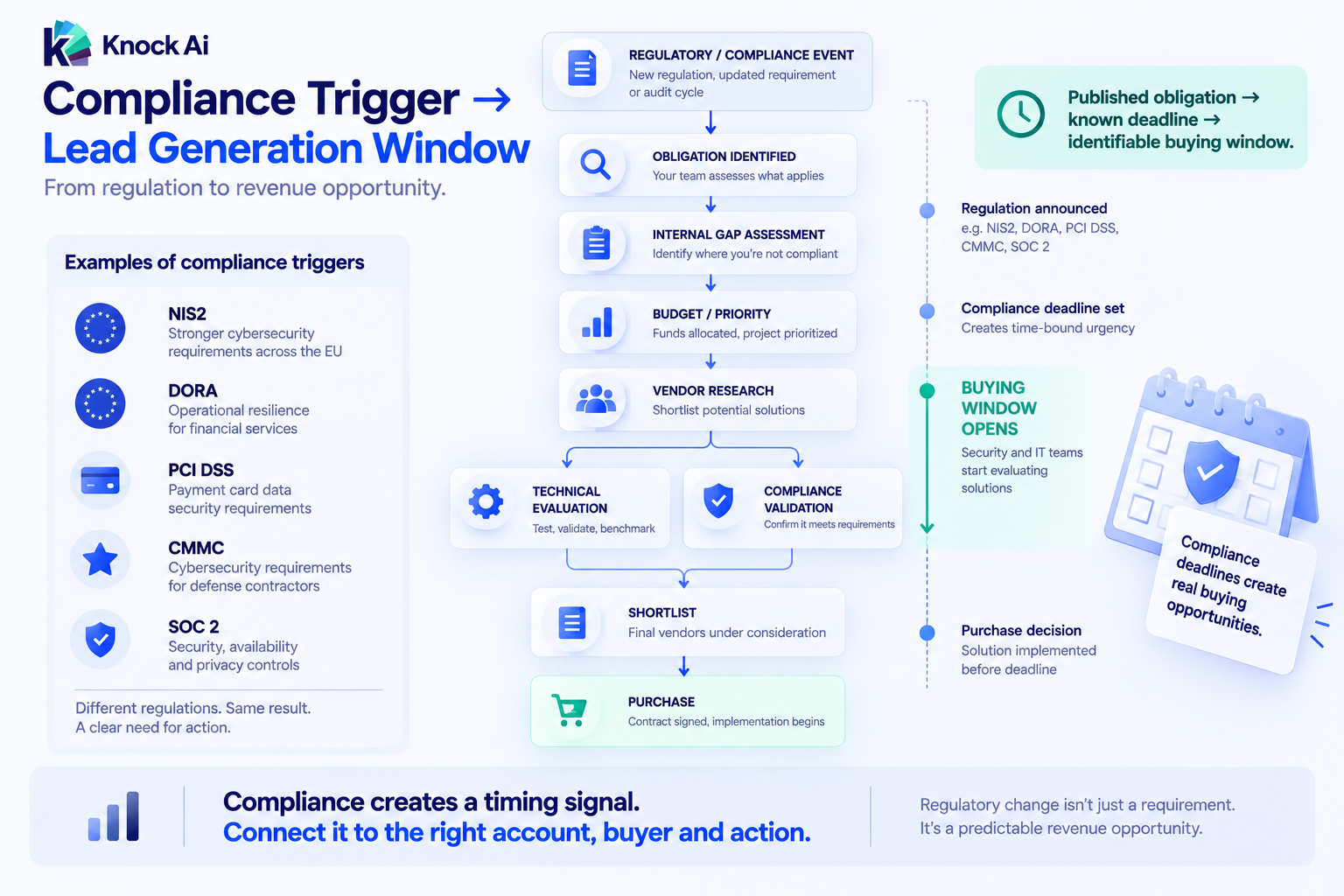
Compliance deadlines create dated, non-optional budget and are the most reliable timing signal in this market.
Lead generation for cybersecurity companies splits into two very different jobs depending on whether you sell software or services.
What is cybersecurity lead generation?
Cybersecurity lead generation is the process of attracting security buyers, qualifying them, and converting them into sales conversations for a security product or service. It is a vertical application of B2B lead generation, with one buyer characteristic that changes almost everything. In B2B cybersecurity lead generation, those buyers are usually CISOs, security engineers, SOC analysts, compliance leads and the procurement and legal functions attached to them.
A cyber security lead is an identified person or account that has shown enough interest to justify a sales conversation. Not every visitor is a lead. Not every form fill is worth routing to a rep.
The definition is the same as any other market. What makes cyber security lead generation different is the buyer. This audience is trained, paid and professionally incentivized to distrust unsolicited contact, verify claims independently, and withhold information from parties they have not vetted.
That single fact breaks most of the standard playbook.
How does cybersecurity lead generation work?
Every cybersecurity lead generation program is built from four motions. Almost every problem you will have belongs to one of them.
Motion
What it does for cyber security leads
Typical channels
Demand creation
Makes security buyers aware of you before they start looking
Technical content, SEO, security communities, conferences, open source, analyst relations
Demand capture
Converts existing interest into an identified cyber security lead
Starts conversations with security accounts that have not raised a hand
Email, LinkedIn, events, channel and MSSP referrals
Why cybersecurity lead generation is harder than other B2B lead generation
Joseph Carson, Chief Security Scientist and Advisory CISO at Delinea, said it plainly on the Audience 1st podcast:
"As marketers, we actually use the same techniques that attackers use. What's important is: How do we distinguish ourselves from the attackers?"
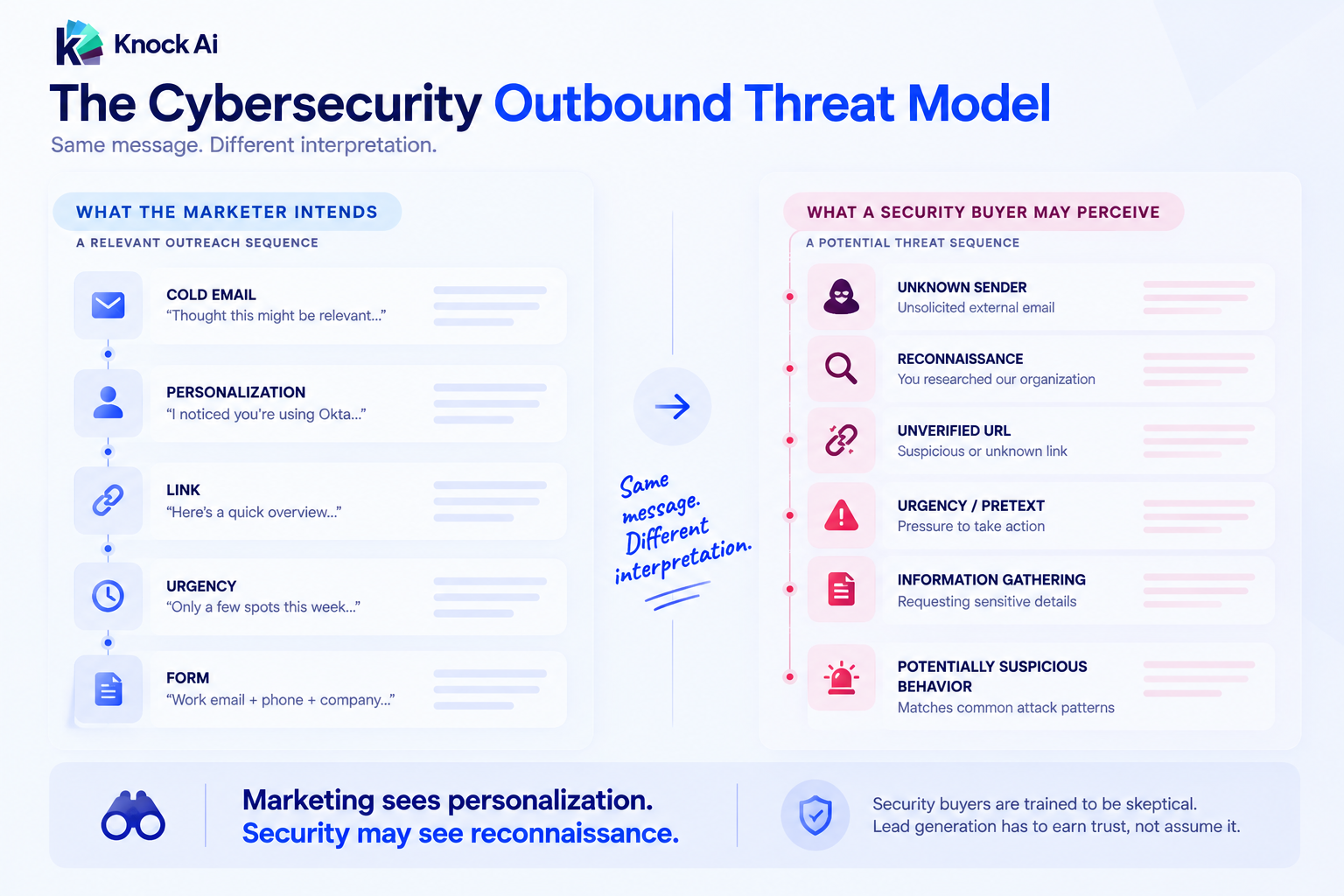
Look at a standard B2B outbound sequence through a threat model rather than a marketing funnel:
What you send
What the security buyer sees
Cold email from an unknown sender
Unsolicited external mail, unknown domain
A link to a landing page
Unverified URL from an unverified party
"I noticed you're running Okta and hiring a detection engineer"
Reconnaissance. Someone profiled the organization before contact
"Limited spots, responding this week"
Urgency framing, a standard pretext technique
A form requesting work email, phone and company size
Information gathering by an unverified party
A follow-up referencing a message they never opened
Persistence after non-engagement
Every line on the right is something a security awareness program trains staff to report. Cybersecurity lead generation is difficult because you are running that sequence at the people who write the training.
You are not competing for attention against other security vendors. You are failing a verification check before the content of your message is considered.
Once you see cyber security lead generation as a verification problem rather than an attention problem, the fixes stop being about better copy. The question becomes how a stranger proves legitimacy to someone whose job is assuming strangers are not legitimate. The answer is the same as in every other trust-scarce context: let them check you without having to trust you first.
See Knock AI in Action — Book Your Live Demo Today
Effective cybersecurity lead generation starts with knowing which security buyer you are actually targeting, because the message that converts one disqualifies you with another.
By company size
Segment
What they need
What changes about lead generation
SMB
Cost-effective coverage, simple deployment, often no dedicated security staff
Shorter cycles, IT generalist buyer, price sensitivity, self-serve matters
Mid-market
A small security team stretched across too much surface
Practitioner-led evaluation, strong free tier and documentation pull
Enterprise
Integration with an existing stack, compliance mapping, vendor consolidation
Long cycles, large buying committee, procurement and legal gates, ABM
By industry vertical
Vertical shapes the buying trigger more than it shapes the product.
Most cybersecurity lead generation programs write for one of these and assume the message carries to the rest. It does not. Risk framing delivered to a practitioner marks you as a salesperson. Technical depth delivered to a CISO leaves them without the thing they need to justify spend.
You need at least two sets of material, and the practitioner material has to be genuinely good, because the practitioner usually finds you first.
Why your cybersecurity lead generation is not working: 10 tactics that fail and why
Most advice on generating cybersecurity leads stops at "buyers are skeptical, build trust." True and useless. Here is what specifically breaks.
1. Cold email with a link. Many security organizations route inbound external mail through sandboxing and link rewriting. Your URL is detonated in a VM and rewritten by the gateway before a human sees it. Beyond delivery, the shape of the email is the shape of a phish.
2. Personalization built from research. "I saw you're using CrowdStrike and just posted a detection engineer role" is meant to show effort. To a security reader it demonstrates OSINT, which is the first phase of an intrusion. You performed reconnaissance on their organization and then told them about it.
3. Gated content behind a work email. You are asking an unverified party to hand over corporate contact details for a document. The careful ones give you a burner. Your list fills with deliverable addresses belonging to nobody and you cannot tell which.
4. Open and click tracking. Security gateways click every link in inbound mail to check it. Privacy-aware users block pixels. Your open rates are inflated by scanners and your click data includes machines. Any lead scoring model built on email engagement is scoring your prospect's security stack.
5. Visitor identification, used naively. Worth saying plainly even though it cuts against the category we work in. Identification coverage on a security audience is lower than on a general B2B audience, because security teams sit behind corporate proxies, use VPNs, run privacy browsers and block trackers at higher rates. Treat identification here as a partial signal, not a roster.
6. FUD and breach-timed outreach. Marketing off a fresh public incident has a name inside the industry. Allan Alford, former CISO and CTO at TrustMAPP, called it directly: "A huge percentage of vendors jumps on this ambulance chasing bandwagon. And I hate it." When Dani Woolf compiled what security professionals hate about their own industry across more than fifteen practitioner interviews, ambulance chasing appeared alongside FUD, buzzwords, egos and the disconnect between vendors and buyer reality.
7. Chatbots.Descope, an identity platform selling to developers and security teams, ran a HubSpot chatbot for about six weeks. Shane Poyar, Growth and Operations Manager, described the result: bot traffic, poor questions, and conversation quality that did not justify keeping it. They turned it off.
8. Gating the product behind a demo. A practitioner wants to run your tool against their own environment. Making them watch a rep click through a sandbox reads as hiding something.
9. Differentiation by claim. Every vendor in your category uses the same words. A CISO interviewed about vendor evaluation described being unable to assess XDR options because of the volume of identical "we do this" claims. When every claim is identical, claims carry no information and buyers fall back on peers and analysts.
10. Discovery calls that start from zero. By the time a security buyer books time, they have read your docs, checked your CVE history, looked for a public security page and asked two people in a private Slack. Opening with "tell me about your challenges" tells them you did not do comparable homework.
12 cybersecurity lead generation strategies that work in 2026
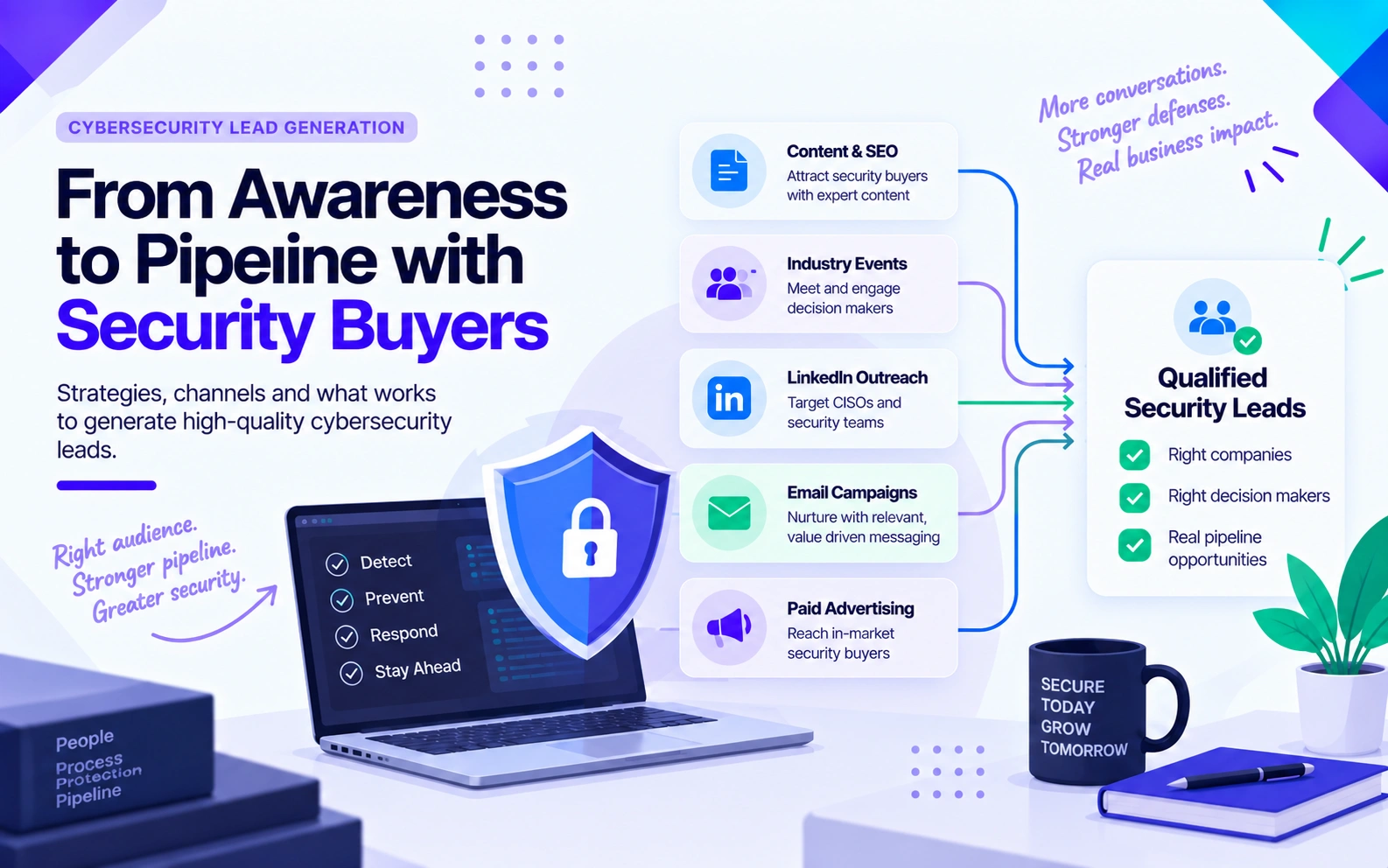
These cybersecurity lead generation strategies are ordered roughly by how much they move pipeline for a security software vendor. Each follows from the verification problem above rather than from generic B2B advice.
1. Publish documentation that closes the evaluation
Your docs are the real landing page in cybersecurity lead generation. Practitioners read them before your homepage. Gated, thin or obviously unused documentation ends the evaluation silently and you never learn it happened. Ungate everything, include architecture, failure modes and integration detail.
2. Make the product the lead magnet
A free tier, open source component or runnable sandbox does what no content offer can. It lets a practitioner form their own opinion without talking to anyone. ARMO, a Kubernetes security platform selling to DevOps and SecOps, described exactly this: their buyers preferred independent product testing and technical documentation over filling out forms and scheduling demos.
The cost is that it produces usage instead of contacts, which breaks the standard funnel. ARMO's VP Marketing Jonathan Kaftzan named the tension: a product-led motion means strong brands visit your site, and converting that into pipeline is the real challenge.
3. Publish pricing
In a market where every competitor says "contact us," a public price says you will not waste their time. It is one of the highest-trust signals available in cyber security lead generation, and it filters poor-fit companies before they consume a call. Optimizing the pricing page matters more here than in most markets.
4. Map your capability to named compliance controls
Generic security messaging is disqualified immediately. Mapping what you do to specific controls in NIS2, DORA, PCI DSS 4.0, CMMC 2.0 or SOC 2 converts an abstract value proposition into a dated obligation the buyer already has budget for.
5. Build peer credibility in security communities
This market runs on peer trust and there is no shortcut. What works is your engineers being genuinely useful in the places practitioners gather, under their own names, without pitching. Published research, detection content that works whether or not someone buys, conference talks with technical substance.
Dani Woolf's research at Audience 1st, built on practitioner interviews and an archive of bad vendor outreach submitted by practitioners, lands on the same conclusion repeatedly: in an industry where distrust is the default, giving something useful before asking for anything is what changes the relationship.
6. Earn third-party validation you cannot influence
MITRE ATT&CK evaluations, independent testing, published vulnerability research, analyst inclusion. Security buyers weight evidence they know you did not write.
7. Publish your own security posture
A security.txt file, a public vulnerability disclosure policy, a trust page with real artifacts rather than badge images, honest CVE history. A security vendor with no visible security posture is a specific red flag to this audience, and fixing it is cheap.
8. Run conference presence as evidence, not booth theater
RSA, Black Hat, BSides and vertical events are where this buyer concentrates. What converts is a talk with technical substance or a small technical dinner, not swag volume.
9. Treat review sites and marketplaces as shortlisting surfaces
Buyers shortlist through G2, Gartner Peer Insights, and AWS or Azure marketplace listings. Marketplace presence also solves a procurement problem, because budget can be drawn against an existing cloud commitment.
10. Use channel, MSSP and partner referrals
A referral arriving through an MSSP or integration partner carries borrowed trust and skips most of the verification problem. For many security vendors this is the highest-converting source available.
11. Publish your limitations
State what your product does not do, where it produces false positives, what the operational overhead looks like, which environments it does not fit. Every practitioner assumes there is a catch because there always is. Naming it yourself is the fastest way to be believed about everything else.
12. Remove the form at the moment of intent
The buyer who read your docs, ran your sandbox and asked a peer eventually wants to talk. That moment is brief, and the standard path in front of it is a form, then a wait, then an SDR email, then scheduling back and forth. Each step loses people who were ready at step one. That is the case for removing the form at high-intent moments.
Cybersecurity lead magnets that actually convert
Lead magnet performance in cyber security lead generation depends entirely on whether you sell software or services.
Lead magnet
Works for
Why
Free tier or open source component
Software vendors
Lets the practitioner test rather than read
Runnable sandbox or demo environment
Software vendors
Evaluation without a sales conversation
Compliance control mapping
Both
Ties your product to a dated obligation
Scoped free security assessment
Services firms only
Delivers real value before any commercial conversation
Redacted sample report
Services firms
Shows how you think and what a client receives
Original research or threat data
Both
Earns citation and peer distribution
Interactive calculator or benchmark
Both
Produces a qualification signal as a side effect
Generic ebook or whitepaper
Neither, mostly
Generates contact records rather than evaluation evidence
The common mistake in lead generation for cybersecurity companies is copying the services playbook as a software vendor. Advice to lead with a free attack surface scan is incoherent if the scan is your product.
Cybersecurity lead generation channels, ranked by what they actually produce
Channel
Best for
Time to first cyber security leads
Compounds
Technical content and SEO
Practitioner discovery
4 to 9 months
Yes
Documentation and free tier
Evaluation and conversion
Immediate once built
Yes
Security communities and peer presence
Trust before the search begins
2 to 6 months
Partly
Conferences and technical events
Enterprise and CISO access
Days after the event
Partly
Review sites and cloud marketplaces
Shortlisting and procurement
4 to 12 weeks
Partly
Channel and MSSP partnerships
Borrowed trust at enterprise scale
1 to 2 quarters
Yes
Analyst relations
Enterprise credibility
2 to 4 quarters
Partly
Paid search on high-intent terms
Capturing active evaluation
Days
No
LinkedIn ABM
Named account coverage
Weeks
No
Cold outbound
Small, researched target lists
Weeks
No
Content syndication
Volume over quality
Weeks
No
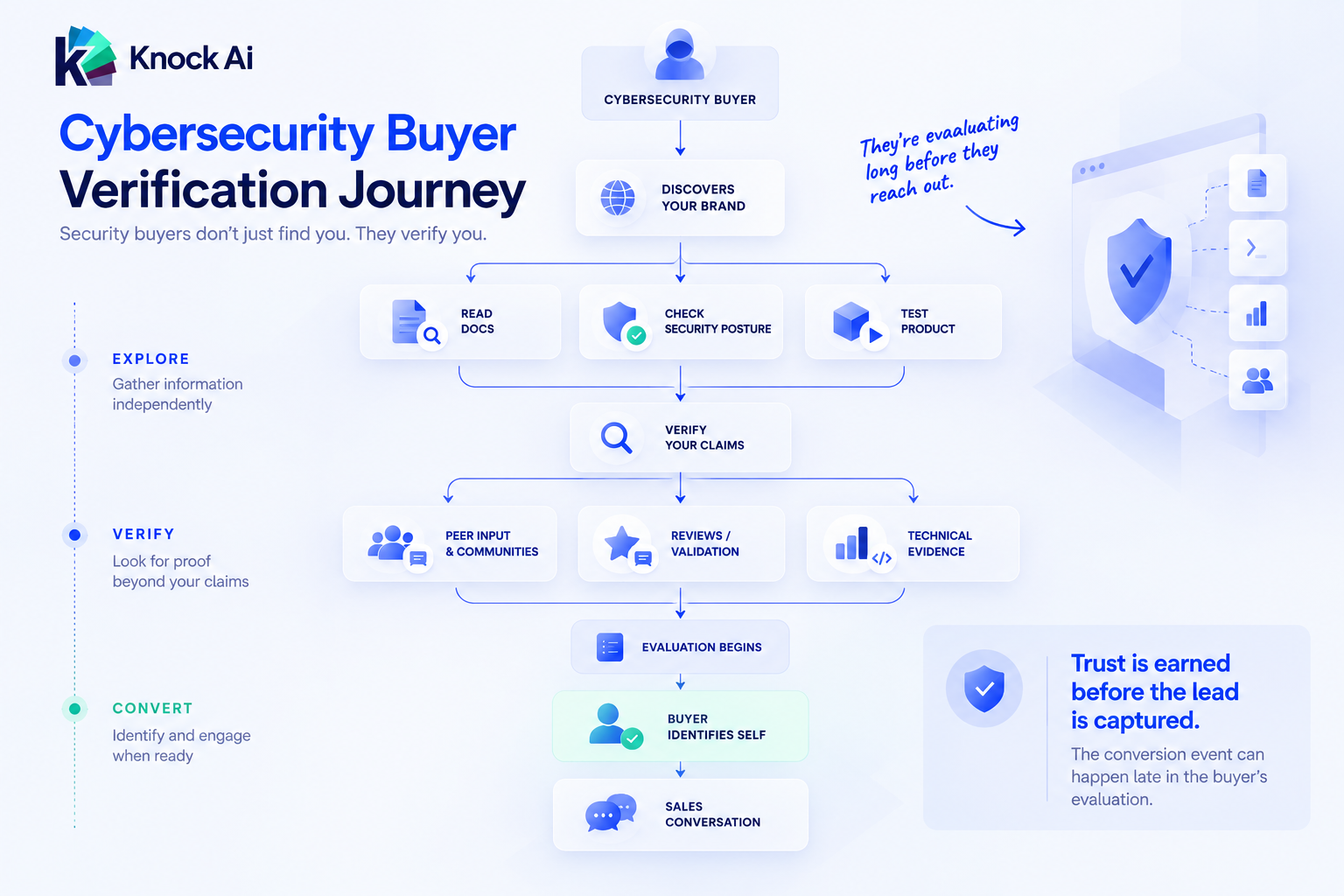
How security buyers evaluate before they generate a lead
Before a cybersecurity lead ever appears in your CRM, most of this has already happened.
They look for the product working: a free tier, an open source component, a container they can run.
They check what you say about your own security posture.
They ask people. Private Slack and Discord communities, former colleagues, local meetups, analyst inquiry calls. Peer input carries more weight here than in almost any other market, because everyone has been burned by a product that did not do what the deck claimed.
They look for validation you cannot influence, and they weigh buyer intent signals far less than vendors assume.
Only after all of that do they consider identifying themselves. Cyera, a data security company, described their version of the same problem: security practitioners tend to avoid forms and sales discussions, which made engagement the bottleneck rather than awareness.
Notice what is absent from that list. Webinar registrations, ebook downloads and sponsored newsletter placements generate contact records. They do not generate the evidence this buyer uses to decide.
When cybersecurity budget appears: compliance as a lead generation trigger
Compliance deadlines are the most reliable timing signal in cyber security lead generation, because unlike discretionary security spend, the budget is not optional and the date is published.
Framework
Who is in scope
Timing that creates budget
NIS2
Essential and important entities across 18 EU sectors
Transposition deadline was 17 October 2024 and most member states missed it. Obligations culminate October 2026. First formal audits for essential entities were due 30 June 2026. Penalties reach EUR 10 million or 2% of global revenue
DORA
EU financial entities and their ICT providers
Applicable since January 2025. Register of Information submissions run annually, the second due 20 March 2026. First coordinated supervisory enforcement is underway
SEC cyber disclosure
US public companies
Annual Form 10-K governance disclosure. The SEC's Cyber and Emerging Technologies Unit is active on disclosure accuracy
PCI DSS 4.0
Anyone handling cardholder data
Future-dated requirements now in force, including MFA across the cardholder data environment
CMMC 2.0
US defense contractors handling CUI or FCI
Enforceable since November 2025
SOC 2
SaaS vendors selling into enterprise
Annual Type II renewal cycles, often triggered by a customer security review
Two things make this actionable rather than merely informative.
Both NIS2 and DORA place the obligation on the management body personally. A framework that makes a board member liable moves security from an IT line item to a governance problem with a name attached, which is a different conversation than most vendors are trying to have.
And compliance-driven purchases behave differently from discretionary ones. The need is dated, the budget is approved against an obligation rather than a business case, and the evaluation is scoped to named controls.
What does not work is treating a public breach as the same kind of signal. It is timing, technically. It is also the behavior practitioners named as the thing they most dislike about vendors.
Cybersecurity lead generation for MSPs and security services firms
Lead generation for cybersecurity companies selling services follows different rules than it does for software vendors.
Services buyers are not evaluating a product. They are evaluating whether you are competent and whether hiring you is defensible if something goes wrong.
Proof beats positioning. A redacted sample report does more than any amount of website copy.
Scope narrowly. "We do pen testing" describes several thousand firms. "We do pen testing for fintechs preparing for DORA" describes a specific buyer with a dated obligation.
A scoped free assessment genuinely works here, in a way it cannot for a product vendor. Deliver findings as a written document, present them live rather than emailing a PDF, and make the remediation path obvious.
Named references are the whole game. Small early clients who will talk to a prospect beat a larger logo who will not.
Certifications are table stakes. They get you considered. They do not get you chosen.
Cybersecurity lead generation tools
Tools do not create demand. They lower the cost of capturing and acting on demand that already exists, and the categories that matter are identification, intent scoring, enrichment, engagement, qualification, routing and scheduling.
The common failure is buying against the wrong diagnosis. Identification software does nothing for a company with no traffic. A better form does nothing when cyber security leads sit unrouted for two days.
Where Knock AI fits is the capture and signal side, for security companies that already generate buyer interest and lose it between the visit and the conversation. Descope's experience after replacing their chatbot: customers started choosing conversation over a demo request, and conversations were about pricing, product and fit rather than bot noise. Port, an internal developer portal company, found during a HubSpot audit that leads had been landing with support engineers via Intercom when what they actually wanted was a meeting and a quote.
One caveat a security reader will raise immediately: moving a conversation off your website into a messaging channel is itself a pattern this audience distrusts. The difference is who initiates. The buyer starts it, on a channel they already use, at a moment they chose. That is the opposite of an unsolicited approach, and the realistic alternative is a form that routes into a sequence.
Should you use a cybersecurity lead generation agency?
Most pages ranking for cyber security lead generation services are agencies selling appointment setting. That model can work, with conditions.
It tends to work when your ICP is small and nameable, your offer is narrow, and you need coverage faster than you can hire. It tends to fail when the agency runs volume outbound into security inboxes, because that reproduces every failure mode in this article at scale and burns your domain reputation doing it.
The question to ask any cybersecurity lead generation company is not how many meetings they book. It is what happens to the accounts that say no, and whether the outreach would survive being posted publicly by the recipient. In this market, it often is.
How to measure cybersecurity lead generation
Standard funnel metrics are unreliable on this audience for the mechanical reasons above.
Whether closed-won accounts had prior peer, community or analyst contact
Cyber security lead count
Pipeline per named account, and multi-person account engagement
The metric worth building is multi-person account engagement, which is a buyer intent signal rather than a lead signal. When the buying committee spans a practitioner, a security leader, compliance, procurement and legal, two or more people from one account engaging inside a short window beats any individual's behavior.
Cybersecurity lead generation FAQs
What is cybersecurity lead generation?
Cybersecurity lead generation is the process of attracting security buyers, qualifying them and converting them into sales conversations for a security product or service. The mechanics match other B2B markets. The difference is that this audience is trained to distrust unsolicited contact and verify claims independently, which breaks most standard tactics.
Why is cyber security lead generation so difficult?
Because standard outbound is structurally similar to social engineering. Cold email with a link, personalization built from research, urgency framing and information requests are all patterns security professionals are trained to detect and report. The buyer is not ignoring you. They are classifying you as an unverified party making an unsolicited approach.
What are the best cybersecurity lead generation strategies?
For software vendors: ungated documentation, a free tier or sandbox, published pricing, compliance control mapping, peer credibility in security communities, third-party validation, and removing the form at the moment of intent. For services firms: a scoped free assessment, redacted sample reports and named references. There is no universal best because the right strategy depends on which of the four motions is failing.
How do you generate cybersecurity leads without cold email?
Make yourself verifiable without contact. Ungated docs, public pricing, a free tier, an honest limitations page and visible security posture. Then earn peer credibility through useful technical work in the communities your buyers already use. Cold email still works on a small researched list with a specific reason for contact.
What lead magnets work best for cybersecurity companies?
For software vendors, the product itself: free tier, open source component or sandbox. Content offers underperform because this buyer wants to test rather than read. For security services firms, a scoped free assessment delivered as a real written report is usually the strongest single offer.
How long is the cybersecurity sales cycle?
Enterprise security purchases commonly run several months and involve a practitioner evaluating technically, a security leader assessing risk and budget, plus procurement and legal. Compliance-driven purchases move faster than discretionary ones because the deadline and budget already exist.
How do you reach CISOs for cybersecurity lead generation?
Usually not directly and rarely first. The practitioner who will use the product often finds you before the CISO does. When you do reach the CISO, what lands is a peer's specific outcome, a named compliance framework they are subject to, and evidence you understand their environment before asking for time.
Does buyer intent data work for cybersecurity lead generation?
Partially, and less well than vendors claim. Security teams sit behind corporate proxies and VPNs, use privacy browsers and block trackers at higher rates than general B2B audiences, so identification coverage and behavioral signals are both weaker. Treat what you capture as a partial signal.
What should a cybersecurity company do when a competitor is breached?
Nothing publicly. Marketing off a fresh incident is known inside the industry as ambulance chasing and practitioners name it among the things they most dislike about vendors. The reputational cost with your exact buyer outweighs the short-term attention.
How do you get clients for a cyber security company that is just starting?
Narrow the offer until it describes a specific buyer with a specific obligation. Build proof you can show rather than claims you can make: sample reports, small named references, published technical work. Start with smaller clients who will talk about results, and work a short researched list rather than a bought one.
Why are our cyber security sales leads low quality?
Two common causes. Either the offer attracts researchers and students rather than qualified cyber security leads, which happens with generic gated content, or your qualification is running on engagement data this audience distorts. Check whether your scoring model depends on email opens and clicks before concluding the leads are bad.
Should cybersecurity companies publish pricing?
It is one of the strongest trust signals available. Every competitor says "contact us," so a public price says you will not waste their time and filters poor-fit companies before they consume a call. The cases against it are genuine, mainly complex usage-based models, but "our competitors do not" is not one of them.
Are cybersecurity lead generation services worth it?
They can work when your ICP is small and nameable and you need coverage faster than you can hire. They fail when the agency runs volume outbound into security inboxes, which reproduces every failure mode above at scale. Ask what happens to accounts that say no, not how many meetings get booked.
Which industries buy the most cybersecurity?
Financial services, healthcare, government and defense, technology and critical infrastructure lead, largely because each carries a named regulatory obligation. Vertical shapes the buying trigger more than it shapes the product.
What metrics should we track for cybersecurity lead generation?
Qualified conversations with named practitioners, documentation and trial engagement, multi-person account engagement within a short window, and pipeline per named account. Avoid building decisions on email opens and clicks, which are contaminated by security gateways, and on form conversion rate, which this audience suppresses deliberately.


.svg)


.svg)
.svg)
.svg)


.svg)
.svg)


.svg)