The best lead enrichment tool depends on what you need to know about a lead and what you want to do with that information next. Traditional lead enrichment takes incomplete records and adds useful context such as job title, company, industry, revenue, technology, and contact details, helping sales and marketing teams better understand who they are targeting.
Modern lead enrichment, however, is moving beyond static data. Instead of simply filling missing fields, newer platforms can connect buyer identification → enrichment → intent → qualification → activation, giving teams a way to act on changing buyer behavior.
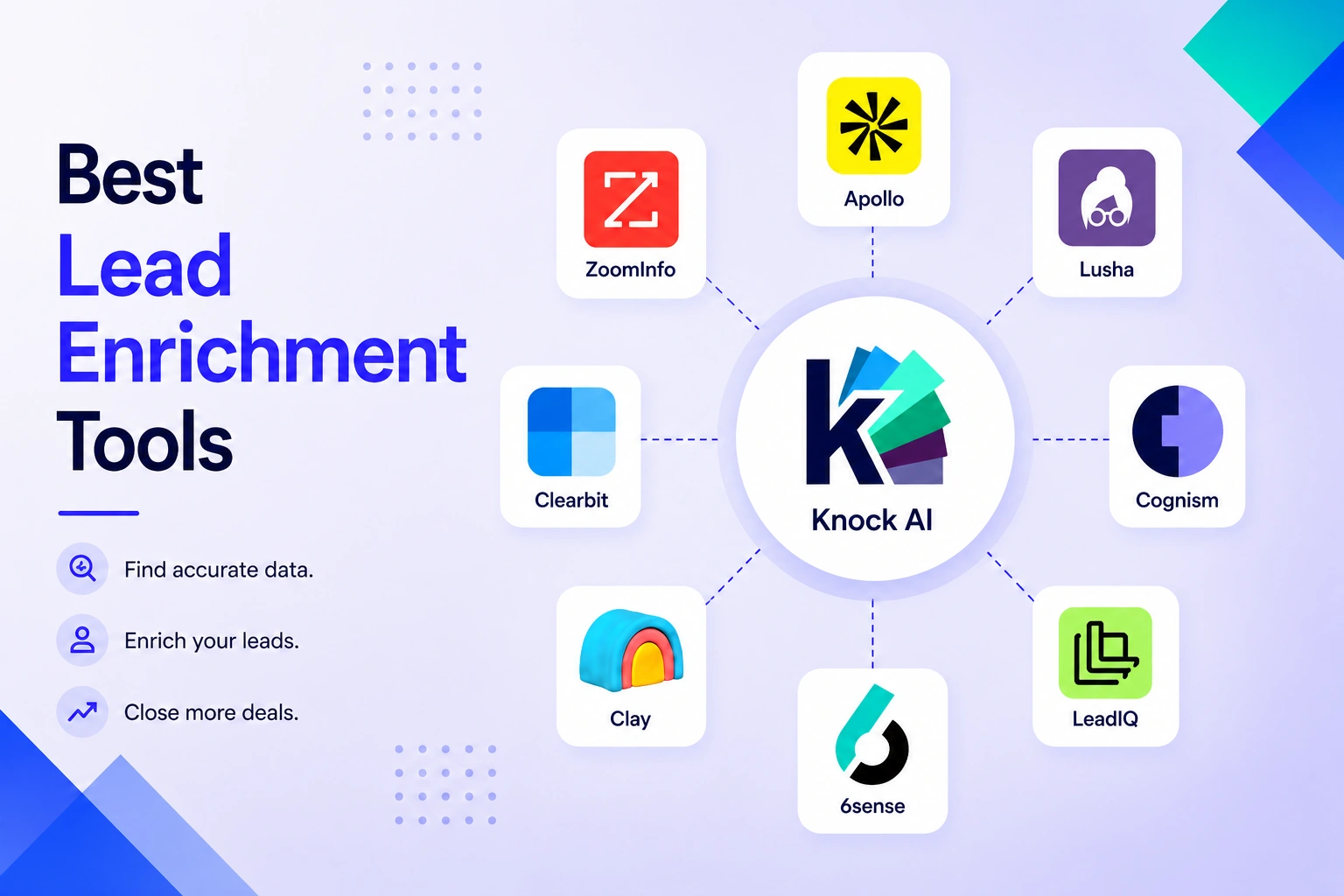
In this guide, we compare Knock AI, Apollo, Clay, Cognism, Lusha, Clearbit/Breeze Intelligence, ZoomInfo, 6sense, and Leadfeeder across their enrichment capabilities, data sources, intent signals, workflows, and best-fit use cases.
Some tools enrich records you already have. Others can identify unknown visitors or buyers, add context in real time, and use that information to determine what should happen next.
What Is Lead Enrichment?
Lead enrichment is the process of adding missing or updated information to a lead record so sales and marketing teams can better understand, qualify, prioritize, and engage that lead. Instead of relying only on the information a prospect provides, lead enrichment adds additional context that can make the record more useful for sales and marketing decisions.
Depending on the platform and data sources available, enrichment can add information such as name, job title, company, work email, phone number, location, industry, company size, revenue, funding, technology, and LinkedIn or other professional profile information. It can also include broader firmographic, technographic, behavioral, and buyer-intent data.
There are two important approaches to lead enrichment:
Static enrichment: Lead record → append data
This is useful when teams need to complete or update existing CRM and prospect records.
This approach connects enrichment with what a buyer is doing now. Instead of only asking, “Who is this lead?”, teams can also determine “What is this buyer doing, how relevant is that activity, and what should happen next?”
That distinction is increasingly important for B2B teams that want enrichment to support not just cleaner data, but better qualification, prioritization, and timely sales action.
What Information Can Lead Enrichment Tools Add?
Lead enrichment tools can add different types of information depending on their data sources, coverage, and intended use case. The most useful platforms go beyond basic contact details and provide company, professional, technology, behavioral, and intent context that helps teams make better decisions.
Data type
Examples
Why it matters
Contact data
Email, phone, title, LinkedIn
Identify and reach the right person
Company data
Industry, size, revenue, location
Determine company fit
Firmographic data
Revenue, headcount, geography, growth
Evaluate ICP fit
Technographic data
Software, infrastructure, tools
Understand the company's technology environment
Professional data
Role, seniority, job changes
Understand decision-making context
Intent data
Research, engagement, behavioral signals
Identify potential buying interest
Behavioral data
Visits, clicks, content activity
Understand current engagement
CRM context
Owner, lifecycle stage, account status
Determine the appropriate workflow
Conversation context
Questions, use case, urgency, objections
Improve qualification and engagement
The exact information available varies by provider. A contact database may specialize in emails and phone numbers, while a broader GTM platform may combine enrichment with intent, behavioral activity, CRM data, or conversation context.
The value of enrichment is not the number of fields added. It is whether the additional context improves a sales or marketing decision.
How Does Lead Enrichment Work?
Lead enrichment typically follows a workflow that turns an incomplete lead record into actionable sales and marketing context:
Input: A lead enters through a form, CRM, website, event, campaign, product signup, or another source.
Identify: The enrichment platform determines the person, company, or account associated with the record.
Match: It matches the available information against one or more data sources.
Enrich: Additional contact, company, firmographic, technographic, or professional attributes are added.
Verify: The platform checks available information for accuracy, completeness, or data quality.
Score: Enriched data can contribute to lead scoring, ICP evaluation, or prioritization.
Activate: The resulting context can trigger personalization, outreach, qualification, routing, or other workflows.
Sync: Relevant information is written back to the CRM, marketing platform, or another system where the team works.
For example, a form submission might provide only a name and work email. Enrichment can add the person's role, company size, industry, technology, and other relevant context. If the same buyer is also showing meaningful website activity, that behavioral information can make the record considerably more actionable.
Modern lead enrichment is increasingly moving from “append data” to “understand the buyer and trigger the next action.”
That shift is especially important when enrichment is connected to buyer intent, qualification, engagement, and revenue workflows, rather than treated as a standalone data-cleaning process.
Lead Enrichment vs. Contact Enrichment vs. Company Enrichment vs. Intent
These terms are often used interchangeably, but they describe different layers of the buyer data and intelligence process.
Term
What it means
Lead enrichment
Add information that makes an individual lead more useful for sales and marketing
Contact enrichment
Add or update person-level information such as role, seniority, email, or phone
Company enrichment
Add information about the organization, including industry, size, revenue, location, or technology
CRM enrichment
Keep existing CRM records complete, accurate, and up to date
Website visitor enrichment
Identify and add context to companies or people visiting your website
Intent enrichment
Add behavioral or research signals that indicate potential buying interest
Real-time enrichment
Enrich a record as activity occurs instead of relying only on periodic data updates
The distinction becomes more useful when thinking about what the data enables.
Enrichment tells you more about the buyer. Intent tells you more about whether the buyer is active. Activation determines what happens next.
For example, knowing that someone is a VP of Sales at a 500-person SaaS company is useful enrichment. Knowing that the same person has repeatedly visited your pricing page, clicked a product link, and engaged with a sales asset adds behavioral and intent context. The next step could then be qualification, personalized engagement, routing, or scheduling.
This is why modern lead enrichment is increasingly becoming part of a broader buyer intelligence and revenue workflow, rather than simply a process for filling missing CRM fields.
What Should You Look for in a Lead Enrichment Tool?
Choosing a lead enrichment tool is not just about how many contacts a provider can return. The more important question is whether the data is accurate, timely, relevant, and actionable for your sales workflow.
1. Data accuracy
Check the reliability of emails, phone numbers, job titles, company information, and other enriched fields. Poor data can create more work for sales teams instead of reducing it.
2. Data freshness
Look for systems that can reflect changes such as job moves, company growth, funding, technology adoption, and other changes that affect lead quality.
3. Enrichment depth
Consider whether the platform covers contact, company, firmographic, technographic, behavioral, and intent data, rather than only basic contact fields.
4. Data sources
Understand whether enrichment comes from proprietary databases, multiple providers, web research, professional networks, first-party activity, or your CRM.
5. Real-time capability
Can the platform enrich a buyer while they are interacting with your business, rather than only enriching records periodically?
6. What happens after enrichment?
The strongest workflows can use enriched context for scoring → qualification → engagement → routing → scheduling → CRM workflows.
7. Can it connect enrichment to revenue?
Do not stop at record enriched. Look for a measurable path from buyer signal → action → qualified lead → meeting → opportunity → revenue.
This last criterion is particularly important when evaluating modern AI-powered lead enrichment tools. The real value is not simply adding more data to a record. It is using that context to make a better decision while the buyer is still active.
9 Best Lead Enrichment Tools Compared
Lead enrichment tools vary significantly in where they begin and what they do with the information they find. Some primarily enrich existing CRM records, while others help identify unknown visitors, add real-time buyer context, or activate intent. The table below compares them by workflow starting point, enrichment depth, behavioral intelligence, activation capabilities, and pricing, so you can see which type of enrichment system actually fits your GTM motion.
Tool
Pricing
Best for
Where enrichment starts
What it can identify / enrich
Intent & behavioral intelligence
What happens after enrichment
Best fit
Knock AI
From $2,000/mo for Pipeline Foundation; from $3,500/mo for Pipeline Acceleration; Enterprise custom
Real-time buyer enrichment + activation
Live buyer activity across website and off-site touchpoints
Person + company identity, contact data, firmographics, CRM context, attribution, conversation context, advanced enrichment
First-party intent, page views, clicks, repeat visits, recency, frequency, engagement patterns, intent score and intent type
AI qualification, Chat, AI agents, LinkedIn, Slack, WhatsApp, Telegram, routing, human handoff, scheduling, CRM sync, follow-up
B2B teams converting active buyer demand into pipeline
Apollo
Free; Basic $49/user/mo annual or $59 monthly; Professional $79/$99; Organization $119/$149
Prospecting + enrichment + engagement
Prospect database, inbound leads and target accounts
Contact + company data, emails, phones, firmographics and prospect information
Buyer signals, website visitor capabilities and engagement activity
Sequences, email, calling, LinkedIn, workflows, AI personalization, routing and scheduling
Website visit → company identification → enrichment → lead generation
The important thing about Knock AI is that enrichment is not the endpoint. It can use the information it discovers to determine who the buyer is, what they are interested in, how strong the intent is, whether they fit the ICP, and what should happen next.
Best Lead Enrichment Tools
Knock AI
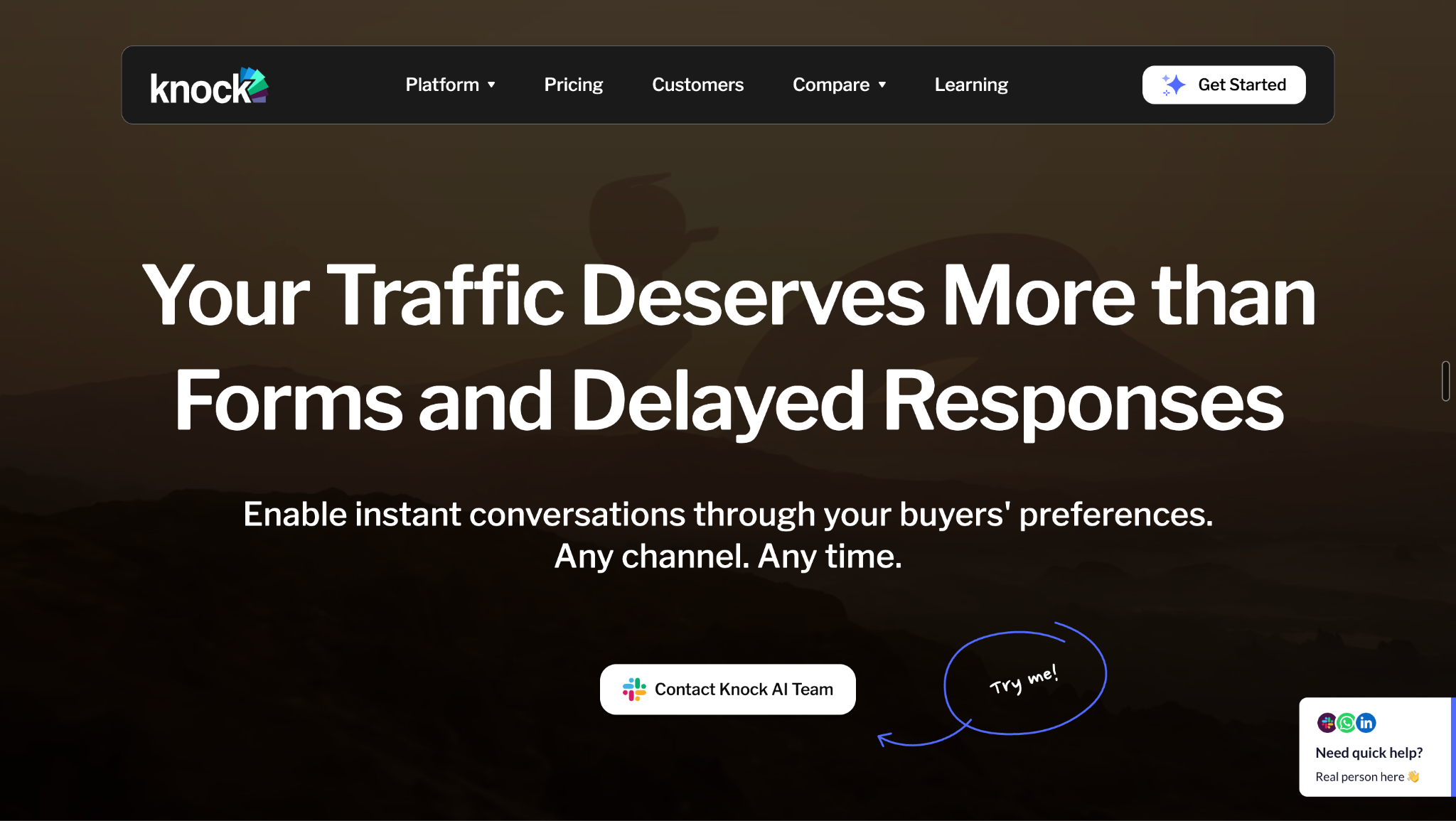
Knock AI combines lead enrichment with buyer identification, first-party intent, AI qualification, engagement, routing, and scheduling. Unlike a traditional enrichment database, Knock AI can start with a buyer actively interacting with your business and use that activity to determine who the buyer is, what they are interested in, and what should happen next.
Identify the buyer
Knock Reveal helps surface company and buyer activity from your website, while Knock Links extend that visibility to off-site touchpoints such as LinkedIn, email, PDFs, social posts, marketplaces, and event or QR-code campaigns. Knock AI can build context across sessions and devices when a deterministic identifier is available, helping connect activity to the same person rather than treating every visit as a separate interaction.
Enrich the buyer in real time
Knock Enrich can enrich connected buyers with contact and company information such as role, company size, industry, location, revenue, funding, technology, attribution, CRM context, and other available company data. That information can then be used in routing and scheduling decisions, rather than simply being added to a CRM record.
The key distinction is:
Knock AI uses enrichment as decision context, not simply as a way to make a CRM record more complete.
Understand intent
Knock AI combines website activity, CTA and link clicks, page views, conversations, and Knock Link engagement into a first-party intent timeline. Its Intent Score considers signal type, recency, and volume, while Intent Type can classify contacts as Buying, Partnership, Support, or Job Seeker.
This allows teams to distinguish meaningful buying activity from traffic that should not receive sales attention.
Activate enriched buyers
Enrichment becomes actionable through Knock Chat and AI Intent Agents. The agents can greet buyers, ask qualification questions, answer from approved sources, evaluate intent, book meetings when enabled, and hand qualified conversations to human reps. Buyers can interact through channels such as Slack, WhatsApp, LinkedIn, and other supported messaging flows.
Route, schedule, and follow up
Teams can route buyers using criteria such as company size, industry, geography, funding, CRM ownership, territory, tier, intent, and round-robin rules. Knock Scheduling can then schedule meetings within the conversation, including when a rep is unavailable, while preserving the conversation context.
Connect enrichment to revenue
Knock AI connects buyer activity → identity → enrichment → intent → qualification → action → meeting → CRM → pipeline. Its HubSpot, Salesforce, and Marketo integrations can sync enriched fields, intent, attribution, ownership, meeting information, and conversation data. Its Website Revenue Report connects website intent activity with leads, accounts, opportunities, and revenue.
Knock AI offers: Pipeline Foundation starting at $2,000/month, Pipeline Acceleration starting at $3,500/month, and Enterprise as custom pricing. The plans shown include capabilities such as auto-identification and enrichment, AI SDR qualification, meeting booking, advanced enrichment and intent routing, CRM sync, and custom routing depending on the plan.
In short, Knock AI is not simply enriching a lead. It is using enrichment and buyer intent to help determine whether the buyer matters, engage them, qualify them, route them, and move them toward revenue.
Apollo
Best for prospecting and enrichment in one platform.
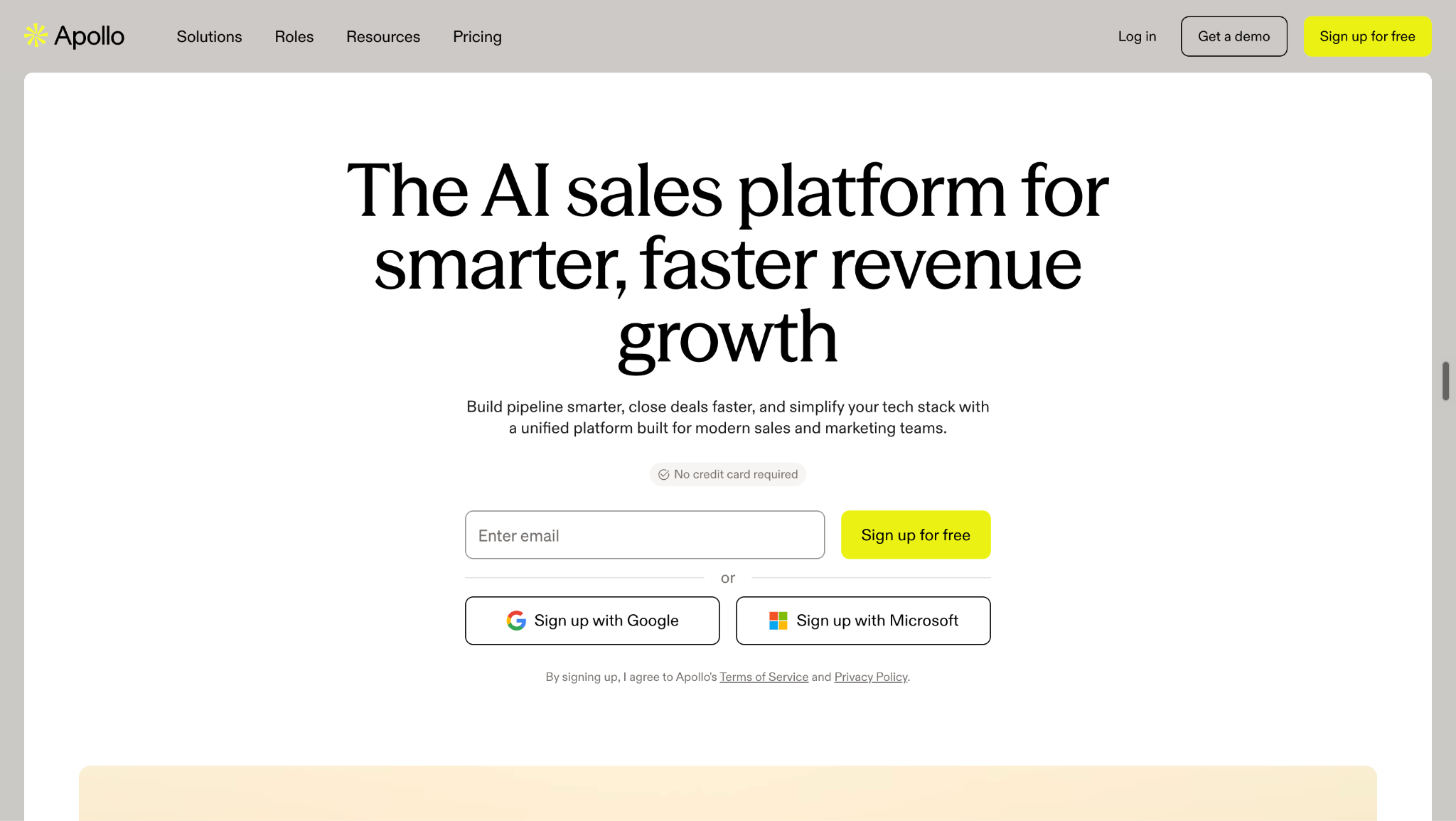
Apollo combines a large B2B database with contact and company enrichment, prospect research, AI-powered workflows, lead scoring, and sales engagement. Teams can find prospects, enrich records, research accounts, build lists, and move those contacts into sequences involving email, calling, and other outreach workflows. Its broader platform approach is one reason Apollo frequently appears in comparisons of lead enrichment and sales intelligence tools.
Apollo also supports enrichment workflows that can combine data sources and improve prospect records before they enter sales workflows. AI features can assist with research, personalization, prioritization, and execution.
Pricing:Apollo has a Free plan. Its paid plans shown in the current pricing data are Basic at $49/user/month billed annually or $59/user/month billed monthly, Professional at $79/$99, and Organization at $119/$149. Organization requires a minimum of three users. Credits and additional functionality can affect the total cost.
The fundamental distinction is:
Apollo starts with prospects. Knock AI can start with buyer activity.
Clay
Best for multi-source enrichment and custom GTM workflows.
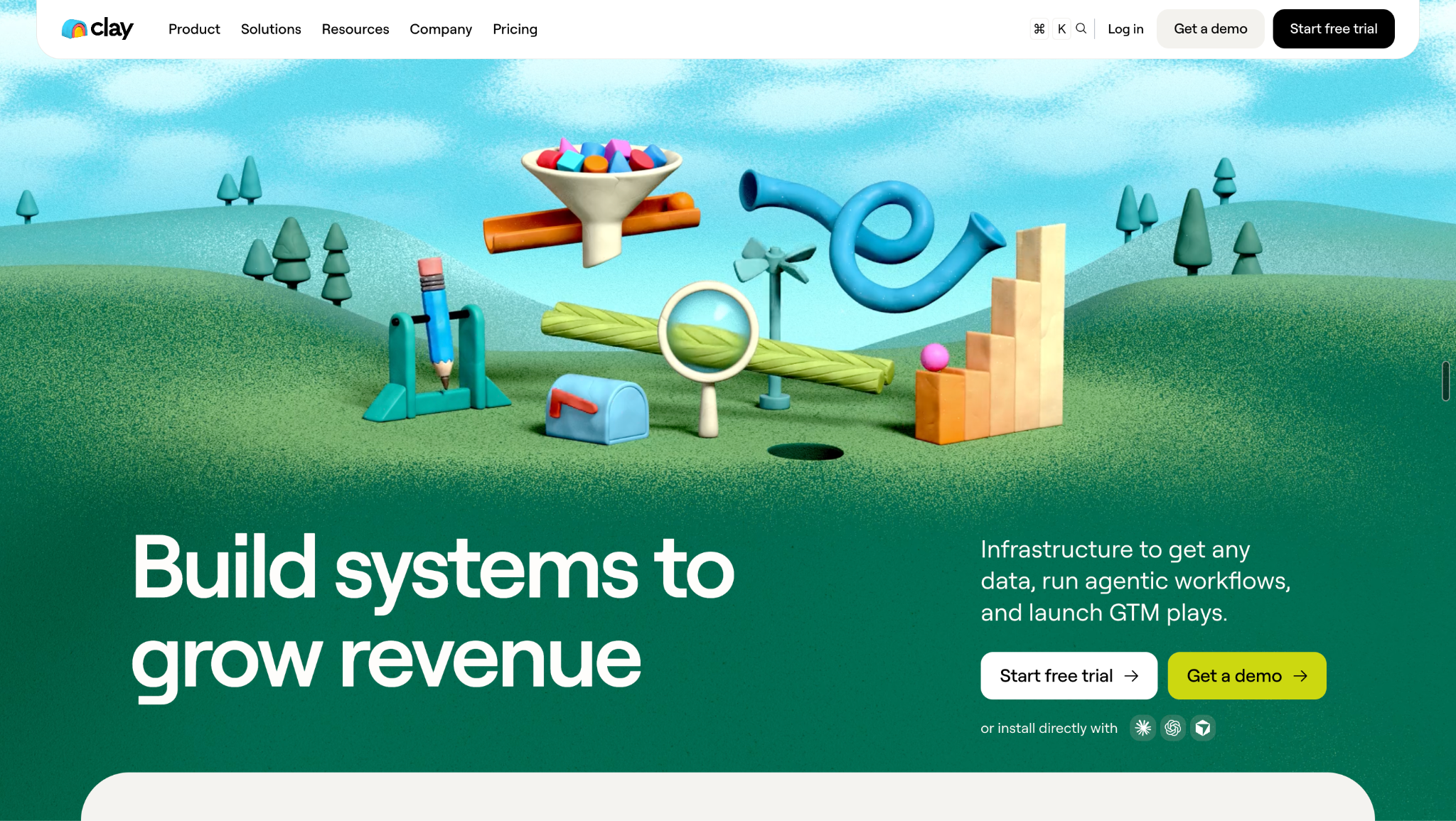
Clay takes a fundamentally different approach to lead enrichment by letting teams combine multiple data providers, waterfall enrichment, web research, AI, and custom workflows. Instead of relying on one database, teams can construct enrichment workflows that pull information from different sources and use AI to research, qualify, personalize, and transform the resulting data.
Clay also supports AI agents, custom workflows, personalization, data synchronization, and GTM orchestration. This makes it particularly useful when a RevOps or GTM team wants control over how enrichment is performed and what happens with the resulting data.
Pricing: Clay has a Free plan. Its current paid pricing shows Launch at $167/month, Growth at $446/month, and Enterprise with custom pricing. The paid plans use action and data-credit allowances, so actual usage can affect the economics.
The distinction is:
Clay gives teams the flexibility to construct their enrichment system. Knock AI provides a purpose-built path from buyer activity to enrichment, intent, qualification, and action.
Cognism
Best for global B2B contact enrichment.
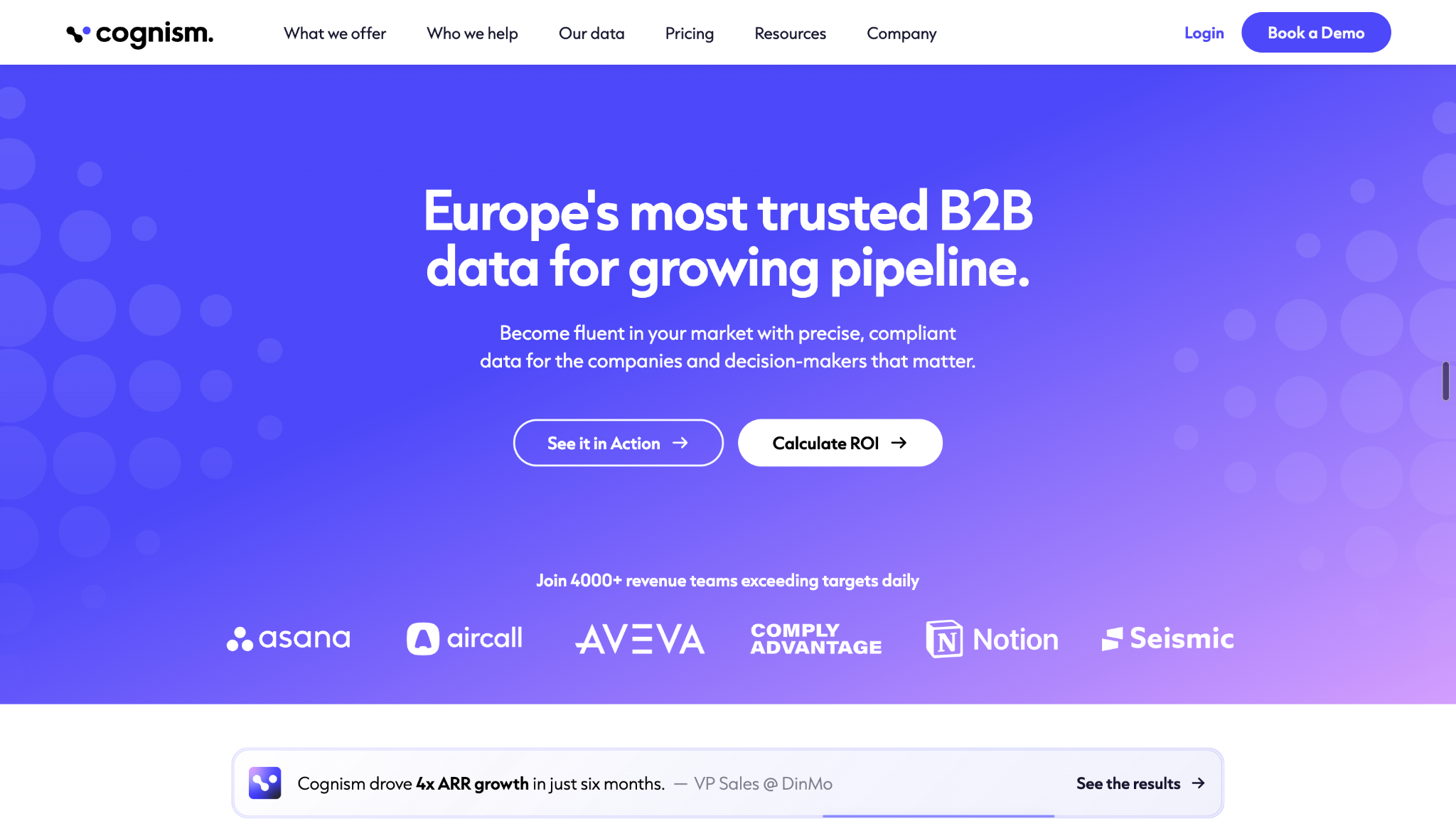
Cognism focuses on B2B contact and company intelligence, with particular emphasis on international coverage, phone-verified mobile numbers, enrichment, compliance, and sales activation. Teams can use it to identify relevant prospects, enrich contact and company records, and build prospecting workflows across different markets.
Cognism also offers intent and signal capabilities, allowing teams to add buying context alongside traditional contact and company information. Its positioning makes it particularly relevant for organizations where international coverage and compliant prospect data are important considerations.
Pricing: Cognism does not publish standard public pricing. It offers: Grow at approximately $15,000/year plus about $1,500 per user/year, and Elevate at approximately $25,000/year plus about $2,500 per user/year. Annual contracts are required, with onboarding costs potentially adding to the total.
The fundamental distinction is:
Cognism is primarily about global prospect data and enrichment. Knock AI is about using first-party buyer behavior to identify, enrich, understand, and activate buyers.
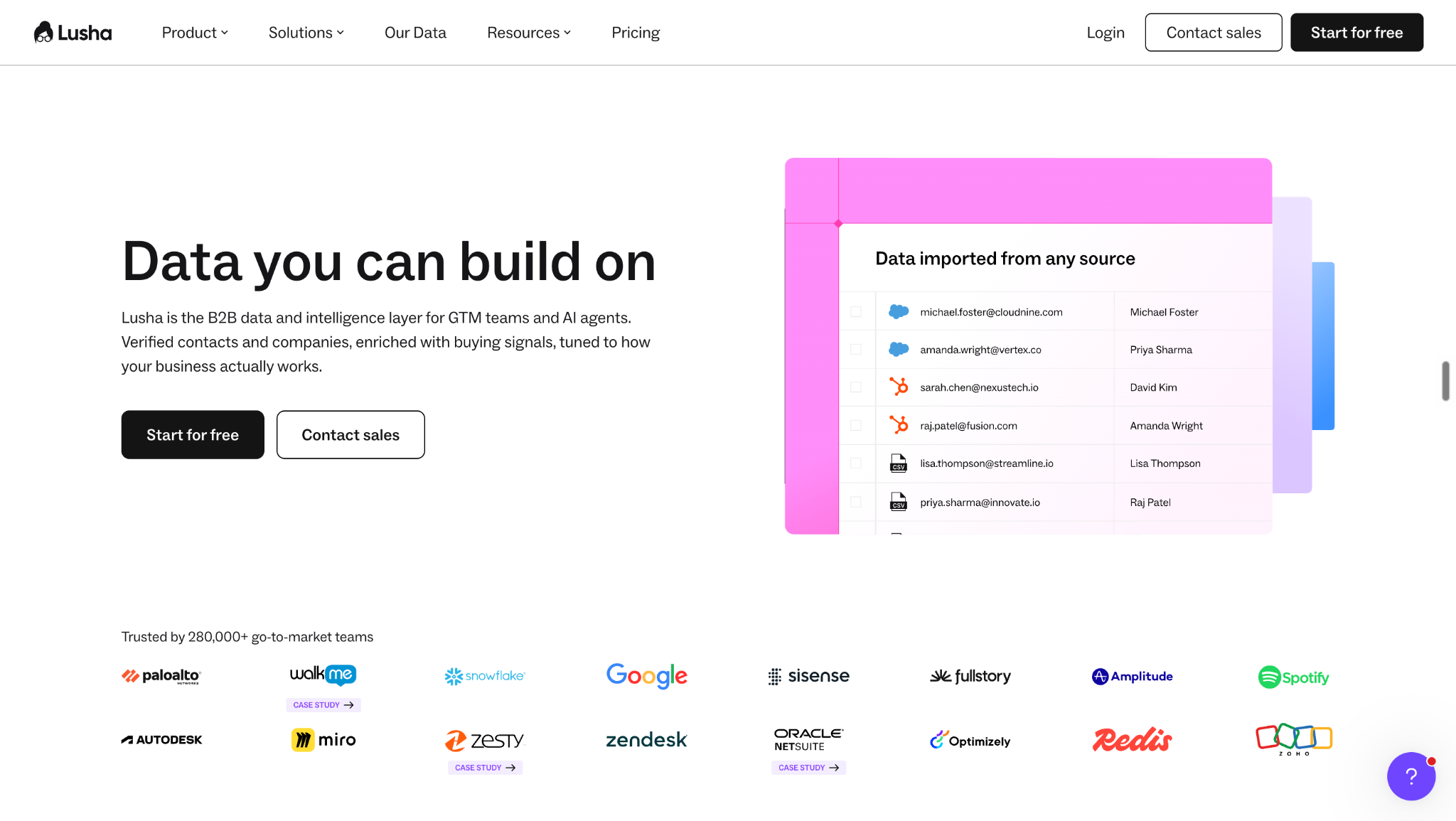
Lusha
Best for straightforward contact intelligence.
Lusha provides contact and company intelligence for teams that need to find prospects and enrich their records with information such as business emails, direct-dial phone numbers, job titles, and company details. Its prospect search capabilities, LinkedIn extension, enrichment functionality, and CRM integrations make it useful for sales teams that want a relatively straightforward way to obtain and use B2B contact data.
Lusha also includes signals and additional data capabilities on higher plans, but its core workflow remains centered around prospect and contact intelligence.
Pricing: Lusha has a Free plan. Its current pricing information shows Starter at $37.45/month, Pro at $48.95/month, and Premium at $259.95/month, based on the annual billing figures provided. Scale uses custom pricing. Credit allowances and available features vary by plan.
The distinction is:
Lusha helps sales teams obtain prospect data. Knock AI uses active buyer behavior as the starting point for enrichment and conversion.
Clearbit / Breeze Intelligence
Best for CRM and inbound enrichment.
Clearbit is now part of HubSpot's Breeze Intelligence offering, making its current positioning particularly relevant to teams already operating within the HubSpot ecosystem. Breeze Intelligence provides company and contact enrichment, firmographic information, buyer intent, form shortening, and enrichment workflows.
The workflow is generally centered on improving existing records or enriching inbound activity so marketing and revenue teams have better information inside their CRM and HubSpot workflows.
Pricing: Breeze Intelligence starts at $45/month with an annual commitment for 100 credits, or $50/month when billed monthly. Larger credit packages and HubSpot Customer Platform plans can increase the total cost. The 1,000-credit and 10,000-credit tiers are usage-based, and the broader HubSpot subscription can represent a significant portion of the total spend.
The distinction is:
Clearbit/Breeze is strongest when existing records or inbound activity need better data. Knock AI can identify the buyer and use that enrichment as part of a broader intent-to-conversion workflow.
ZoomInfo
Best for enterprise B2B intelligence and enrichment.
ZoomInfo combines contact and company data with firmographic and technographic information, buyer intent, account intelligence, enrichment, workflows, CRM activation, and broader sales and marketing capabilities. For organizations looking for a broad B2B intelligence platform, its strength is the ability to bring prospect and account information into multiple GTM workflows.
Its enrichment capabilities can add or update information such as contact details, company attributes, firmographics, technographics, and buyer signals. That makes ZoomInfo relevant to teams that need a large intelligence layer supporting prospecting, account targeting, sales, and marketing.
Pricing:Zoominfo starts at $15,000+ per year for entry-level packages, with more advanced packages commonly reaching approximately $25,000 to $40,000+ per year, and enterprise configurations potentially reaching $40,000 to $60,000+ per year. Actual pricing depends on package, seats, data access, and negotiated contract terms.
The distinction is:
ZoomInfo provides broad intelligence for understanding prospects and accounts at scale. Knock AI focuses on what happens when a buyer is actively interacting with your business.
6sense
Best for account-level intent and enrichment.
6sense combines account intelligence, contact and company data, intent signals, predictive AI, buying stages, account prioritization, buying-group intelligence, and ABM workflows. Its approach is particularly useful for enterprise teams that want to determine which accounts are entering or progressing through a buying journey.
The platform can combine account activity, anonymous research, third-party intent, technographic and psychographic information, web visitor identification, predictive models, and sales workflows. Sales teams can then use these signals for prioritization and account-based activation.
Pricing: 6sense offers a Free plan with 50 monthly data credits. Paid packages use custom pricing. The pricing range from approximately $60,000 to $100,000 per year, while some reported enterprise commitments reach approximately $120,000 for the first year. Implementation costs may also apply.
The distinction is:
6sense helps determine which accounts are showing buying behavior. Knock AI focuses on activating buyer behavior into person-level enrichment, qualification, engagement, routing, and scheduling.
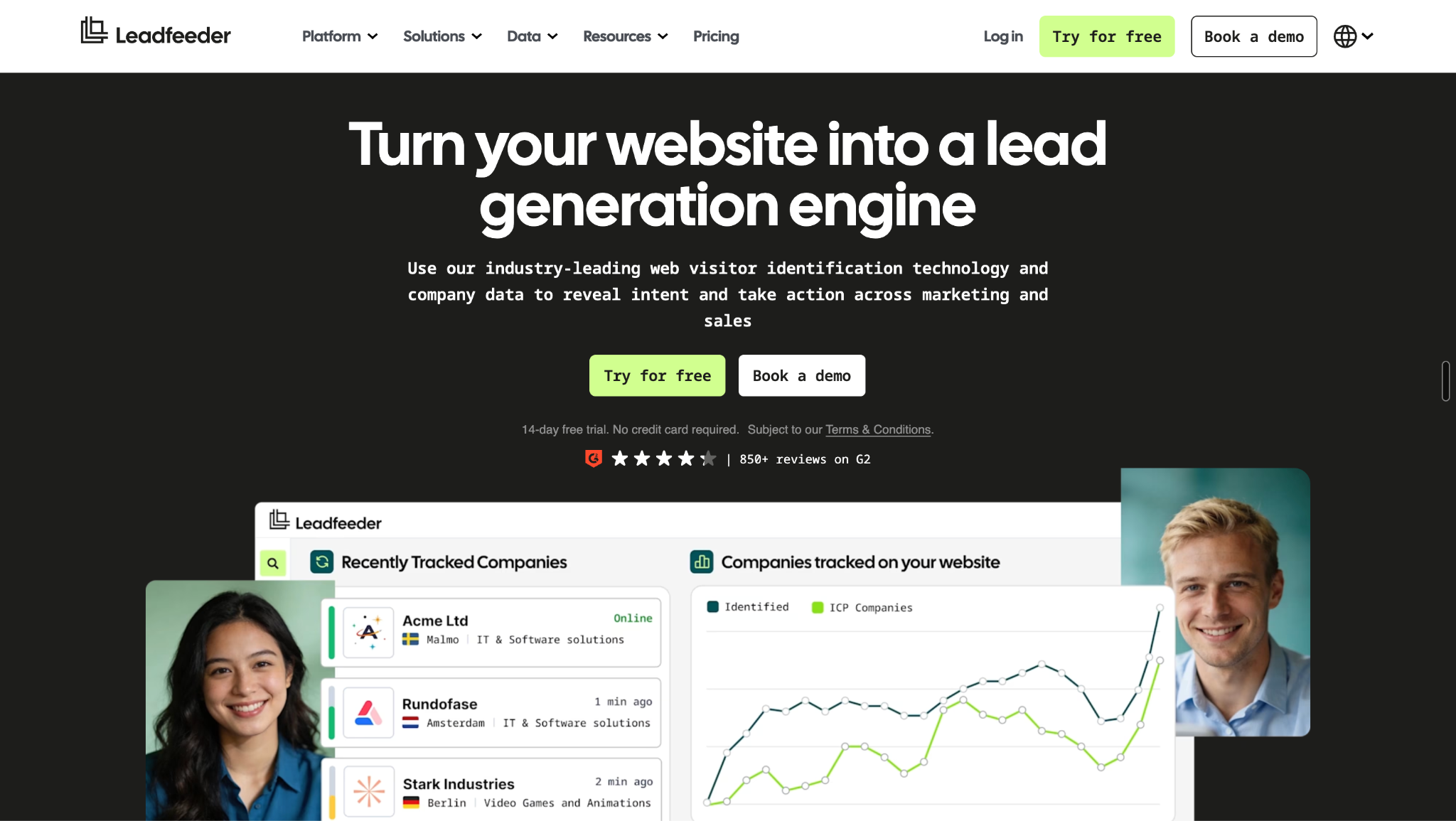
Leadfeeder
Best for website visitor identification and company intelligence.
Leadfeeder focuses heavily on identifying companies visiting your website and turning that website activity into actionable sales intelligence. Teams can see visiting companies, review website behavior and visit history, receive alerts, enrich identified accounts, and synchronize information with their CRM.
Its higher-tier plans extend into lead generation, intent filtering, CRM automation, workflows, outreach, retargeting, and AI-assisted prospect list building. This makes Leadfeeder particularly relevant to website-led B2B businesses that want to understand which companies are already showing interest.
Pricing: Leadfeeder's current pricing shows Lite at €0/month, Discover at €79/month, Activate at €369/month, and Scale at €599/month, with the paid plans billed annually. All plans have unlimited users, while identification, enrichment, workflows, CRM automation, and other capabilities increase across the tiers.
The distinction is:
Leadfeeder is particularly useful for discovering which companies are visiting your website. Knock AI can take buyer activity further into person-level identification, enrichment, intent, engagement, qualification, routing, and scheduling.
Lead Enrichment by Use Case
The best lead enrichment tool depends on what you need to enrich and what you want to accomplish with the data afterward. A prospecting platform, an enrichment database, an intent platform, and a buyer activation system can all enrich leads, but they begin at different points in the revenue workflow.
If you need to...
Consider
Enrich prospect lists
Apollo
Find global contact data
Cognism
Find affordable contact intelligence
Lusha
Build custom enrichment workflows
Clay
Enrich HubSpot records
Clearbit / Breeze Intelligence
Enrich enterprise GTM data
ZoomInfo
Identify website visitors
Leadfeeder
Prioritize accounts using intent
6sense
Identify, enrich, qualify, and activate active buyers
Knock AI
Knock AI is particularly relevant when the buyer is already interacting with your business. It can identify anonymous or known visitors, enrich person and company records, analyze first-party activity and intent, and use that context for AI qualification, engagement, routing, scheduling, and CRM workflows.
The key distinction is:
If enrichment is the end goal, a data provider may be enough. If enrichment should determine what happens next, look for a platform that connects enrichment to intent, qualification, routing, engagement, and conversion.
Lead Enrichment vs. Lead Scoring vs. Lead Qualification
Lead enrichment, lead scoring, and lead qualification are related but solve different problems in the revenue workflow. Enrichment adds context, scoring evaluates that context, and qualification determines whether the lead should move forward.
Concept
Primary purpose
Lead enrichment
Add information about the lead, contact, or company
Lead scoring
Assign a value based on fit, behavior, or engagement
Lead qualification
Determine whether the lead is worth pursuing
Intent detection
Identify meaningful buying behavior and signals
Lead routing
Decide which rep, team, or workflow should handle the lead
Lead activation
Engage the buyer and move them toward a desired action
The distinction becomes clearer in a modern buyer-led workflow. Enrichment gives you context about who the buyer is and what company they represent. Intent gives you timing by showing whether their behavior suggests active interest. Scoring gives you prioritization, while qualification gives you confidence that the opportunity is worth pursuing. Routing gives you ownership, ensuring the right person or workflow receives the lead.
Finally, activation turns information into action, whether that means engaging the buyer, answering questions, booking a meeting, or triggering a sales workflow.
A lead enrichment tool adds missing or updated information to lead records, such as contact details, company information, firmographics, technographics, behavioral data, and intent signals. The goal is to give sales and marketing teams enough context to qualify, prioritize, and engage leads more effectively.
What are the best lead enrichment tools?
The leading options serve different use cases. Knock AI is best for real-time buyer identification, enrichment, intent, qualification, and activation. Apollo combines prospecting and enrichment. Clay specializes in multi-source enrichment and custom workflows. Cognism focuses on global B2B contact data. Lusha provides accessible contact intelligence. Clearbit/Breeze Intelligence focuses on CRM and inbound enrichment. ZoomInfo provides broad enterprise B2B intelligence. 6sense specializes in account-level intent and ABM. Leadfeeder focuses on website visitor identification and company intelligence.
What is the difference between lead enrichment and data enrichment?
Lead enrichment typically focuses on adding information to individual prospects or leads. Data enrichment is a broader term that can apply to contacts, companies, accounts, CRM records, databases, and other datasets.
How does AI improve lead enrichment?
AI can connect research → enrichment → normalization → context → scoring → intent → next action. Instead of simply appending fields, AI can help interpret the information and determine which leads deserve attention or what should happen next.
Can lead enrichment tools identify anonymous website visitors?
Some can identify companies or, where sufficient signals exist, individual buyers behind website activity. The workflow can be visitor activity → identity → enrichment → intent → action. Company-level visitor identification tells you which organization visited. Person-level identification can provide more specific buyer context and enable more targeted activation. Knock AI combines visitor identification with enrichment, first-party intent, qualification, and downstream engagement workflows.
Can lead enrichment tools qualify leads automatically?
Yes, depending on the platform. Modern systems can combine identity → enrichment → intent → AI qualification → routing → scheduling. Knock AI can use buyer and company context to evaluate qualification, engage buyers through AI agents, route qualified conversations, and facilitate meeting scheduling, including cases where an AI agent can book when a human rep is unavailable.


.svg)


.svg)
.svg)
.svg)


.svg)
.svg)


.svg)