Best Lead Generation Tools for Sales Reps & Marketers
What Lead Generation Tools Do You Recommend for Sales Reps and Marketers?
TL;DR
Lead generation for sales and marketing teams is no longer just about building a large prospect list. Buyers are researching independently, using AI during their buying process, and forming preferences before they speak with sales.
95% of the time, the winning vendor is already on the buyer's Day One shortlist.
94% of B2B buyers use LLMs during their buying journey, mainly to compare and synthesize information.
Buyers now contact sellers at around 61% of the way through their buying journey, compared with 69% previously. (Source)
84% of sales professionals say AI saves time and optimizes their sales process, while 83% say it helps personalize prospect interactions. (Source)
Only one in five marketers say their marketing data is fully integrated with the tools they use. (Source)
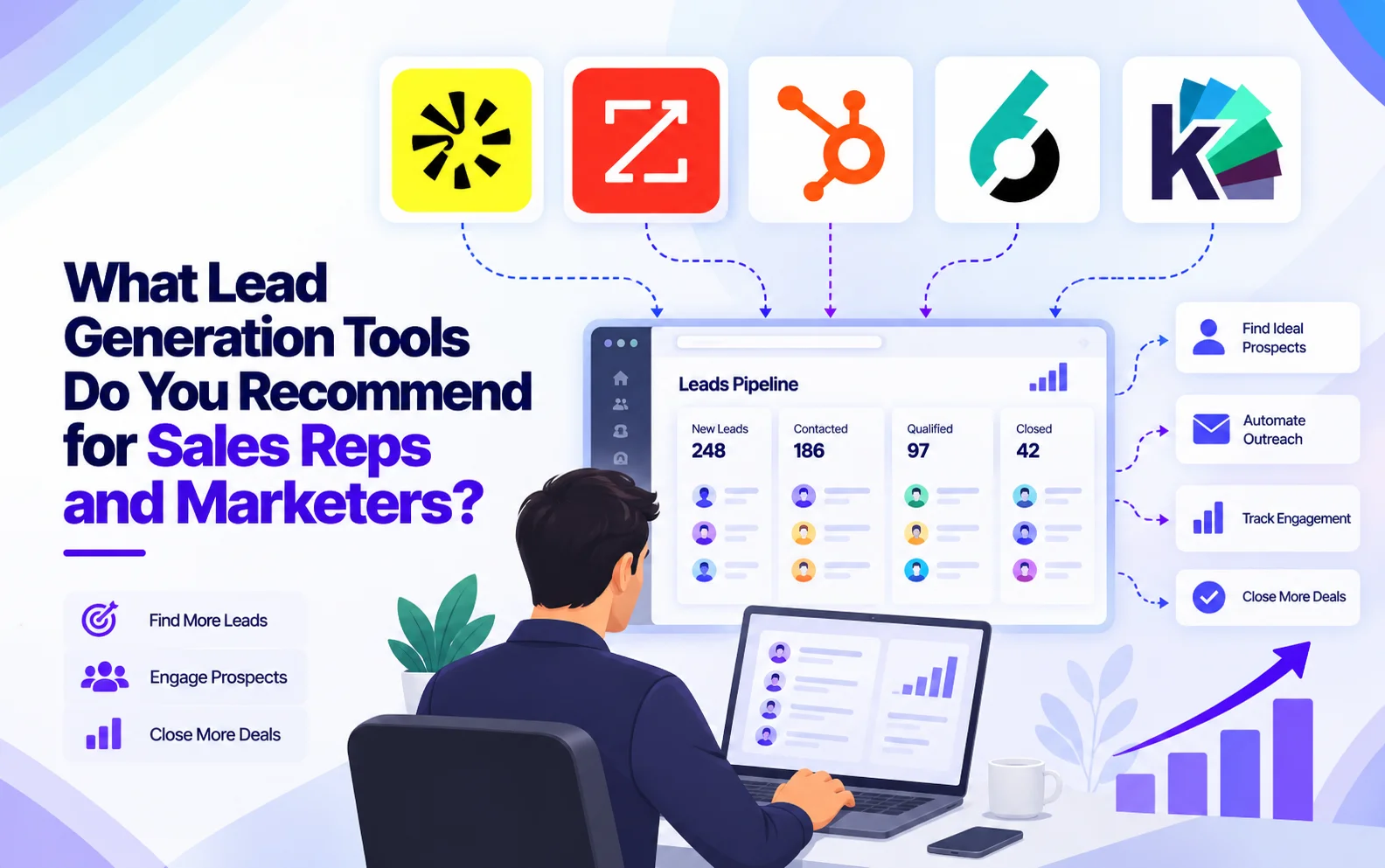
The five tools we'll compare are:
Tool
Best suited for
Apollo
Finding prospects, enriching data, and running outbound campaigns
ZoomInfo
B2B company and contact intelligence
HubSpot
Capturing, nurturing, and managing inbound leads
6sense
Identifying accounts showing buying intent
Knock AI
Identifying, engaging, qualifying, and routing high-intent website visitors
The important distinction is that Apollo and ZoomInfo help you find prospects, while tools such as 6sense and Knock AI help you understand buying intent and act on it. HubSpot sits closer to the inbound side, helping teams capture and manage demand.
The right choice isn't the tool with the biggest database or the longest feature list. Choose the tool that fixes the biggest gap in your lead-generation process.
How Modern Sales and Marketing Teams Generate Leads
Lead generation used to be heavily focused on building lists of potential customers. Today, that is only one part of the process.
B2B buyers can research companies, compare vendors, read reviews, use AI tools, and evaluate solutions long before speaking with a sales rep. 6sense's 2025 research found that 95% of winning vendors were already on the buyer's Day One shortlist.
That means sales and marketing teams need to understand who they should target, which accounts are showing interest, and what to do when that interest becomes visible.
A modern lead-generation workflow looks more like:
Clean data matters because sales reps need reliable information for outreach, while marketers need accurate data for segmentation and targeting.
3. Buying Intent and Signals
This is where modern lead generation goes beyond traditional prospecting.
Instead of asking only:
Who could buy from us?
you also want to know:
Who is showing signs that they might buy now?
Useful signals can include:
Website activity
Content engagement
Research behavior
Account activity
Intent data
Changes within target accounts
6sense's research shows why this matters: buyers often establish their shortlist before sales gets involved.
4. Inbound Lead Capture
For marketers, generating traffic is only half the job.
A lead-generation system should help capture actions such as:
Form submissions
Demo requests
Content downloads
Chat conversations
Website inquiries
That information should then flow into the CRM or sales workflow so reps can act on it.
5. Website Visitor Identification
Here's a problem many sales and marketing teams face:
What happens when the right prospect visits your website but never fills out a form?
A traditional form-based system may never turn that visit into an actionable lead.
Visitor identification can add more context around website activity, helping teams understand which companies or contacts are visiting, what they're doing, and whether their behavior indicates meaningful interest.
This is one of the areas where Knock AI is different from traditional prospecting platforms.
6. Lead Engagement
Finding a lead isn't enough. You also need a way to engage them.
Depending on the tool, this can include:
Email sequences
Sales outreach
AI conversations
Website chat
Personalized engagement
Meeting booking
The best approach depends on where the prospect is in the buying process. A cold prospect may need outbound outreach, while a high-intent website visitor may be ready for a conversation immediately.
7. Lead Qualification
More leads don't necessarily mean more pipeline.
A useful system should help determine:
ICP fit
Company characteristics
Engagement level
Intent
Lead score
Buying stage
The distinction is simple:
Finding a lead is not the same as finding a qualified opportunity.
8. Lead Routing
Once a lead is qualified, it needs to reach the right person quickly.
Look for workflows that can:
Assign leads to the right rep
Route by territory
Route by account ownership
Trigger sales workflows
Send real-time alerts
Create or update CRM records
Trigger AI or human follow-up
This is particularly important when high-intent activity happens in real time. A qualified visitor shouldn't sit in a queue while the buying signal goes cold.
9. CRM and Marketing Integration
Your lead-generation tools shouldn't become isolated databases.
The goal is to make lead information available wherever sales and marketing teams already work.
This matters because HubSpot's 2025 marketing research found that only one in five marketers said their marketing data was fully integrated with the tools they use.
For marketers, this helps show which campaigns and channels actually contribute to revenue. For sales teams, it helps identify which sources are producing opportunities worth pursuing.
And with AI becoming a bigger part of sales workflows, this measurement layer matters even more. HubSpot's 2025 research found that 84% of sales professionals say AI saves time and optimizes processes, while 82% say it surfaces better insights from data.
The goal isn't to add more tools to the stack. It's to connect the right signals to the right action at the right time.
Best Lead Generation Tools for Sales Reps and Marketers
1. Apollo
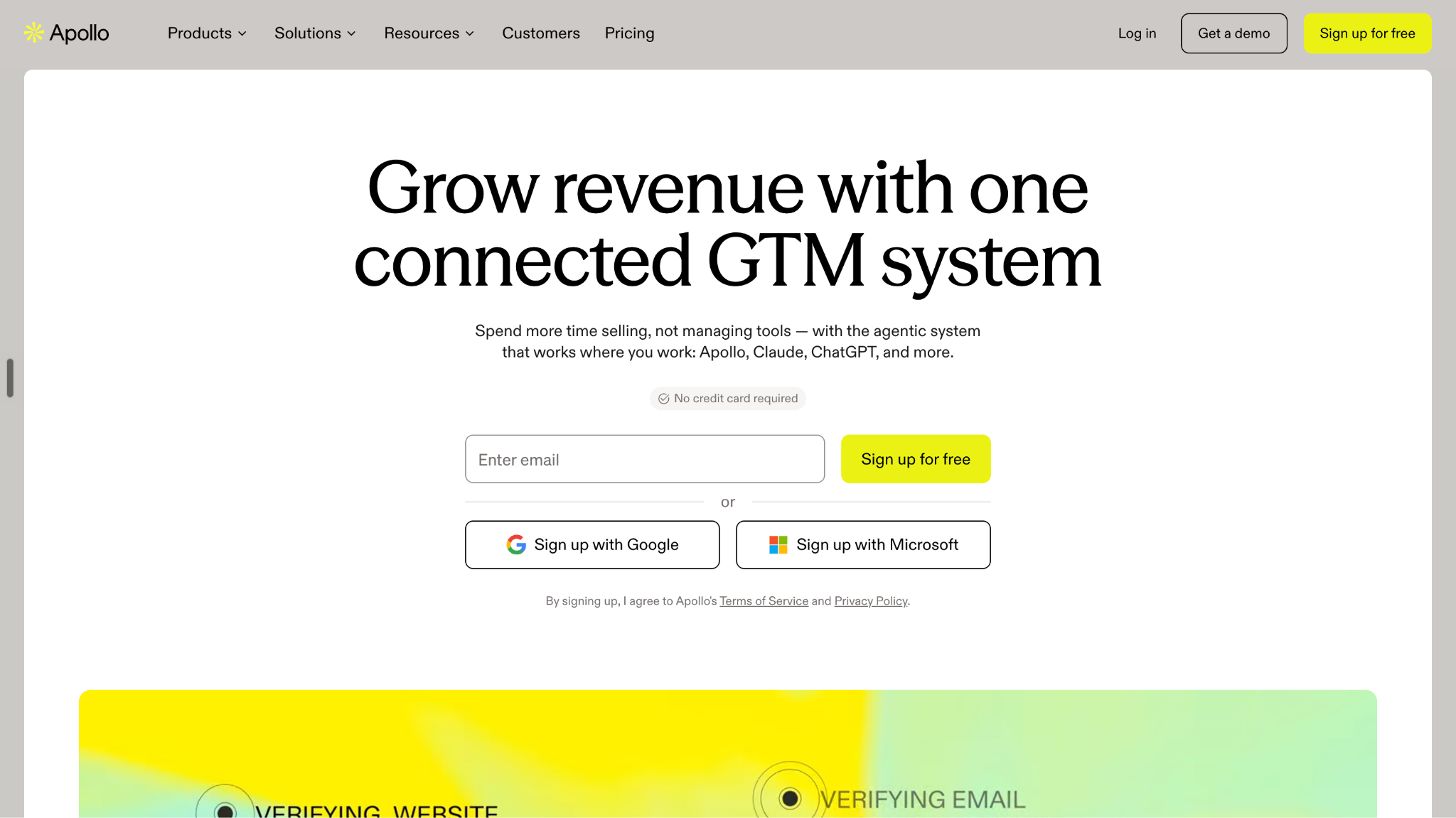
Apollo is a prospecting, sales intelligence, and engagement platform built primarily for finding potential buyers and turning them into outbound sales opportunities. It combines a large B2B contact and company database with prospect search, enrichment, intent data, and sales engagement tools.
The key advantage is consolidation. Instead of using one tool to find prospects, another to enrich them, and another to run outbound sequences, sales teams can perform much of that workflow inside Apollo.
Key Features
Contact and company database: Search for prospects and companies using filters such as job title, industry, company size, location, and other attributes.
Prospect search: Build targeted prospect lists based on your ideal customer profile.
Enrichment: Add or update contact and company information to make prospect records more complete.
Intent signals: Use buying-intent information to prioritize prospects that may be researching relevant solutions.
Lead scoring: Prioritize prospects based on attributes, engagement, and other signals.
Email sequences: Create automated outbound sequences for prospect follow-up.
Sales engagement: Combine email, calling, and other sales activities into structured workflows.
Calling: Make and manage sales calls from the platform.
Meeting scheduling: Allow prospects to book meetings with sales reps.
Workflow automation: Automate repetitive prospecting and sales processes.
Best For
Sales reps and teams that need to find prospects, build targeted lists, and execute outbound campaigns from one platform.
Example Use Case
Define ICP → find contacts → enrich prospects → build list → launch sequence → book meetings
For example, a sales team targeting VP-level marketing leaders at SaaS companies can define those criteria, build a prospect list, enrich the records, and place qualified contacts into an outbound sequence without switching between multiple prospecting tools.
Pros
Combines prospect discovery, enrichment, and sales engagement.
Useful for building highly targeted outbound lists.
Provides multiple channels for sales engagement.
Can reduce the number of separate tools needed for prospecting.
Supports both prospecting and inbound workflows.
Cons
Primarily oriented toward finding and engaging prospects rather than converting anonymous website demand.
Large amounts of prospect and engagement data can require ongoing list management and prioritization.
Teams focused primarily on inbound demand may not need its full prospecting functionality.
Pricing
Apollo offers a free entry point, with paid plans adding more advanced prospecting, engagement, data, and automation capabilities. Pricing can vary based on plan, usage, and included credits, so teams should evaluate the current plan structure against their prospecting volume.
When Should You Choose Apollo?
Choose Apollo when your biggest lead generation challenge is finding the right people and reaching them through outbound sales.
It makes particular sense when your workflow looks like:
Build ICP → find prospects → enrich data → contact prospects → follow up → book meetings.
When Should You Consider Another Tool?
If the problem is finding and contacting prospects, Apollo is a natural fit.
But if your problem is understanding what existing website visitors are doing and engaging high-intent traffic already arriving on your site, that's a different problem. In that situation, a platform focused on first-party intent and website conversion may be more relevant.
2. ZoomInfo
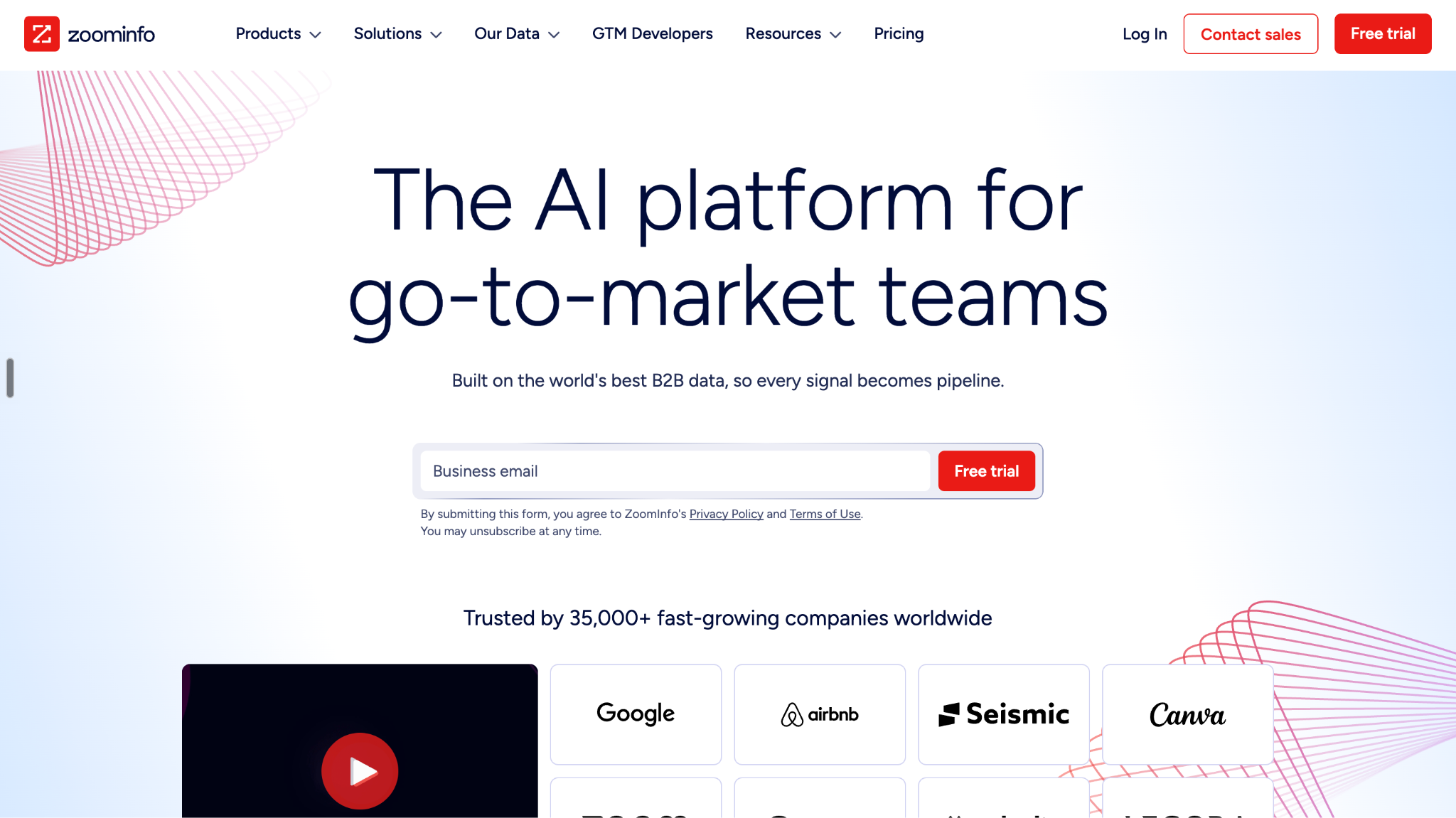
ZoomInfo is a B2B sales intelligence and go-to-market data platform focused on helping sales and marketing teams understand companies, contacts, markets, and buying activity.
Where Apollo combines prospecting and sales engagement, ZoomInfo is particularly centered around company and contact intelligence, enrichment, account intelligence, and intent data.
Key Features
Company intelligence: Research companies using firmographic and business information.
Contact database: Find decision-makers and other relevant contacts within target accounts.
Enrichment: Improve existing CRM and prospect records with additional company and contact information.
Intent data: Identify accounts showing signals that may indicate interest in relevant products or categories.
Technographics: Understand the technologies companies use.
Account intelligence: Build a more detailed picture of target accounts and their buying environment.
Sales intelligence: Give sales teams additional information for prospecting and account prioritization.
Workflow automation: Trigger actions based on account, contact, and buying signals.
CRM integrations: Connect intelligence and prospect data with existing GTM systems.
Best For
Sales and marketing teams that need deep account and contact intelligence for prospecting, segmentation, enrichment, and go-to-market planning.
For example, an enterprise sales team can identify companies that match its ICP, discover relevant decision-makers, enrich account records, layer in intent signals, and then prioritize those accounts for sales outreach.
Pros
Extensive B2B company and contact intelligence.
Useful for account-based prospecting.
Combines multiple types of company and buyer information.
Supports enrichment and GTM segmentation.
Can connect intelligence with existing sales and marketing workflows.
Cons
Can be more than a smaller sales team needs.
Its value depends heavily on how effectively teams use and operationalize the available data.
Teams primarily focused on converting existing website traffic may need additional tools for real-time website engagement and conversion.
Pricing
ZoomInfo uses a custom pricing model. Pricing depends on factors such as products, data access, users, and organizational requirements.
When Should You Choose ZoomInfo?
Choose ZoomInfo when your challenge is understanding and prioritizing target companies and the people inside them.
It is particularly relevant when your GTM strategy depends on account intelligence, enrichment, intent data, and structured prospecting.
When Should You Consider Another Tool?
If your main requirement is a large B2B intelligence database, ZoomInfo fits that problem.
But the problem changes once those prospects reach your website.
Unlike a prospecting database, Knock AI focuses on what happens when those prospects actually arrive on your website and begin showing intent.
That distinction matters because identifying a target account and converting an actively interested visitor are two different stages of the buyer journey.
3. HubSpot
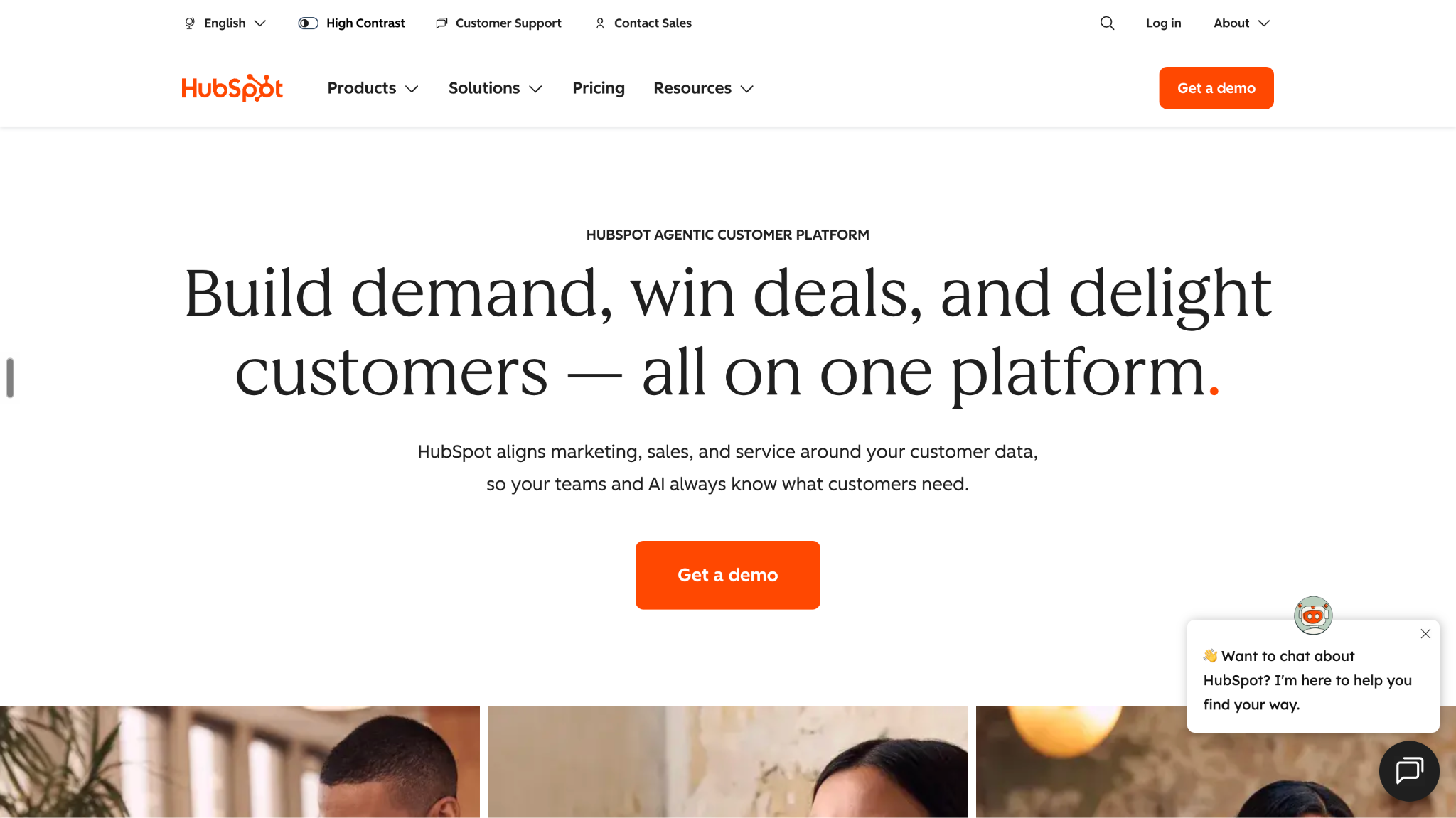
HubSpot is an inbound marketing, CRM, sales, and customer platform designed to help companies capture, manage, nurture, and convert leads.
Rather than focusing primarily on prospect database access, HubSpot brings together website conversion tools, CRM, marketing automation, sales workflows, and reporting.
Key Features
Forms: Capture lead information from website visitors.
Landing pages: Create dedicated conversion pages for campaigns and offers.
CRM: Store and manage contacts, companies, activities, and deal information.
Lead capture: Collect leads from forms, chat, campaigns, and other channels.
Marketing automation: Automate campaigns and follow-up activities.
Lead scoring: Prioritize leads based on fit and engagement.
Workflows: Automate marketing and sales processes.
Sales sequences: Support structured sales follow-up.
Meeting scheduling: Let prospects book meetings with sales teams.
Reporting: Connect marketing and sales activity with pipeline reporting.
Best For
Marketing and sales teams that want to capture, nurture, manage, and measure inbound leads within one ecosystem.
Example Use Case
Content / SEO / ads → landing page → form → CRM → nurture → qualification → sales handoff
For example, a company can publish SEO content, send visitors to a landing page, capture leads through a form, automatically add them to the CRM, nurture them with email, score their engagement, and pass qualified leads to sales.
Pros
Combines CRM, marketing, and sales functionality.
Strong fit for inbound marketing.
Provides extensive automation and workflow capabilities.
Connects lead activity with CRM and pipeline data.
Supports lead capture, nurturing, qualification, and sales handoff.
Cons
The broader platform can become complex as teams add more hubs and functionality.
Costs can increase as teams require more advanced capabilities, contacts, or seats.
Much of the workflow becomes more effective after a visitor becomes identifiable.
Pricing
HubSpot offers a free CRM, while paid Sales Hub and Marketing Hub plans add more advanced functionality. Current paid pricing varies significantly by hub, plan, seats, contacts, and billing terms.
When Should You Choose HubSpot?
Choose HubSpot when you want a central system for inbound lead generation, CRM management, marketing automation, and sales follow-up.
It works particularly well when your workflow looks like:
Attract → capture → nurture → qualify → hand off → close.
When Should You Consider Another Tool?
HubSpot is excellent once a visitor becomes identifiable through a form, chat, meeting request, or another conversion point.
But what about the visitors who show strong intent without filling out a form?
That's where the problem changes.
A visitor might spend several minutes comparing pricing, reading product pages, returning multiple times, or clicking a high-intent campaign link and still leave without submitting their information.
A platform such as Knock AI is designed to address that gap by identifying and engaging high-intent website demand before it disappears.
4. 6sense
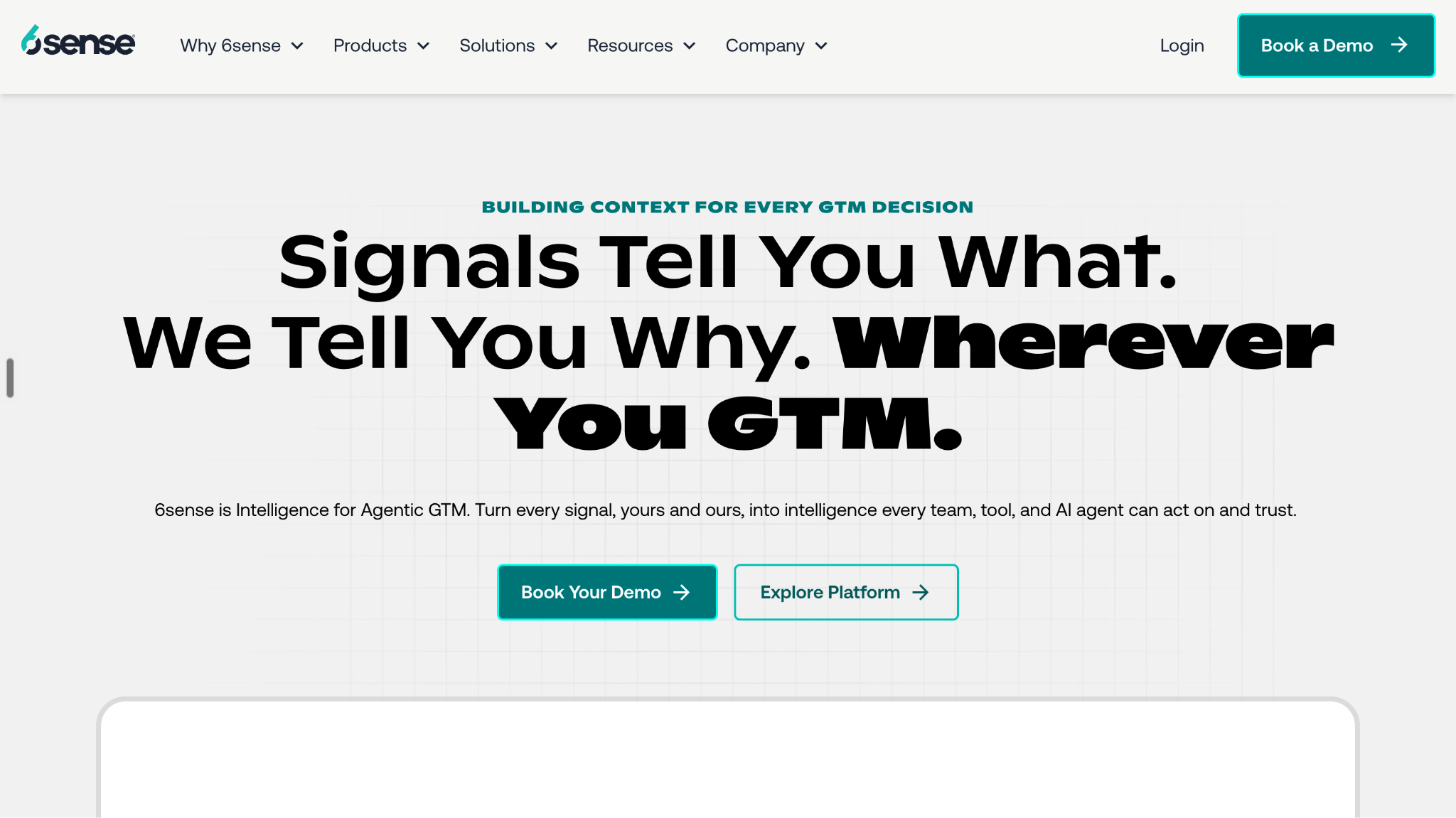
6sense is an account-based marketing and revenue intelligence platform focused on helping B2B organizations identify accounts that are entering a buying journey, understand their intent, and activate sales and marketing programs around those accounts.
Its core approach is account-centric. Instead of waiting for individual leads to identify themselves, 6sense helps teams understand which target accounts may be researching solutions and where those accounts are in the buying process.
Key Features
Intent data: Detects research and buying signals associated with target accounts.
Predictive intelligence: Use data and predictive models to prioritize accounts.
Buying-stage identification: Understand where accounts may be in their buying journey.
Account prioritization: Help sales and marketing focus on accounts showing relevant signals.
ABM: Build account-based marketing programs around specific companies.
Audience activation: Activate target accounts across marketing channels.
Sales alerts: Surface relevant account activity to sales teams.
Orchestration: Coordinate actions across sales and marketing workflows.
Best For
B2B teams running ABM or intent-driven sales and marketing programs, particularly organizations that need to prioritize target accounts based on buying signals.
Example Use Case
Target accounts → detect research activity → identify buying stage → prioritize accounts → activate marketing and sales
For example, an enterprise software company can define its target account list, identify companies researching relevant solutions, determine which accounts appear to be entering a buying cycle, and then activate sales and marketing campaigns around those accounts.
Pros
Strong focus on account-level intent.
Designed for ABM and enterprise GTM programs.
Helps sales and marketing teams prioritize accounts.
Connects intent signals with activation and orchestration.
Useful for coordinating account-based sales and marketing.
Cons
Better suited to sophisticated B2B GTM programs than simple lead generation.
Can require substantial data, process, and operational maturity to get full value.
Account-level intent does not necessarily answer what an individual website visitor is doing in real time.
Pricing
6sense uses custom pricing, with costs depending on the products, data, functionality, and organizational requirements involved.
When Should You Choose 6sense?
Choose 6sense when your strategy revolves around target accounts, buying intent, ABM, and coordinated sales and marketing activation.
It is especially relevant when your team wants to answer:
Which accounts are entering a buying journey, and how should we activate around them?
When Should You Consider Another Tool?
6sense and Knock AI address related but different parts of the buyer journey.
6sense helps answer:
“Which accounts are showing buying signals?”
Knock AI takes a more real-time website-level approach:
“Who is engaging with our website right now, what are they doing, and what should we do next?”
That difference becomes particularly important for companies that already generate significant website traffic and want to turn more of that existing demand into conversations.
5. Knock AI
Knock AI is a revenue conversion platform that identifies, understands, engages, qualifies, and routes high-intent website visitors.
It is not designed to be another Apollo or ZoomInfo-style prospect database.
The focus is what happens after demand reaches your digital properties.
“How do we convert more of the buyers who are already showing interest?”
Key Features
Website visitor identification: Identify companies and, where available, people interacting with your website.
Account and contact enrichment: Add relevant company and buyer information to visitor activity.
First-party intent signals: Analyze actions such as page views, CTA interactions, form activity, and other website engagement.
Website behavior analysis: Understand what visitors are actually doing across your site.
AI-powered engagement: Engage visitors through conversational experiences and AI.
Lead qualification: Evaluate visitors using engagement, intent, enrichment, and ICP signals.
Meeting booking: Move qualified visitors directly toward a sales conversation.
Lead routing: Route qualified opportunities to the appropriate sales rep, team, or workflow.
CRM integrations: Sync relevant buyer and engagement information with existing GTM systems.
Real-time sales alerts: Surface high-intent activity so sales teams can act while interest is active.
Attribution and GTM workflows: Connect buyer activity and acquisition sources with downstream sales actions.
Best For
Sales and marketing teams that already generate website traffic but want to convert more of that existing demand into qualified sales conversations.
This is particularly relevant when the company has a problem such as:
Significant website traffic but relatively few demo requests
High-intent visitors leaving without converting
Anonymous account activity that sales teams cannot act on
Slow follow-up after buyer intent appears
Too many leads reaching sales without sufficient qualification
Sales reps spending time manually identifying and prioritizing website visitors
Example Use Case
Target account visits website → visitor identified → behavior and intent analyzed → AI engages visitor → qualification → meeting booked → lead routed to sales
Imagine a target account lands on a product page, visits the pricing page, returns later, and interacts with a high-intent CTA.
Instead of treating that visitor like another anonymous session, Knock AI can use the available visitor, company, enrichment, and first-party intent signals to determine whether the activity warrants sales engagement.
If the visitor engages, the AI can help qualify the opportunity, facilitate a meeting, and route the conversation to the appropriate sales owner.
Pros
Focuses specifically on converting existing website demand.
Combines visitor identification, intent, engagement, qualification, and routing.
Uses first-party website behavior as an important source of intent.
Can engage buyers before they complete a traditional lead form.
Helps sales teams act on high-intent activity in real time.
Connects website engagement with downstream sales workflows.
Complements prospecting and ABM platforms rather than trying to replace them.
Cons
Its value is strongest for companies that already have meaningful B2B website traffic and demand.
It is not primarily designed to replace a large prospecting database such as Apollo or ZoomInfo.
Teams with very limited website traffic may need to solve demand generation first.
The platform is focused on B2B revenue teams rather than consumer lead generation.
Pricing
Knock AI's current pricing starts at $2,000/month for Pipeline Foundation, with higher-tier plans available for teams requiring additional pipeline acceleration and enterprise capabilities.
When Should You Choose Knock AI?
Choose Knock AI when your problem isn't simply finding more prospects.
Your problem is that high-intent prospects are already visiting your website, but too many of them leave without identifying themselves, engaging with sales, or booking a meeting.
That creates a very different optimization opportunity.
It can also complement the other tools in this list rather than replace them:
Apollo / ZoomInfo → find prospects
6sense → identify account-level buying intent
HubSpot → capture and manage inbound demand
Knock AI → identify and convert high-intent website demand
When Should You Consider Another Tool?
If your primary requirement is:
Building a prospect list: Apollo
Deep contact and company intelligence: ZoomInfo
Running inbound marketing and CRM: HubSpot
Enterprise ABM and intent orchestration: 6sense
Converting high-intent website demand: Knock AI
The important distinction is that these platforms solve different problems across the revenue funnel. The right choice depends less on which platform has the longest feature list and more on where your current lead generation process is losing potential buyers.
How to Choose the Right Lead Generation Tool
The right lead generation tool depends on where your current process is losing potential buyers. A prospecting problem requires a different solution from an inbound conversion problem, and an ABM problem requires a different approach again.
Your Main Challenge
Tool to Consider
Finding prospects and running outbound campaigns
Apollo
Deep company/contact intelligence and enrichment
ZoomInfo
Capturing and nurturing inbound leads
HubSpot
Identifying in-market accounts and running ABM
6sense
Identifying and engaging high-intent website visitors
Knock AI
Don't choose based on the size of the database or the number of features. Choose based on where your lead-generation process is losing opportunities.
If your team cannot find enough relevant prospects, start with prospecting and data. If you generate plenty of traffic but struggle to convert it, look at visitor identification, intent, engagement, and routing. If your organization is focused on target accounts and buying stages, an ABM and intent platform may be more relevant.
What Does a Modern Sales and Marketing Lead Generation Stack Look Like?
Modern lead generation rarely comes down to one tool doing everything. Different platforms can support different stages of the buyer journey.
The important point is that these tools aren't necessarily direct substitutes at every stage. A company might use Apollo to build an outbound prospect list, 6sense to identify accounts showing buying activity, HubSpot to manage inbound leads, and Knock AI to convert high-intent website traffic.
That means the better question isn't “Which tool has the most features?”
It's:
“Which part of our lead-generation process needs to work better?”
Apollo vs. ZoomInfo vs. 6sense vs. HubSpot vs. Knock AI: What's the Difference?
Comparing these platforms only by feature count can make them look much more similar than they actually are. Their primary jobs across the revenue funnel are different.
Apollo vs. Knock AI
Apollo: Find and contact prospects.
Knock AI: Identify and engage prospects already showing intent on your website.
Apollo is primarily useful when you need to create the opportunity to start a conversation through prospect discovery and outbound engagement.
Knock AI becomes relevant when the opportunity may already exist because a potential buyer is actively engaging with your website or other connected GTM touchpoints.
ZoomInfo: Build intelligence around companies and contacts.
Knock AI: Turn real-time website behavior and intent into sales action.
ZoomInfo helps teams understand who their target accounts and contacts are and enrich the data surrounding them.
Knock AI focuses more heavily on what those buyers are doing right now, particularly when they are engaging with your website, and what your team should do next.
6sense vs. Knock AI
6sense: Identify accounts entering or progressing through a buying journey.
Knock AI: Identify and engage high-intent visitors interacting with your website.
6sense is built around an account-based view of buying intent and ABM orchestration.
Knock AI puts more emphasis on real-time first-party website activity, using those signals to engage, qualify, book meetings, and route opportunities.
HubSpot vs. Knock AI
HubSpot: Capture, manage, nurture, and report on leads inside a CRM and marketing ecosystem.
Knock AI: Add a real-time identification, intent, engagement, qualification, and routing layer to website traffic and GTM workflows.
The distinction is particularly useful for teams asking what happens before a visitor becomes a traditional lead.
A visitor can show meaningful buying behavior without submitting a form. Knock AI is designed to help sales and marketing teams act on that activity rather than waiting for a conventional conversion event.
Our Recommendation
There isn't one tool that fits every lead-generation strategy. The better approach is to match the platform to the problem your team is trying to solve.
For Prospecting and Outbound: Apollo
Best suited to teams that need to build prospect lists, enrich contacts, and execute outbound campaigns.
For B2B Data and Account Intelligence: ZoomInfo
Best suited to teams that need extensive company, contact, and account intelligence for prospecting and GTM segmentation.
For Inbound Marketing and CRM: HubSpot
Best suited to teams generating demand through content, SEO, paid campaigns, forms, and other inbound channels and want to capture, nurture, and manage that demand inside one ecosystem.
For ABM and Intent: 6sense
Best suited to teams that need to prioritize target accounts based on buying signals and coordinate account-based sales and marketing programs.
For Website Intent and Conversion: Knock AI
Best suited to teams that already have website traffic and want to identify, engage, qualify, and route high-intent visitors instead of letting that demand disappear.
The broader point is simple:
The question isn't just how many leads your tools can generate. It's how effectively your sales and marketing stack can turn buying signals into qualified conversations and pipeline.
FAQs
What are the best lead generation tools for sales reps?
The right tool depends on how sales reps generate opportunities. Apollo is designed around prospect discovery and outbound engagement, ZoomInfo around B2B data and account intelligence, 6sense around account-level intent and ABM, and Knock AI around identifying and converting high-intent website demand. HubSpot combines lead management, CRM, marketing automation, and sales workflows.
What are the best lead generation tools for marketers?
Marketers may need different tools depending on their acquisition strategy. HubSpot is suited to inbound capture and nurturing, 6sense to ABM and account-level intent, ZoomInfo to data and segmentation, Apollo to prospecting and outbound workflows, and Knock AI to identifying and engaging high-intent website visitors.
What is the difference between Apollo and ZoomInfo?
Apollo combines B2B prospect data with prospecting and sales engagement workflows, while ZoomInfo is more focused on extensive company, contact, account, and GTM intelligence. Teams choosing between them should consider whether their primary requirement is prospecting and outbound execution or deeper B2B intelligence and enrichment.
What is the difference between Apollo and Knock AI?
Apollo primarily helps sales teams find and contact prospects. Knock AI focuses on identifying and engaging prospects who are already showing intent through website and GTM activity. They can therefore address different stages of the lead-generation process.
What is the difference between ZoomInfo and Knock AI?
ZoomInfo helps teams build intelligence around companies and contacts. Knock AI focuses on using real-time first-party engagement and website intent to identify, engage, qualify, and route potential buyers.
What is the difference between 6sense and Knock AI?
6sense focuses heavily on account-level intent, buying stages, and ABM orchestration. Knock AI focuses more directly on real-time website engagement, helping teams identify visitors and turn their activity into conversations, qualification, meetings, and routing.
Can HubSpot generate leads?
Yes. HubSpot provides tools for lead capture and inbound demand generation, including forms, landing pages, marketing automation, chat, CRM workflows, and other conversion mechanisms. It can then manage and nurture those leads through the sales process.
How can sales reps identify high-intent prospects?
Sales teams can combine signals such as account fit, website behavior, content engagement, intent data, campaign activity, and other buyer signals. Platforms such as 6sense emphasize account-level intent, while Knock AI focuses on real-time first-party engagement and website behavior.
How can marketers identify companies visiting their website?
Website visitor identification platforms can use available company, contact, enrichment, and behavioral signals to identify organizations visiting a website. Knock AI is designed specifically around identifying and acting on high-intent website activity.
How can AI help with lead generation?
AI can automate parts of the lead-generation process such as prospect research, personalization, lead qualification, conversational engagement, follow-up, meeting booking, and routing. The biggest opportunity is not simply generating more interactions, but reducing the time between a buyer showing intent and the sales team acting on it.
How can sales and marketing teams qualify leads automatically?
Teams can combine ICP criteria with firmographic data, engagement behavior, intent signals, lead activity, and other qualification rules. Automation can then score or categorize leads and trigger actions such as enrichment, sales alerts, AI engagement, meeting booking, or routing.
How can companies turn website traffic into sales pipeline?
The process generally involves identifying relevant visitors → understanding their behavior → detecting intent → engaging them → qualifying the opportunity → booking a meeting → routing it to the right sales team → tracking the resulting pipeline.
The key shift is moving beyond measuring website traffic and form submissions alone and focusing on which visitors are showing meaningful buying intent and what happens after that signal appears.


.svg)


.svg)
.svg)
.svg)


.svg)
.svg)


.svg)