Best Lead Distribution Software: 7 Platforms Compared
Best Lead Distribution Software for B2B Sales Teams in 2026
TL;DR
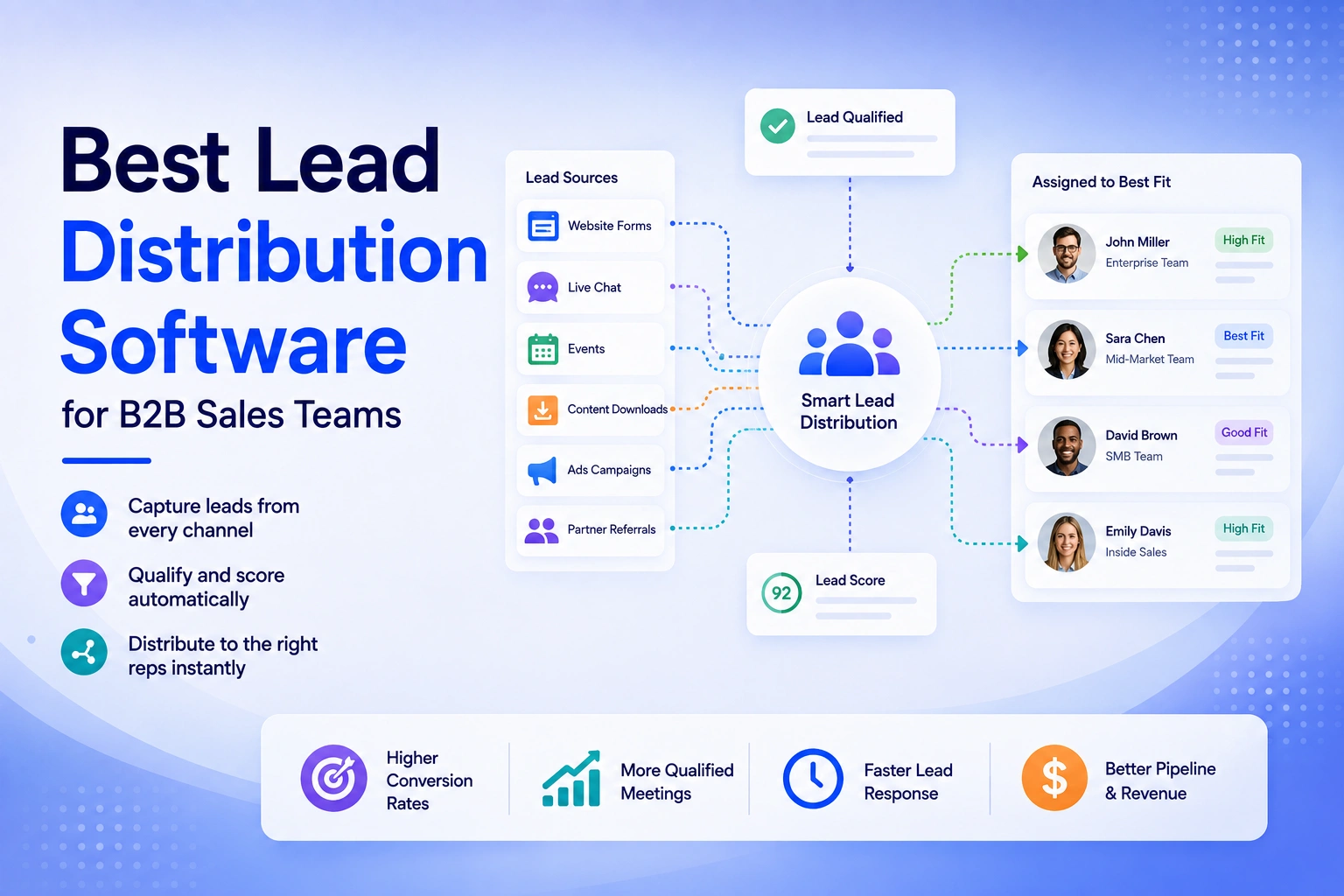
Lead distribution software automatically determines which salesperson, team, or workflow should receive an inbound lead. A modern lead distribution system can consider factors such as account ownership, territory, rep availability, capacity, qualification, buyer intent, and other routing rules to distribute opportunities to the right sales resource.
Lead routing software is a closely related part of this process: it determines where a lead should go based on the available rules and buyer context. The best lead distribution platforms go beyond simply assigning leads by connecting distribution with qualification, scheduling, CRM workflows, and lead tracking.
Traditional lead distribution typically follows Lead → Routing → Rep. Modern inbound revenue teams increasingly need a broader workflow: Buyer → Identification → Intent → Qualification → Routing → Scheduling → Pipeline. The right platform depends on the problem you're solving, but for teams that want to turn meaningful inbound buyer signals into qualified pipeline, Knock AI operates beyond basic lead assignment and focuses on the broader revenue-conversion workflow.
The 7 Best Lead Distribution Software Platforms: Quick List
If you're evaluating lead distribution software, these seven platforms cover different parts of the lead assignment, qualification, routing, scheduling, and inbound conversion workflow.
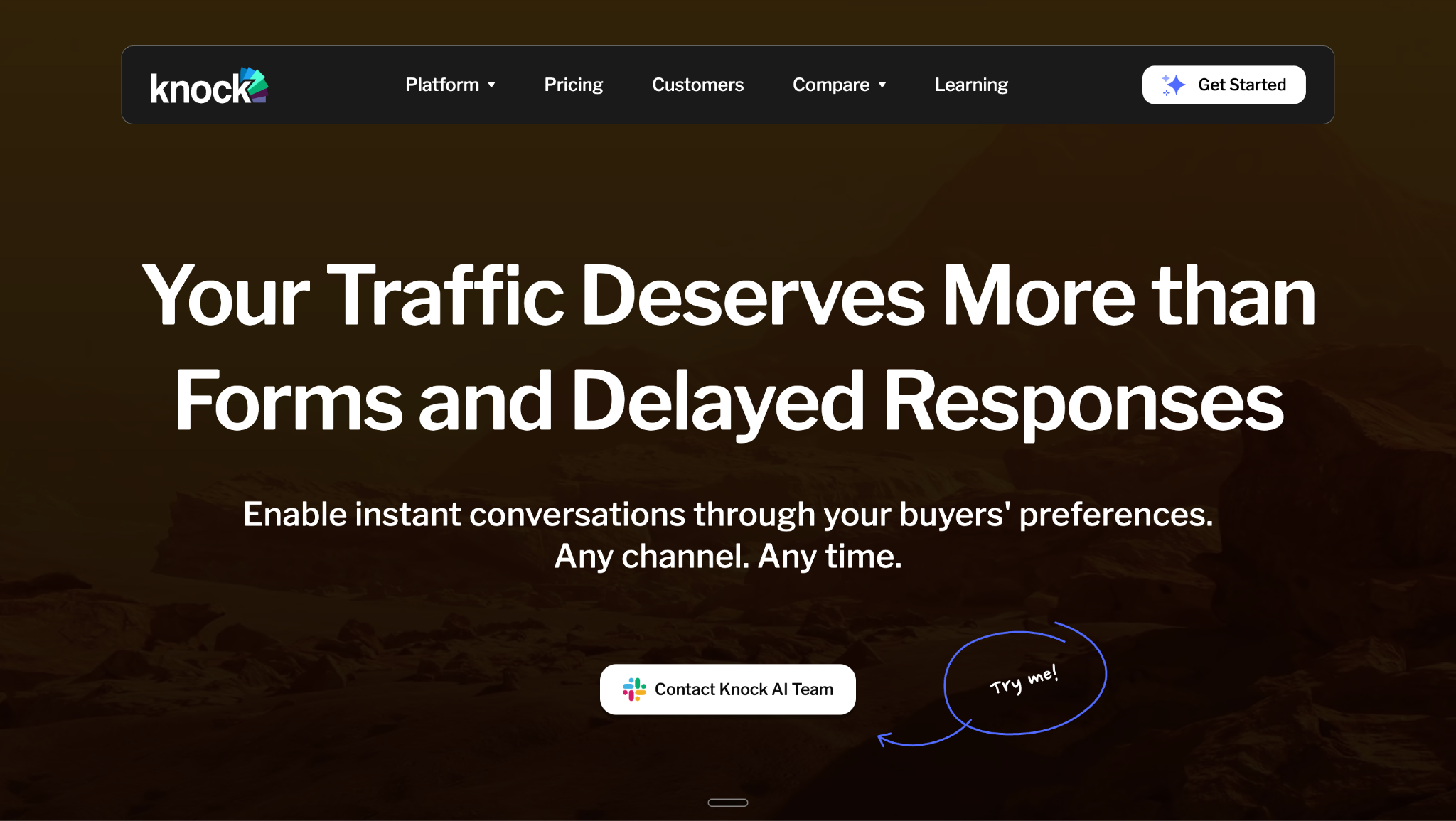
1. Knock AI: Focuses on inbound revenue conversion, connecting buyer identification, intent, qualification, routing, scheduling, and CRM workflows to help turn meaningful buyer activity into qualified pipeline.
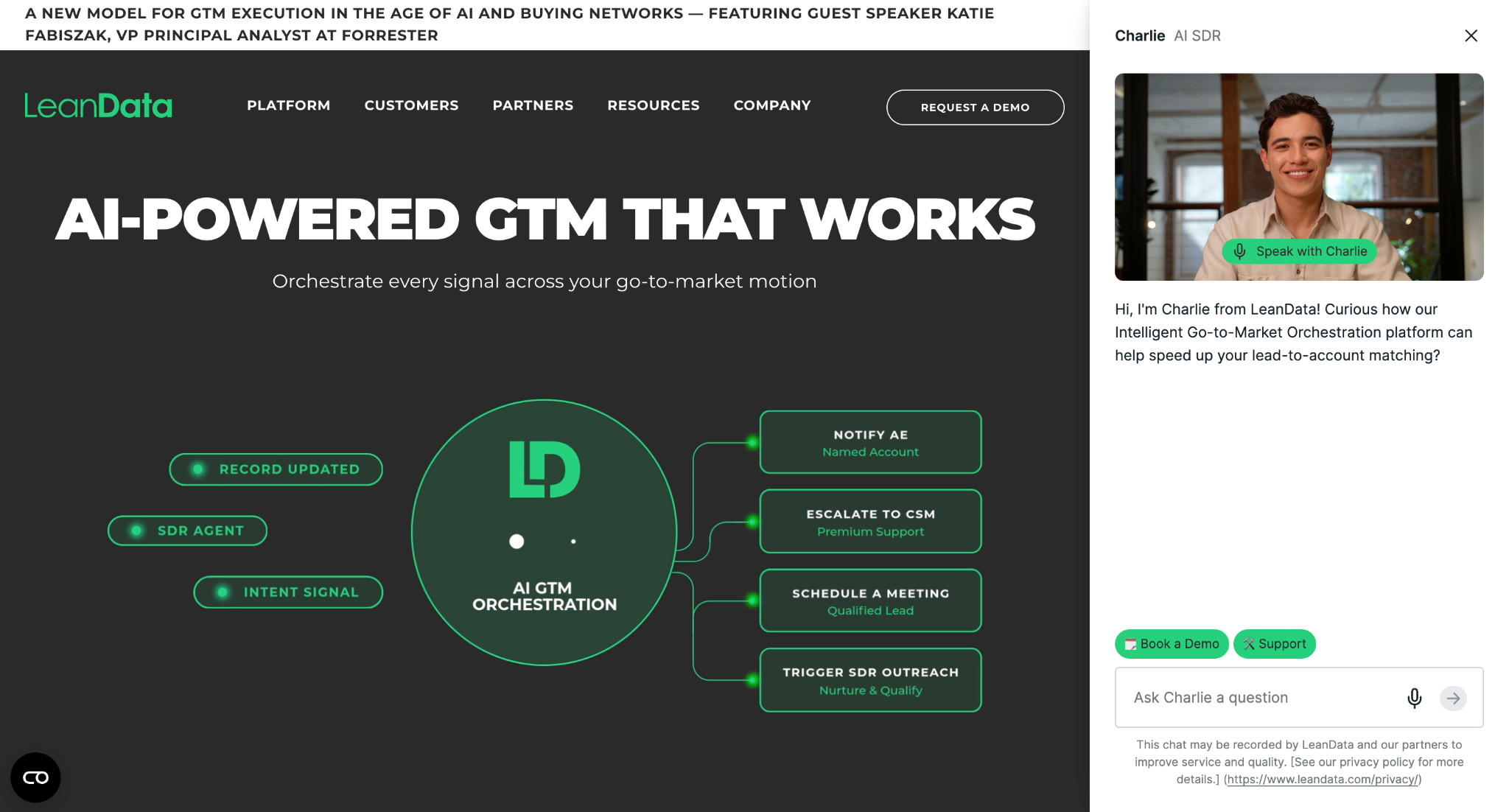
2. LeanData: Focuses on enterprise lead routing, particularly complex lead-to-account matching, ownership, and routing workflows within Salesforce environments.
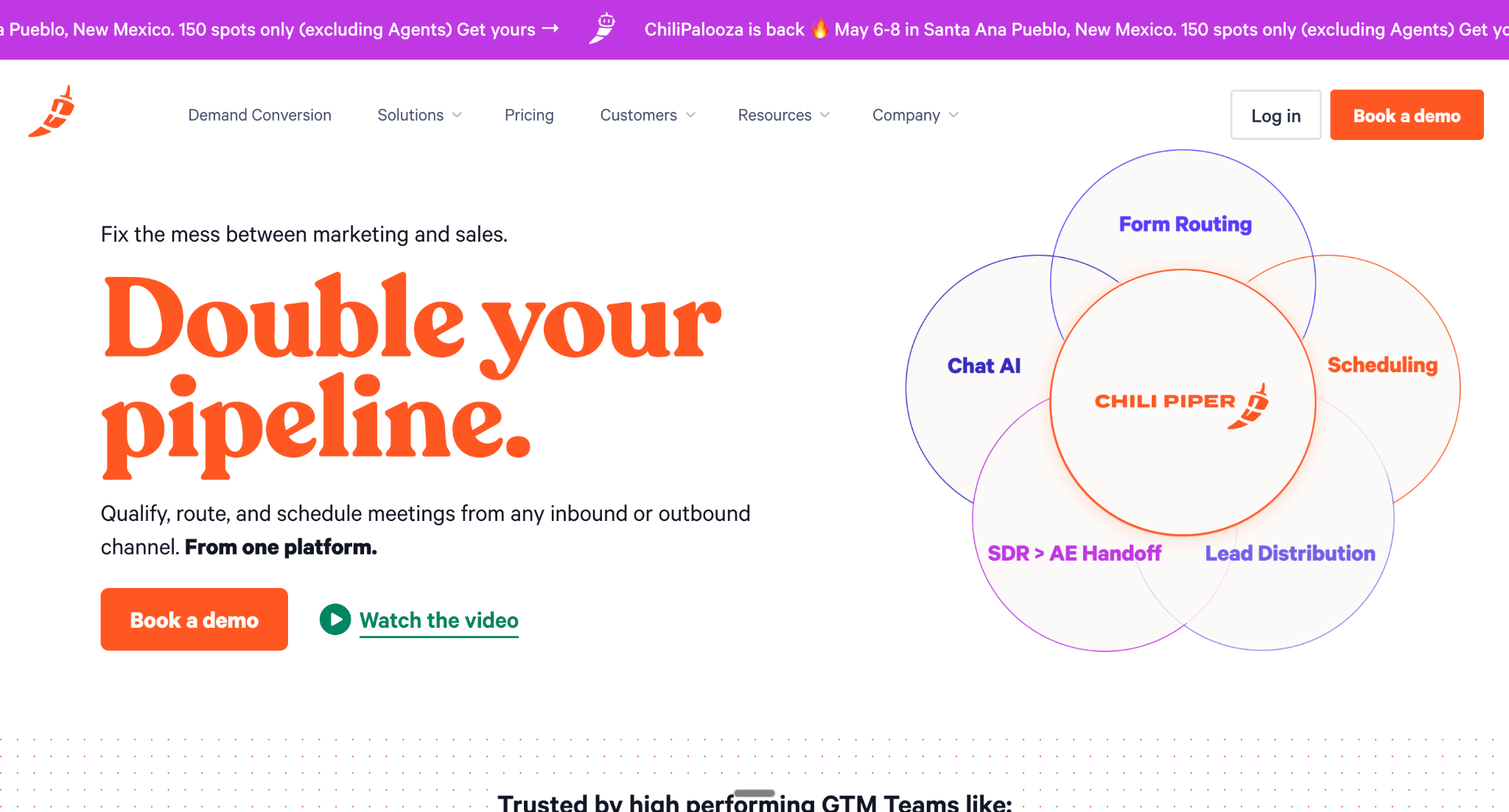
3. Chili Piper: Focuses on inbound routing and meeting conversion, helping teams move qualified inbound leads toward the appropriate sales conversation.
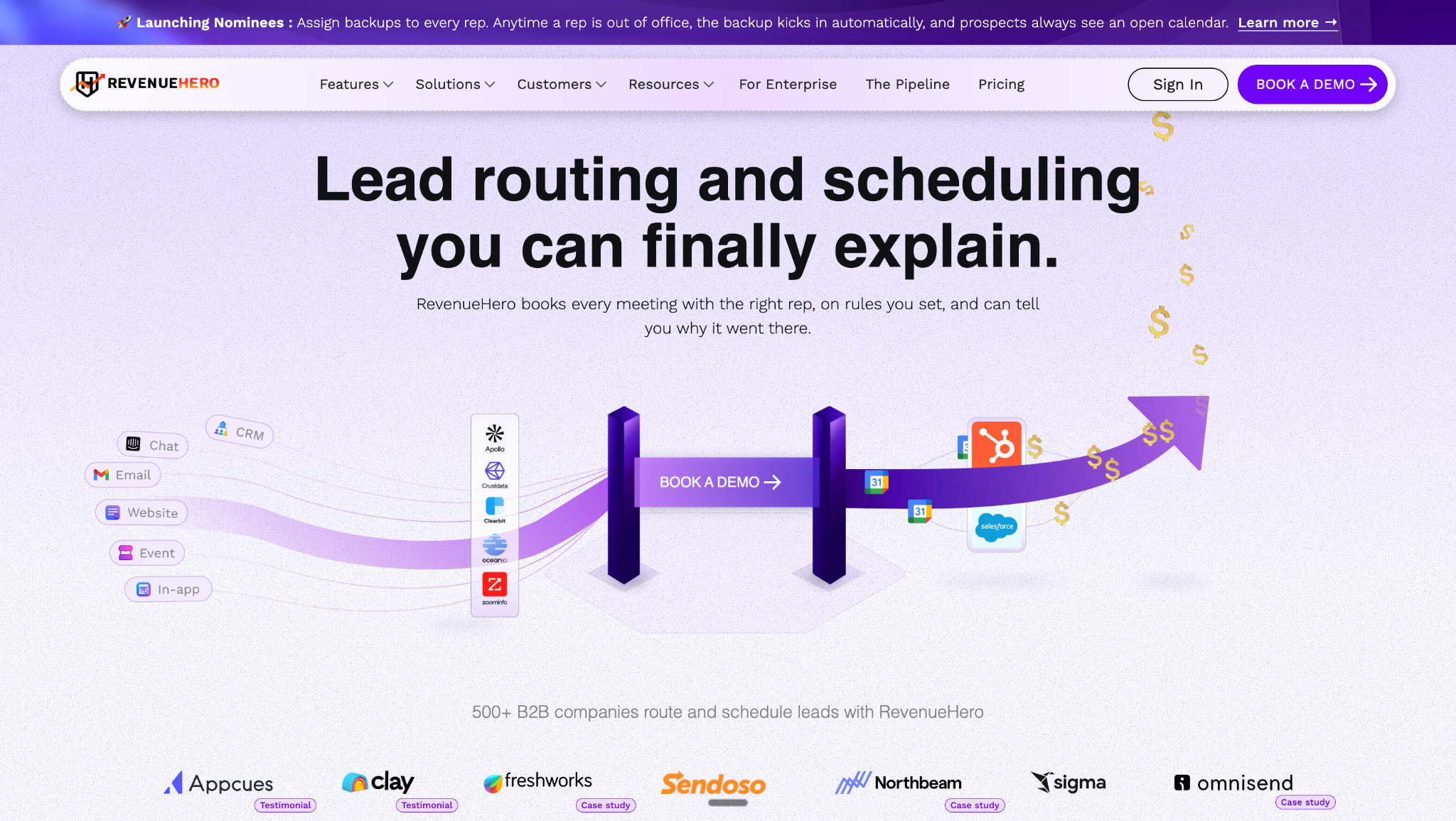
4. RevenueHero: Focuses on qualification, routing, and scheduling, connecting inbound lead qualification with automated meeting booking.
5. LeadAngel: Focuses on lead-to-account matching and routing, helping revenue teams match incoming leads with the appropriate accounts and sales ownership.
6. Salescadia: Focuses on lead distribution and automated assignment, supporting routing rules and distribution workflows across sales teams.
7. Calendly: Focuses primarily on scheduling and simple lead routing, helping teams reduce friction between buyer interest and a booked meeting.
What Is Lead Distribution Software?
Lead distribution software is technology that automatically assigns and routes incoming leads to the appropriate salesperson, team, territory, or workflow based on predefined rules and buyer or account information. A lead distribution system helps sales teams distribute leads consistently without relying on manual assignment, while a lead distribution platform can connect distribution with qualification, tracking, CRM, and sales workflows.
Modern automated lead distribution software can use factors such as:
Lead source: Where the lead originated, such as a website, campaign, event, or referral.
Territory: Geographic or market-based ownership rules.
Account ownership: Whether the company already belongs to a specific salesperson or account team.
Company size: Employee count, revenue, or other firmographic criteria.
Industry: Industry-specific assignment rules.
Rep availability: Whether the appropriate salesperson is available to receive and act on the lead.
Rep capacity: Current workload or lead volume.
Lead score: The lead's calculated sales readiness or priority.
Qualification: Whether the lead meets defined criteria for sales follow-up.
Account matching: Matching a lead to the correct company, account, or sales owner.
Routing rules: Custom conditions that determine where the lead should go.
The goal is simple: get the right lead to the right sales resource at the right time, while reducing manual assignment and improving the speed and consistency of the sales handoff.
What Is Lead Routing Software?
Lead routing software is technology that determines where an incoming lead should go based on predefined rules, buyer information, account data, and sales requirements. Lead routing tools automate this decision-making process so leads can be directed to the appropriate salesperson, team, territory, or workflow without relying on manual assignment.
The key distinction is that lead routing determines the destination, while lead distribution is the broader process of assigning and delivering the lead to the appropriate sales resource or workflow.
The process typically looks like this:
Lead captured → Lead evaluated → Routing decision → Lead distributed → Sales action
For example, automated lead routing may evaluate territory, account ownership, company characteristics, lead qualification, rep availability, or other routing rules before determining who should receive the lead.
In simple terms, routing answers “where should this lead go?” while distribution answers “how does the lead get assigned and delivered to the right sales resource?” This makes lead routing an important component of a broader lead distribution system.
Lead Distribution vs Lead Routing vs Lead Tracking
These terms are closely related, but they describe different parts of the lead management process.
Capability
What it does
Lead distribution
Determines who or what receives a lead
Lead routing
Applies rules to determine the appropriate destination
Lead assignment
Establishes ownership of the lead
Lead tracking
Records and monitors what happens to the lead
Lead qualification
Determines whether the lead is worth sales attention
These capabilities often work together, but they solve different problems. Lead distribution focuses on getting a lead to the appropriate sales resource, while lead routing determines the destination based on rules and available information. Lead assignment establishes who owns the opportunity once that decision is made.
Lead tracking software serves a different purpose. It records and monitors what happens after a lead enters the sales process, such as its status, activity, ownership, and progression. A lead tracking platform can therefore show what happened to a lead without necessarily deciding who should receive it.
Likewise, a lead routing tool can determine where a lead should go without necessarily determining whether that lead is qualified or worth sales attention.
In a modern lead distribution system, these capabilities can work together:
Lead captured → Lead qualified → Routing decision → Lead distributed → Lead assigned → Lead tracked → Sales action
This distinction matters because distribution, routing, assignment, tracking, and qualification are complementary capabilities, not interchangeable terms.
What Should a Modern Lead Distribution System Do?
A modern lead distribution system should do more than assign an incoming lead to a salesperson. It should connect the lead from initial capture through qualification, distribution, sales follow-up, and revenue measurement.
The goal is to make sure relevant inbound leads enter the distribution workflow without requiring manual data entry or handoffs.
Identify the Buyer
Once a lead enters the system, the next step is determining who the buyer is and which account they belong to. This can include identifying the person, company, role, account, and existing ownership information.
Enrich Lead Data
Lead enrichment adds the context needed to make better distribution decisions. This can include company information, account details, job role, territory, segment, and other relevant buyer or firmographic data.
Understand Intent
Not every lead represents the same level of buying interest. A modern system should distinguish basic engagement from meaningful buyer intent, using available activity and behavioral signals to determine which leads deserve immediate sales attention.
Qualify the Lead
Qualification determines whether the lead meets the team's criteria for sales follow-up. Qualification can consider factors such as company fit, buyer role, intent, engagement, and other criteria defined by the revenue team.
Route the Lead
Once the lead has been evaluated, the system determines where it should go. Lead routing can use rules based on:
Territory
Account ownership
Segment
Rep
Capacity
Availability
Qualification
Intent
The objective is to direct each lead to the sales resource best positioned to act on it.
Assign and Schedule
After routing, the lead can be assigned to the appropriate salesperson or workflow. For qualified buyers who are ready to speak with sales, the system can also enable immediate meeting scheduling, reducing the delay between buyer interest and sales engagement.
Track the Outcome
Distribution shouldn't end when a lead reaches a salesperson. A modern lead tracking platform should allow teams to follow the buyer through the downstream sales process:
This is where lead tracking software and a sales lead tracking system complement lead distribution: distribution gets the lead to the right place, while tracking shows what happens afterward and whether that lead ultimately contributes to pipeline.
Traditional Lead Distribution vs Modern Inbound Lead Routing
Traditional lead distribution is primarily concerned with assignment: a lead enters the system, routing rules are applied, and the lead is sent to the appropriate salesperson.
Traditional workflow: Lead → Routing Rules → Sales Rep
Modern inbound revenue teams need a broader process. Before deciding where an opportunity should go, the system can identify the buyer, understand the strength of the buying signal, qualify the opportunity, and determine the appropriate next action.
The key difference is simple: traditional lead distribution asks “Who should receive this lead?” Modern inbound lead routing increasingly asks “Who is the buyer, how valuable is the signal, is the buyer qualified, and what should happen next?”
This shifts lead distribution from a basic assignment function into a broader inbound revenue workflow, where routing is connected to buyer intelligence, qualification, scheduling, CRM workflows, and ultimately pipeline.
Lead Distribution Software Comparison
Before diving into the individual platforms, here's how the seven options differ by their primary GTM job, ideal use case, and business outcome:
Platform
Primary Job
Best For
Key Outcome
Knock AI
Inbound revenue conversion
Revenue teams with meaningful buyer activity
Qualified pipeline
LeanData
Enterprise lead routing
Complex Salesforce environments
Accurate lead/account assignment
Chili Piper
Inbound routing + meeting conversion
B2B inbound teams
Faster sales conversations
RevenueHero
Qualification + routing + scheduling
Inbound revenue teams
Qualified meetings
LeadAngel
Lead-to-account matching + routing
Enterprise RevOps
Accurate account ownership
Salescadia
Lead distribution + routing
Teams needing automated assignment
Faster lead allocation
Calendly
Scheduling + simple routing
Teams reducing booking friction
Faster meeting booking
See Knock AI in Action — Book Your Live Demo Today
The comparison is intentionally based on what each platform primarily helps a revenue team accomplish, rather than a generic feature or ratings system. This makes it easier to identify which lead distribution software fits a specific bottleneck in the inbound sales process.
Enrichment: Adds relevant buyer and account context to support qualification and sales decisions.
AI qualification: Evaluates buyers against qualification criteria before sales follow-up.
Engagement: Enables teams to engage buyers based on their activity and context.
Routing: Directs qualified buyers to the appropriate sales resource or workflow.
Scheduling: Helps qualified buyers move directly toward a sales conversation.
CRM connectivity: Connects the inbound conversion workflow with CRM processes.
Conversation continuity: Maintains context as buyers move through different stages of the journey.
Pipeline conversion: Connects these stages to the ultimate outcome: qualified pipeline.
Best For
Enterprise revenue teams that already have meaningful buyer activity and want to turn more of that activity into qualified pipeline.
Knock AI is particularly relevant for teams generating website traffic, inbound demand, or other buyer signals but struggling to consistently identify, qualify, engage, and route those buyers.
Strengths
Buyer identification
Intent detection
AI qualification
Buyer and account enrichment
Multi-channel engagement
Intelligent routing
Scheduling
CRM connectivity
Conversation continuity
Pipeline conversion
Limitations
Knock AI is not intended to replace every lead distribution or CRM system. Companies may still need specialized tools for functions such as demand generation, prospecting, content management, or revenue attribution.
Knock AI is broader than a traditional lead routing tool. It connects buyer identification, intent, qualification, routing, scheduling, CRM workflows, and conversation continuity rather than focusing only on assigning an already-created lead.
2. LeanData
Primary Job: Enterprise Lead Routing
What It Does
LeanData is focused on helping revenue operations teams automate complex lead and account routing, particularly within Salesforce environments.
Key capabilities include:
Lead routing: Automates the movement of leads to the appropriate sales resources.
Lead-to-account matching: Matches incoming leads with the appropriate existing accounts.
Salesforce workflows: Supports routing and ownership workflows within Salesforce.
Territory routing: Applies geographic, segment, or territory-based rules.
Account ownership: Uses existing account ownership to determine where leads should be assigned.
Complex routing logic: Supports more sophisticated assignment conditions than basic round-robin distribution.
RevOps workflows: Helps revenue operations teams standardize and automate lead management processes.
Best For
Enterprise organizations with complex Salesforce-based routing requirements.
LeanData is particularly suited to organizations where lead assignment depends on account relationships, territories, ownership structures, and multiple routing rules.
Strengths
Enterprise lead routing
Lead-to-account matching
Salesforce integration
Territory-based routing
Account ownership logic
Complex routing workflows
RevOps automation
Limitations
LeanData is primarily focused on routing and revenue operations workflows. Teams looking for broader buyer identification, intent detection, AI qualification, engagement, or inbound revenue conversion may need additional technology alongside it.
3. Chili Piper
Primary Job: Inbound Routing and Meeting Conversion
What It Does
Chili Piper helps B2B teams move inbound demand from lead capture toward the appropriate sales conversation by combining routing, qualification, and scheduling workflows.
Key capabilities include:
Inbound lead routing: Directs inbound leads to the appropriate sales resource.
Qualification: Applies qualification criteria before or during the handoff.
Scheduling: Allows qualified buyers to book meetings with the appropriate salesperson.
Meeting booking: Reduces the delay between inbound interest and a sales conversation.
Round-robin: Distributes opportunities across eligible sales representatives.
CRM workflows: Connects routing and scheduling processes with CRM systems.
Speed-to-lead: Helps sales teams respond to qualified inbound demand quickly.
Best For
B2B teams that want to move qualified inbound leads from capture to sales conversation quickly.
Strengths
Inbound lead routing
Qualification workflows
Meeting scheduling
Round-robin distribution
Speed-to-lead
CRM connectivity
Inbound conversion workflows
Limitations
Chili Piper is particularly strong when the primary objective is connecting inbound demand with routing and meeting conversion. Teams that need deeper buyer identification, broader intent analysis, or continuous buyer engagement may require additional tools.
4. RevenueHero
Primary Job: Inbound Qualification, Routing and Scheduling
What It Does
RevenueHero connects inbound lead qualification with routing and scheduling to automate the path from lead capture to a qualified sales meeting.
Key capabilities include:
Lead qualification: Evaluates inbound leads against defined criteria.
Routing: Determines the appropriate sales destination for qualified leads.
Scheduling: Enables qualified buyers to book meetings with the right representative.
Enrichment: Adds relevant information to support qualification and routing decisions.
Meeting booking: Connects qualified leads directly with sales calendars.
CRM integrations: Connects inbound workflows with CRM systems.
Inbound workflows: Automates multiple steps between lead capture and sales engagement.
Best For
Revenue teams looking to automate the path from inbound lead capture to qualified meeting.
Strengths
Inbound qualification
Automated routing
Meeting scheduling
Lead enrichment
Meeting booking
CRM integrations
Inbound workflow automation
Limitations
RevenueHero is primarily centered on the qualification, routing, and scheduling portion of the inbound sales workflow. Teams requiring broader buyer identification, engagement, or revenue-conversion capabilities may need complementary tools.
5. LeadAngel
Primary Job: Lead-to-Account Matching and Routing
What It Does
LeadAngel focuses on matching incoming leads with the appropriate accounts and sales ownership, helping enterprise revenue teams manage complex routing and account assignment requirements.
Key capabilities include:
Lead-to-account matching: Matches incoming leads with the correct account.
Account ownership: Uses account relationships to determine sales ownership.
Lead routing: Routes leads according to account, territory, and other rules.
Data matching: Uses available data to improve lead and account matching.
Salesforce workflows: Connects matching and routing with Salesforce processes.
Duplicate prevention: Helps reduce duplicate records and conflicting ownership.
Best For
Enterprise RevOps teams managing complex account ownership and routing requirements.
Strengths
Lead-to-account matching
Account ownership management
Lead routing
Territory management
Data matching
Salesforce workflows
Duplicate prevention
Limitations
LeadAngel is primarily focused on account matching, ownership, and routing. Teams looking for broader inbound buyer intelligence, AI qualification, engagement, or pipeline conversion may need additional platforms.
6. Salescadia
Primary Job: Lead Distribution and Automated Routing
What It Does
Salescadia helps teams automate lead distribution and assignment across sales organizations using defined routing and allocation rules.
Key capabilities include:
Automated lead distribution: Assigns incoming leads without manual intervention.
Round-robin routing: Distributes leads across eligible sales representatives.
Lead assignment: Establishes ownership based on defined criteria.
Territory routing: Routes leads according to geographic or organizational territories.
Lead matching: Matches leads with the appropriate sales resources.
Routing rules: Applies predefined conditions to distribution decisions.
CRM integrations: Connects distribution workflows with CRM systems.
Best For
Teams that need automated lead assignment and distribution across sales teams.
Strengths
Automated lead distribution
Round-robin assignment
Territory routing
Lead matching
Custom routing rules
Sales assignment automation
CRM integrations
Limitations
Salescadia is primarily focused on the lead distribution and routing function. Organizations looking for deeper buyer identification, intent detection, AI qualification, or broader inbound revenue workflows may need complementary technology.
7. Calendly
Primary Job: Scheduling and Simple Lead Routing
What It Does
Calendly primarily helps sales and revenue teams reduce friction when a buyer is ready to schedule a meeting. Its capabilities can also support basic routing workflows around meeting booking.
Key capabilities include:
Meeting scheduling: Lets prospects book meetings based on available calendars.
Routing forms: Collects information and directs visitors toward appropriate booking options.
Booking workflows: Automates parts of the meeting-booking process.
Calendar availability: Uses representative availability to determine suitable meeting times.
Round-robin scheduling: Distributes meetings across eligible team members.
CRM integrations: Connects scheduling activity with CRM workflows.
Best For
Teams primarily looking to reduce scheduling friction after a buyer is ready to speak with sales.
Strengths
Meeting scheduling
Routing forms
Calendar availability
Round-robin scheduling
Booking workflows
CRM integrations
Limitations
Calendly is primarily a scheduling platform, rather than a comprehensive lead distribution or qualification system. It can help determine where a meeting should be booked, but it does not by itself identify buyers, understand buying intent, or qualify opportunities.
A scheduling platform can remove friction after buyer intent is established, but scheduling alone does not identify, qualify, or create buying intent.
Which Lead Distribution Software Solves Which Problem?
The right lead distribution software depends on where your inbound sales process is breaking. Instead of choosing a platform based on the number of features it offers, start with the specific problem you need to solve.
If your biggest challenge is...
Consider...
Complex Salesforce lead routing
LeanData
Lead-to-account matching
LeadAngel
Routing inbound leads to meetings
Chili Piper
Qualifying inbound leads before scheduling
RevenueHero
Automated lead distribution
Salescadia
Removing scheduling friction
Calendly
Identifying and qualifying buyers before routing
Knock AI
Understanding buyer intent before assignment
Knock AI
Turning inbound buyer activity into qualified pipeline
Knock AI
The distinction is important: some platforms primarily solve distribution, routing, account matching, or scheduling, while others address the buyer intelligence and qualification that happen before a routing decision. If your main problem is simply getting leads to the correct salesperson, a specialized routing or distribution platform may be enough. If you're already generating meaningful inbound activity but struggle to identify, understand, qualify, and convert buyers, a broader revenue-conversion workflow may be more appropriate.
Round-Robin vs Territory vs Account-Based Lead Routing
Different sales organizations need different lead routing rules. The right approach depends on how your team is structured, how accounts are owned, and how much buyer context should influence the routing decision.
Round-Robin Routing
Round-robin routing distributes leads across a group of eligible sales representatives, typically to keep lead volume relatively balanced.
It works best when reps have similar responsibilities and leads do not need to be assigned based on a specific territory, account, or specialization.
Territory-Based Routing
Territory-based routing assigns leads according to defined geographic or sales territories.
It is useful when sales ownership is divided by factors such as country, region, state, or market territory and each rep is responsible for a specific area.
Account-Based Routing
Account-based routing sends a lead to the salesperson or team that already owns the associated company or account.
This is particularly useful for organizations with established account ownership because it prevents new contacts from an existing account from being assigned to an unrelated rep.
Capacity-Based Routing
Capacity-based routing considers a salesperson's current workload when deciding where a lead should go.
Instead of distributing leads purely by rotation or ownership, the system can account for how much lead volume each representative can currently handle.
Skill-Based Routing
Skill-based routing matches leads with sales representatives based on relevant expertise or specialization.
This can be useful when different reps handle specific industries, products, customer segments, languages, or other areas of expertise.
Intent-Based Routing
Intent-based routing uses buyer behavior or purchase intent as part of the routing decision.
For example, a high-intent buyer may be routed differently from a low-intent lead, allowing sales teams to prioritize opportunities based on the strength of the buying signal.
The more complex the sales organization, the less likely a single routing rule is sufficient. Modern lead routing often combines multiple conditions, such as account ownership, territory, rep capacity, qualification, skills, and buyer intent, to determine the most appropriate destination for each opportunity.
Speed-to-Lead vs Routing Accuracy
Fast routing ≠ good routing.
Getting a lead to a salesperson quickly is valuable only when the lead reaches the right salesperson with enough context to act. A lead can be distributed within seconds and still create a poor sales outcome if it is:
Poorly qualified
Assigned to the wrong account owner
Missing important enrichment
Outside the representative's territory
Showing little meaningful buying intent
Sent to an unavailable or overloaded representative
The better objective is:
Get the right buyer to the right sales resource at the right time with enough context to act.
This makes modern lead distribution more than a speed problem. The workflow increasingly needs to connect:
A faster process can improve response time, but routing accuracy determines whether the sales team is actually spending that response time on the right opportunities.
Lead Distribution Software vs Lead Tracking Software
Lead distribution software and lead tracking software address different parts of the sales process. Distribution determines where a lead should go, while tracking provides visibility into what happens after the lead enters the sales workflow.
Lead Distribution Software
Lead Tracking Software
Determines where leads go
Tracks what happens to leads
Assigns ownership
Records activity
Applies routing rules
Monitors lead status
Optimizes handoff
Measures progression
Focuses on allocation
Focuses on visibility
Many modern sales systems combine distribution and tracking, but the underlying operational problems remain different. Distribution determines what should happen next; tracking helps teams understand what happened after the lead entered the system.
For example, a lead distribution platform might determine that an inbound lead should be assigned to a specific account owner based on territory, account ownership, and qualification. A lead tracking platform can then monitor whether that lead was contacted, progressed to a meeting, became an opportunity, or ultimately contributed to pipeline.
This distinction makes lead distribution software primarily an allocation and handoff system, while lead tracking software is primarily a visibility and monitoring system.
Where Lead Distribution Systems Break
Even well-designed lead distribution systems can underperform when routing happens without enough buyer context or when the handoff to sales is incomplete. The most common problems are operational rather than technical.
Leads Are Routed Before They Are Qualified
Sending every lead directly to sales can create unnecessary workload and dilute attention. Qualification should happen early enough to distinguish genuine sales opportunities from low-fit or low-intent leads.
Account Ownership Is Incorrect
If a new lead is assigned without accurately identifying the associated account, the opportunity may reach the wrong salesperson. This can create duplicate outreach and ownership conflicts.
Routing Rules Are Too Basic
Simple rules such as round-robin assignment may work for small teams but become insufficient as organizations add territories, account ownership, segments, skills, capacity, and other conditions.
Leads Sit Unassigned
A lead that enters the system but waits for manual assignment loses valuable response time. Automated distribution should minimize gaps between lead capture and sales ownership.
Sales Teams Don't Receive Enough Context
A salesperson needs more than a name and email address. Without information about the account, buyer, activity, qualification, or intent, reps may have to research the opportunity before they can take meaningful action.
Routing Isn't Connected to Scheduling
Routing a qualified buyer to the right salesperson is only part of the handoff. If scheduling requires another manual step, the buyer can still experience unnecessary friction between expressing interest and speaking with sales.
CRM Data Becomes Stale
Outdated account ownership, territories, rep availability, or lead information can cause otherwise correct routing rules to produce incorrect assignments.
Teams Measure Assignment Instead of Pipeline
Successful distribution isn't simply about how quickly or accurately leads are assigned. The more meaningful question is what happens afterward: Do those leads become conversations, meetings, opportunities, and pipeline?
How AI Is Changing Lead Distribution
AI is changing lead distribution from a static assignment process into a broader decision-making workflow. Instead of simply applying the same routing rules to every incoming lead, modern systems can use buyer context and signals to help determine whether a lead deserves sales attention and what should happen next.
AI is increasingly being applied to:
AI lead qualification: Evaluate whether an inbound buyer meets defined sales criteria.
AI intent detection: Interpret buyer activity to identify potentially meaningful purchase interest.
Buyer identification: Help determine who the buyer is and which account they belong to.
Automated enrichment: Add relevant company, account, role, and buyer context.
AI sales agents: Engage with inbound buyers and handle parts of the initial sales conversation.
Intelligent routing: Use buyer context, qualification, intent, ownership, and other conditions to determine the appropriate destination.
Automated scheduling: Move qualified buyers toward a sales meeting without unnecessary manual steps.
Conversation analysis: Extract useful signals and context from buyer conversations.
Revenue intelligence: Connect buyer activity and sales interactions with downstream revenue outcomes.
Traditional Lead Distribution
Lead arrives → Rules → Rep
Modern Lead Distribution
Buyer signal → AI interpretation → Qualification → Routing → Action
The important shift is that AI doesn't simply make lead assignment faster. It can help interpret the information surrounding a lead before a routing decision is made. This allows lead distribution to incorporate qualification, intent, buyer context, and the appropriate next action rather than treating every incoming lead as an identical record.
AI changes lead distribution from a static assignment problem into a decision-making workflow. Instead of routing every lead according to the same predefined conditions, AI can help interpret buyer context and determine whether a lead deserves sales attention and what action should happen next.
When Lead Distribution Software Isn't Enough
A traditional lead distribution system starts when a lead already exists. But modern inbound teams can have valuable buyer signals before someone fills out a form or becomes a known lead.
These signals can include:
Anonymous website activity
Returning visitors
Account activity
Content engagement
High-intent pages
Conversational interactions
Campaign engagement
AI search activity
Existing CRM context
That creates a broader workflow:
Buyer Activity
↓
Identification
↓
Intent
↓
Enrichment
↓
Qualification
↓
Routing
↓
Scheduling
↓
Pipeline
The key distinction is that lead distribution answers where an existing lead should go. A broader inbound conversion workflow also asks who the buyer is, whether they are showing meaningful intent, whether they are qualified, and what should happen next.
This is where lead distribution becomes part of a broader revenue-conversion workflow. The objective isn't simply to distribute more leads. It's to identify the buyers most likely to become opportunities and move them to the appropriate sales workflow quickly.
Knock AI operates across this broader inbound conversion workflow, connecting buyer identification, intent, enrichment, AI qualification, routing, scheduling, CRM workflows, and conversation continuity.
How to Choose the Best Lead Distribution Software
The right lead distribution software depends on your routing complexity, sales structure, and the stage of the inbound workflow you need to automate.
What routing problem are you solving?
Does it support your CRM?
Can it match leads to accounts?
Can it handle your territory structure?
Can it account for rep availability and capacity?
Can it qualify leads before routing them?
Can it incorporate buyer intent?
Can it trigger scheduling or sales actions?
Can you track what happens after assignment?
Can you measure pipeline impact?
The best lead distribution software isn't necessarily the platform with the most routing rules. It's the system that gets the right opportunity to the right sales resource with the context and timing needed to move it toward revenue.
How Many Lead Distribution Tools Does a Company Need?
Most companies don't need multiple systems performing the same routing function. The right number depends on the complexity of the sales organization and how much of the inbound revenue workflow needs to be automated.
Simple GTM Team
CRM
↓
Basic Routing
↓
Sales
A smaller team may be able to handle lead assignment directly through its CRM and a small number of routing rules.
Growing GTM Team
Capture
↓
Qualification
↓
Routing
↓
Scheduling
↓
CRM
As inbound volume grows, teams may need dedicated systems for qualification, routing, and meeting conversion.
Enterprise GTM Team
Identification
↓
Intent
↓
Enrichment
↓
Qualification
↓
Account Matching
↓
Routing
↓
Scheduling
↓
CRM
↓
Pipeline
Enterprise organizations typically have more complex account ownership, territories, qualification criteria, and sales workflows, making a broader technology architecture necessary.
Choose the smallest technology stack that can reliably handle your routing complexity and revenue workflow.
Lead Distribution Should Optimize Pipeline, Not Assignment
Traditional lead distribution focuses on one operational objective:
More leads distributed
Modern revenue teams should optimize for a different outcome:
More qualified opportunities created
The workflow therefore becomes:
Buyer
↓
Signal
↓
Intent
↓
Qualification
↓
Routing
↓
Conversation
↓
Pipeline
↓
Revenue
Lead distribution is valuable because it reduces the gap between an inbound buyer and the salesperson who can help them. But distribution itself isn't the end goal. For modern GTM teams, the real objective is turning meaningful buyer activity into qualified pipeline.
Lead distribution is not successful simply because a lead reaches a salesperson. It is successful when the right buyer reaches the right sales resource with enough context to move the opportunity forward.
Knock AI focuses on that conversion layer, helping revenue teams connect buyer signals and intent with qualification, routing, scheduling, CRM workflows, and qualified pipeline.
FAQ
What is lead distribution software?
Lead distribution software automatically assigns and routes incoming leads to the appropriate salesperson, team, territory, or workflow based on predefined rules and relevant buyer or account information.
What is lead routing software?
Lead routing software determines where an incoming lead should go based on factors such as territory, account ownership, qualification, availability, capacity, and other routing conditions.
What is the difference between lead distribution and lead routing?
Lead routing is the decision-making process that determines the appropriate destination for a lead. Lead distribution is the broader process of assigning and delivering that lead to the appropriate sales resource or workflow.
What is the best lead distribution software?
The best lead distribution software depends on the problem being solved. Teams with complex Salesforce routing may need LeanData, while teams focused on inbound routing and meeting conversion may consider Chili Piper or RevenueHero. Teams looking to connect buyer identification, intent, qualification, routing, and pipeline conversion may consider Knock AI.
What is automated lead distribution software?
Automated lead distribution software uses predefined rules and, increasingly, buyer and account context to assign incoming leads without requiring manual distribution by sales or operations teams.
How does lead routing software work?
A lead routing system evaluates information such as account ownership, territory, lead qualification, rep availability, capacity, and other conditions, then determines the appropriate salesperson, team, or workflow for the lead.
What is the difference between lead distribution and lead tracking?
Lead distribution determines where a lead should go, while lead tracking monitors what happens to the lead after it enters the sales workflow. Distribution focuses on allocation and ownership; tracking focuses on activity, status, and progression.
How does lead distribution software improve sales conversion?
Lead distribution software can reduce delays, improve assignment accuracy, and connect qualified leads with the appropriate sales resources. More advanced systems can incorporate buyer intent and qualification before routing, helping sales teams focus on opportunities that are more likely to progress toward pipeline.


.svg)


.svg)
.svg)
.svg)


.svg)
.svg)


.svg)